Anglican leaders from across Africa, Asia, Europe and the Americas have issued a declaration they say will reshape the future of the global Anglican movement, arguing that the church must be reorganized around shared doctrine and biblical authority rather than historic institutional ties.
The statement, known as the Abuja Affirmation, was released at the conclusion of a gathering organized by the Global Anglican Future Conference (GAFCON), a movement of Anglican leaders formed in response to growing theological differences within the Anglican Church. The meeting in Abuja, Nigeria was attended by 347 Anglican bishops and 121 lay and clerical Anglican leaders from 27 provinces from March 3 to 6.
One of the most significant announcements in the Abuja declaration is the formation of a new governing body called the Global Anglican Council.
The council replaces the earlier GAFCON Primates Council and will include archbishops and other leaders from participating Anglican provinces. According to the communiqué, the body will help coordinate mission efforts, safeguard doctrine and recognize Anglican jurisdictions that align with the Jerusalem Declaration.
“We recognize that there is still much work to be done by the Global Anglican Council, including working out the implications of the Jerusalem Declaration in word and deed,” the statement says.
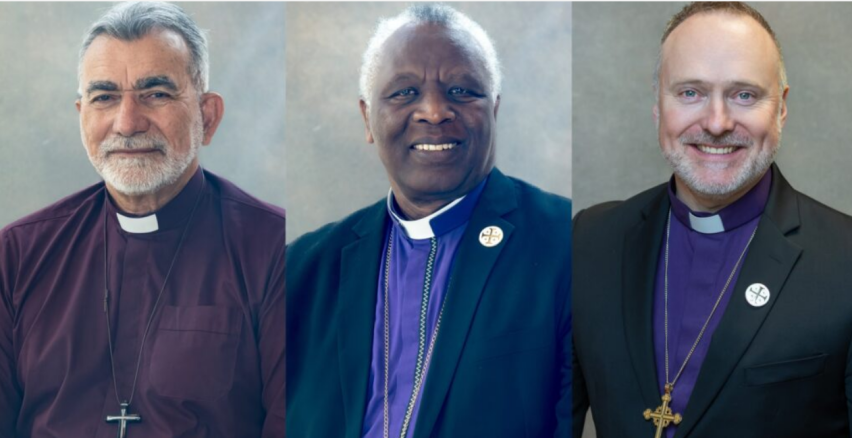
Archbishop Laurent Mbanda of Rwanda was elected to serve as chairman of the council. Other leaders appointed to key roles include Archbishop Miguel Uchôa of Brazil as deputy chairman and Bishop Paul Donison as general secretary.
The council is expected to guide cooperation among churches connected to the GAFCON movement and provide recognition for Anglican dioceses or networks that identify with its doctrinal commitments. The developments in Abuja also highlight a broader shift within global Anglicanism.
The declaration says disagreements over doctrine, particularly issues related to marriage, sexuality and the authority of Scripture, have revealed deep divisions within the Anglican Communion. As a result, the document calls for a “reordering” of Anglican fellowship, arguing that unity should be grounded in shared belief and commitment to Biblical teaching rather than traditional institutional structures historically linked to the Archbishop of Canterbury.
Leaders involved in the movement say the declaration represents a decisive step after more than two decades of theological tensions within the worldwide Anglican Communion.
“At Abuja, we rejoiced in the gospel of our Lord Jesus Christ, the good news that God, in his great love for sinners, gave his Son so that, through his death and resurrection, sinners might be forgiven,” the communiqué states. “Without this gospel, the Church dies.”
The document emphasizes that Scripture must remain the ultimate authority for Anglican faith and practice.
“The Bible is God’s Word written, and therefore is clear and sufficient in all matters of faith and obedience,” the statement says.
The Abuja declaration comes after years of internal disputes within the Anglican Communion over theology, church authority and human sexuality.
A major turning point occurred in 2003 when the Episcopal Church in the United States consecrated Gene Robinson, an openly gay priest, as bishop of New Hampshire. The move sparked global controversy and prompted protests from Anglican leaders in Africa, Asia and other regions who argued that the decision departed from Christian teaching.
Those tensions deepened over the following years as some Western Anglican provinces approved same-sex marriage blessings and other changes in church practice.
In response, conservative Anglican leaders organized the first Global Anglican Future Conference in Jerusalem in 2008. That meeting produced the Jerusalem Declaration, a statement affirming traditional Anglican doctrine and the authority of Scripture.
The declaration became a foundational document for Anglicans who believed the existing structures of the Anglican Communion were no longer able to maintain doctrinal unity.
For much of its history, the Anglican Communion has been held together by a set of leadership bodies known as the “Instruments of Communion.” These include the Archbishop of Canterbury, the Lambeth Conference of bishops, the Anglican Consultative Council and the Primates’ Meeting.
However, many leaders within the GAFCON movement say these institutions have failed to provide clear theological guidance or discipline churches that adopt positions they believe contradict Scripture.
Shared belief not institutional membership
Instead, the document argues that Christian fellowship should be grounded in shared belief rather than institutional membership.
“True communion is confessional, rather than defined by shared history or institutional structures,” the statement says.
While the Anglican tradition historically developed from the Church of England, there is a strong Anglican presence in Africa, Asia and Latin America. As those churches expanded, their leaders increasingly called for greater influence in shaping the direction of the worldwide communion. Supporters of the Abuja declaration say the new structure reflects that changing reality.
At the same time, the communiqué insists that the initiative should not be understood as forming a separate Anglican church body. Instead, it argues that the real issue involves competing understandings of what defines Anglican unity.
“There are not two Communions but two incompatible understandings of communion,” the document states: one rooted in historic institutional structures and another grounded in shared confession of faith.
For many local Anglican congregations, the immediate impact of the declaration may be limited. Churches will continue worship services, mission activities and parish life as usual.
But church observers say the Abuja Affirmation marks a significant moment in the ongoing debate over doctrine and authority within Anglicanism.
By establishing the Global Anglican Council and reaffirming the Jerusalem Declaration, leaders involved in the movement say they hope to strengthen cooperation among Anglicans who share common theological convictions.
“Our Abuja Affirmation is that we and our global household of faithful Anglicans will also serve the Lord,” the communiqué concludes.