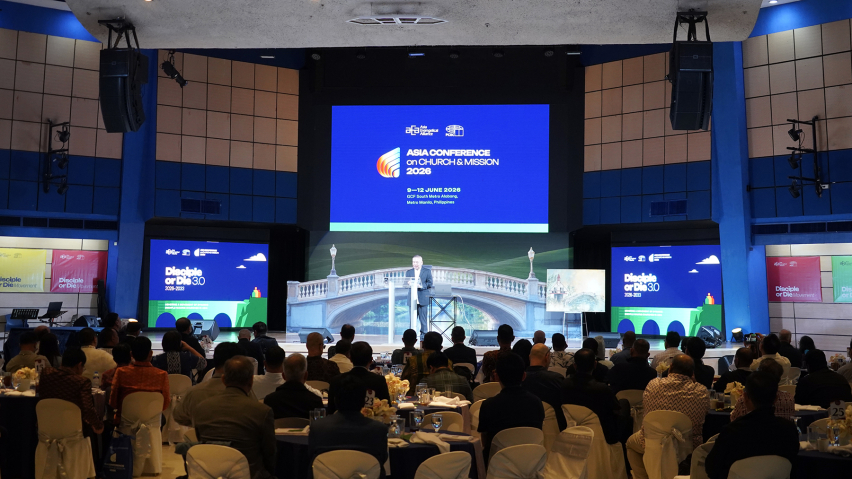
With 210 delegates gathered from 25 nations across Asia and beyond, the Asia Conference on Church & Mission (ACCM) 2026 officially kicked off on Monday evening, June 9, at GCF South Metro in Alabang, Metro Manila.
Organized by the Asia Evangelical Alliance (AEA) in collaboration with the Philippine Council of Evangelical Churches (PCEC) and hosted by Greenhills Christian Fellowship South Metro, the four-day gathering carries a bold theme alongside a concrete seven-year vision: to usher in a movement of dynamic disciple-making churches across the continent by the year 2033.
The conference follows two previous milestone gatherings convened by the Asia Evangelical Alliance: the AEA's 11th General Assembly in Ulaanbaatar, Mongolia in August 2024, held under the banner "Disciple or Die," where Christian leaders from across the region sounded an alarm about the state of discipleship on the continent; and the Asian Evangelical Leadership Forum near Seoul, South Korea in June 2025, convened under the theme "Disciple or Die 2.0," which deepened the strategic conversation around mobilizing leaders for intentional disciple-making.
Manila's gathering marks what organizers are calling "Disciple or Die 3.0" — no longer a time for discussion alone, but for committed, measurable action.
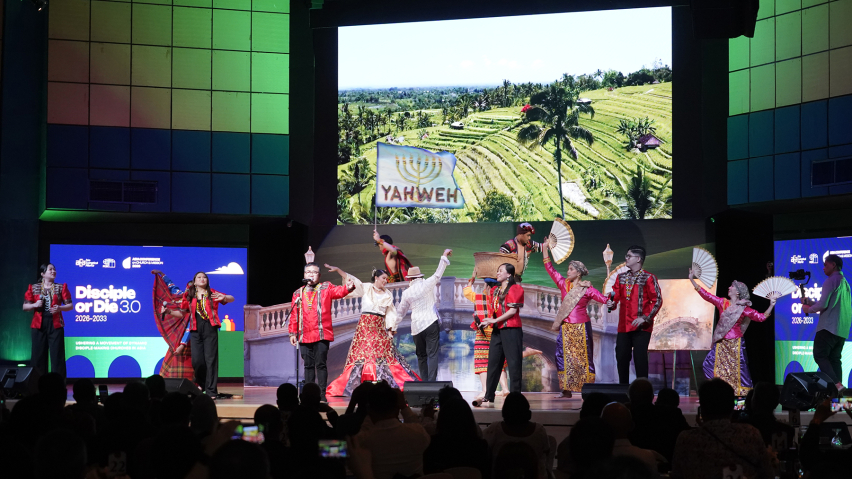
The state of the Church in Asia requires provocation
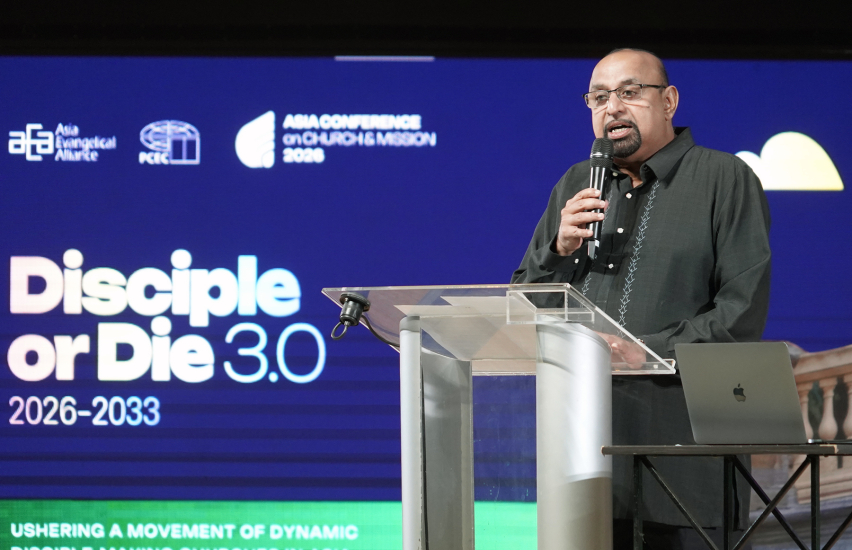
The opening session, themed "Revive Us Again O Lord" from Habakkuk 3:2, started with an address by Godfrey Yogarajah, Chair of both the Asia Evangelical Alliance and the International Council of the World Evangelical Alliance.
Speaking about the striking theme of the gatherings, Yogarajah acknowledged that the phrase "Disciple or Die" might unsettle some — and argued that it should. The state of the Church in Asia, he said, demands nothing less than provocation. Asia is home to over four billion people, he noted, with vast portions of the continent never having heard the name of Jesus Christ — not for lack of resources, but because the church had drifted from its central mandate.
"Somewhere along the way," he said, "the church stopped making disciples and started making attenders. We filled pews, we built buildings, we ran programs and events, but we forgot the Great Commission."
Yogarajah turned to the text of the Great Commission as recorded in Matthew 28:19, underscoring that the Greek imperative at the sentence's heart is not "go" or "baptize" or "teach" — those are participles, the means — but "disciple." The command is non-negotiable. "We have no right to call ourselves the church of Jesus Christ, if we are not doing the one thing he commanded us to do above all else," he argued.
Referring to the theme "Disciple or Die," Yogarajah said that a church where 80 percent of adult members are consuming rather than reproducing is a church one generation away from decline. A denomination most of whose churches have stopped multiplying disciples is a denomination in crisis, whatever its budget or prayer activity. And a national evangelical alliance with no strategy or accountability for disciple-making has confused coordination with commission.
Set against that diagnosis, Yogarajah spoke about the 2033 Dream: a vision for 50 percent of national evangelical alliances across Asia to become disciple-making alliances — defined as those where 40 percent or more of their member denominations are actively pursuing the mandate; where 30 percent or more of local churches are disciple-making churches; and where, at the congregational level, at least 20 percent of adult members are personally discipling others.
"This is not an impossible number," he said. "It is simply enough yeast to leaven the whole batch."
In practice that would mean one in five church members not merely attending services, but investing: sitting with someone over a meal or a cup of tea, opening Scripture together, walking through life, refusing to let that person stay where they are until they too are walking alongside someone else.
He closed with a prayer echoing the prophet Habakkuk, that God would revive His work through the Church today, so that this generation might not pass without a movement of disciples shaping the continent for Jesus Christ.
From event-based church to disciple-making church
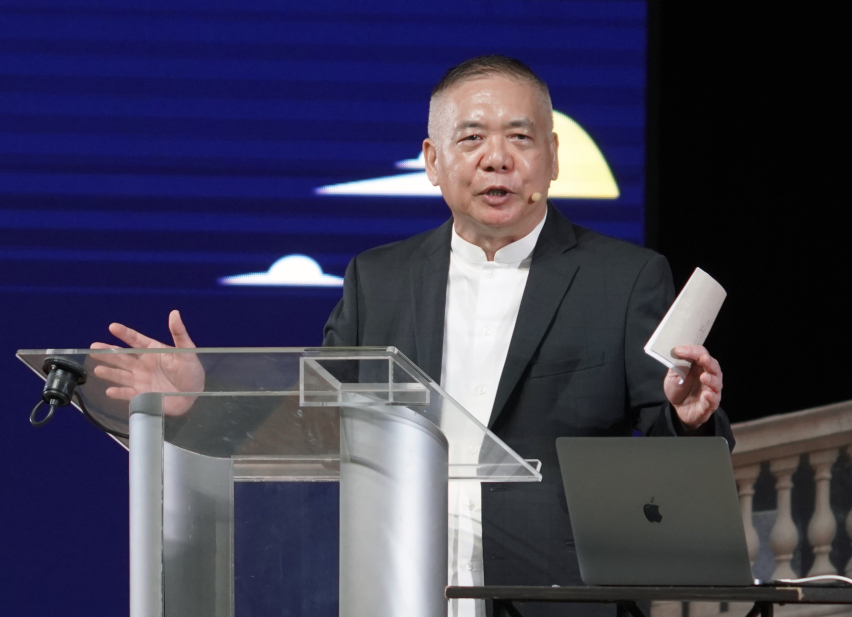
Dr. Bambang Budijanto, General Secretary and CEO of the Asia Evangelical Alliance, reminded delegates about the longer arc of the movement — a ten-year journey that has now reached a decisive inflection point.
Budijanto pointed to 2016, when the AEA's general assembly in Bandung, Indonesia first turned its focused attention to the discipleship crisis. Around that time, research by the Barna Group had been published examining the state of the Great Commission in American churches. The findings were stark: only 20 percent of American Christians were engaged in any kind of discipleship activity.
Budijanto recalled speaking with a researcher afterward who suggested that globally, the figure of those genuinely obeying the Great Commission and making disciples might be even lower — perhaps below 5 percent.
What troubled him most was not the statistic itself, but the institutional non-response. "Four out of five Christians were disregarding the last command of Jesus Christ," he said. "But what was worse was that leaders knew about this and carried on with business as usual — as if nothing had happened. We celebrated Easter, we celebrated Christmas, we celebrated anniversaries, as if everything was fine."
That wake-up moment in 2016 set the AEA on its present course. The Mongolia gathering and the South Korea forum, he noted, addressed definition, concept, and theory. "Disciple or Die 1.0 and 2.0 — they're finished, they're done," he said. Manila is for action.
The concrete goal Budijanto set before the room: by 2033, 20 percent of all evangelical churches represented by AEA member alliances across Asia will become disciple-making churches — defined as congregations where at least 20 percent of members are actively discipling others, not merely attending small groups or seeking their own spiritual formation, but investing in others.
Budijanto noted that the prevailing model of church in most Asian cities is what he calls the "weekly event-based church" — where congregations spend as much as 70 percent of their resources and energy preparing for Sunday services. "How to move from event-based into a movement of disciple-making community," he said, "that's the task." He used the image of a bridge displayed throughout the conference's materials: churches on one side are slowly decaying; the other side is dynamic disciple-making. The responsibility of every leader present, he said, is to help their church cross it.
The final day of the conference, he noted, would bring together the visiting delegates alongside an estimated 1,000 Filipino pastors for a joint intensive day on intentional disciple-making.
The role of the Church as instruments of the gospel
The welcome address on behalf of the hosts was delivered by Bishop Dr. Noel Pantoja, National Director and CEO of the Philippine Council of Evangelical Churches (PCEC). While expressing his appreciation for the privilege of hosting the event in the Philippines, he first highlighted the 7.8-magnitude earthquake that struck the country the previous day.
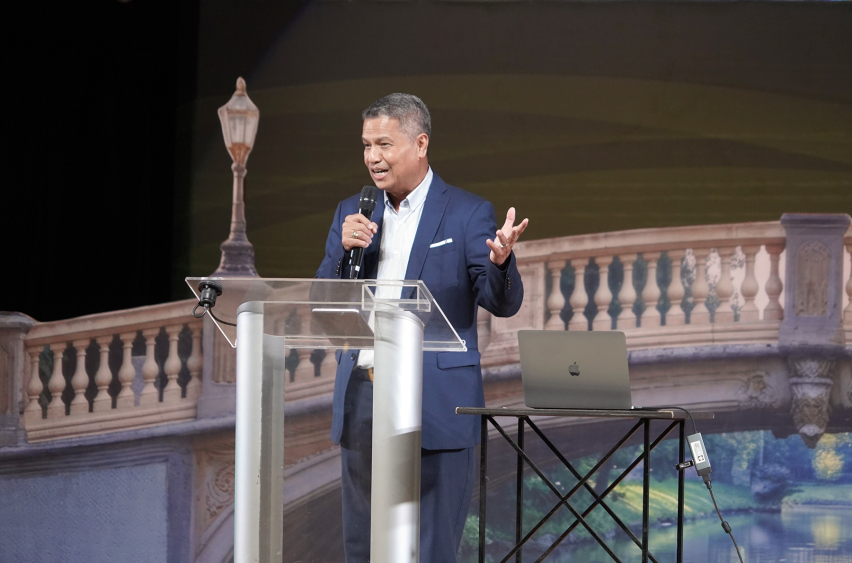
Pantoja asked delegates to pause and pray — noting that as of the opening session, more than 40 people had been confirmed dead, with hundreds still missing. He reported that the PCEC's Philippine Relief and Development Services was already on the ground conducting rapid assessments, and he called on churches, denominations, and international partners to mobilize in response.
Against that backdrop, Pantoja then pointed to the broader issues the Church faces in the nation.
"As we come together amidst the challenges we are experiencing in the Philippines — not only the disasters, but the social, economic, political, and cultural difficulties — we are reminded of our role as the church of the Lord Jesus Christ in Asia: as instruments of the gospel, advancing God's mission through faithful obedience to our Lord's mandate to make disciples of all nations," he said.
Pantoja spoke to the urgency embedded in the conference's theme. In the PCEC's own journey, he noted, 2025 had brought a deliberate declaration: "This is not business as usual for the church." It requires what they came to call a "discipleship revolution." Now, in Manila, that urgency intensifies under the banner "Disciple or Die."
"If we miss the Lord's design and purpose for the Church," he warned, "we risk losing hope for the world."