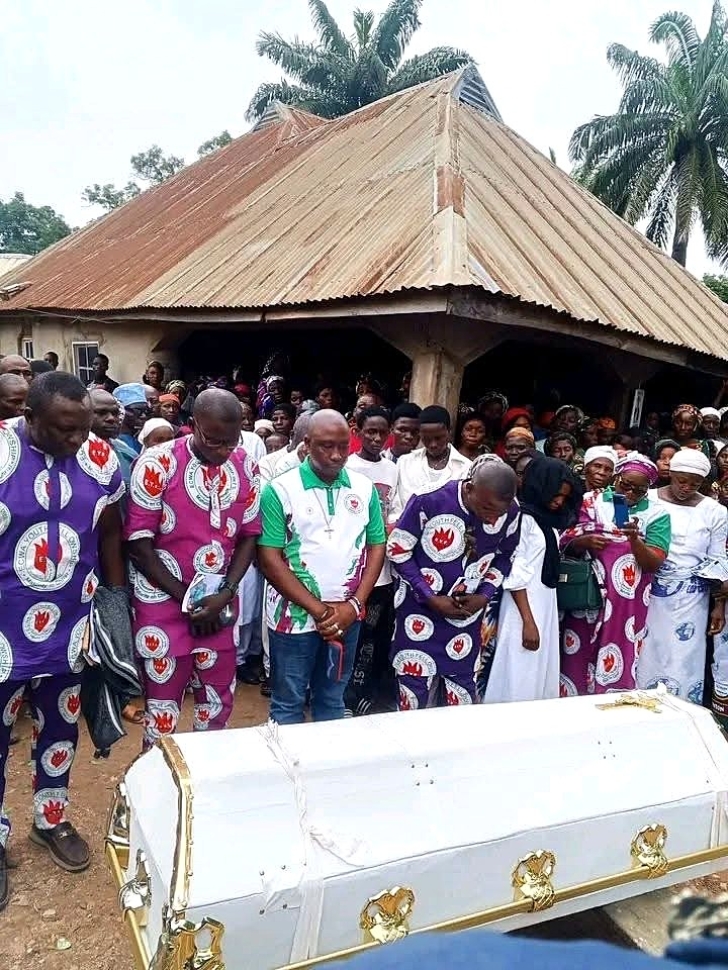
Christians in Nigeria were killed at a rate of one every 86 minutes between Jan. 1 and Sept. 8, most of them in the Middle Belt that receives low priority in Nigerian and U.S. security policy, a new report by a U.S.-based aid agency shows.
Among 4,216 Christians killed in Nigeria during the period, a majority of the documented violence against Christian farming communities appears to be religiously motivated and carried out through organized militant networks, with Fulani actors responsible for more deaths than Boko Haram and Islamic State West Africa Province (ISWAP) combined, according to the report by Equipping The Persecuted (ETP), “Crisis in the Middle Belt: Religious Persecution and Security Failure in Nigeria.”
Multiple ethnic and religious communities in Nigeria suffer violence, but the religious motivation of attacks on Christian farmers is important to note to avoid flawed policy responses, the report asserts.
“When attacks are framed only as farmer-herder clashes, the actions of unknown gunmen, or generalized rural violence, mass persecution may be misinterpreted as merely a development problem or a policing failure,” ETP states. “Likewise, when the religious identity of affected communities is omitted, the religious dimension of the violence may be underrepresented in public reporting and casualty records. As a result, targeted persecution can be absorbed into broader narratives of insecurity, obscuring both its nature and its scale.”
The 4,216 deaths of Christians in Nigeria recorded by ETP between Jan. 1 and Sept. 8 represents an average of 16.8 deaths per day, or approximately one every 86 minutes.
“Local disputes over land, resources, or communal identity can be deadly, but they are not equivalent to the systematic destruction or depopulation of entire villages,” the report states. “According to Equipping The Persecuted and TruthNigeria field reporting, the destruction of villages, burning of churches, and permanent displacement of communities are overwhelmingly associated with religiously motivated attacks and sustained militant territorial pressure rather than isolated communal disputes.”
The report acknowledges that tribal, land-use, grazing and communal disputes exist throughout Nigeria and can result in serious violence.
“However, these factors alone do not account for the prevailing pattern documented herein, which is characterized by village raids, church burnings, targeted killings, abductions, the destruction of communities, and the long-term displacement of Christian farming populations from ancestral lands,” ETP states.
The tribal, land-use, grazing and other communal disputes account for only part of the violence and do not adequately explain the insecurity facing many Christian farming communities across the Middle Belt, according to the report. Violence is marked by destruction of communities followed by displacement and the loss of ancestral lands.
“While communal disputes may result in localized clashes, they do not ordinarily produce the systematic burning of churches, the targeted killing or abduction of worshippers and clergy, the abandonment of entire villages, or the prolonged denial of return to displaced populations,” the report states.
Nigeria’s Middle Belt is marked by raids on villages, abductions, intimidation, land occupation and limited accountability for assailants, ETP reports.
“In Benue, Plateau, southern Kaduna, Nasarawa and Taraba, armed Fulani militant networks are identified as the principal named threat in TruthNigeria and Nigeria Terror Tracker reporting,” the report states. “The terms Fulani-linked actors and Fulani Ethnic Militia refer specifically to armed groups and organized militant networks identified through incident-level evidence. These terms do not imply collective responsibility on the part of Fulani civilians or the Fulani population as a whole.”
Equipping The Persecuted estimates that more than 5 million Christians have been displaced and more than 600 Christian communities have been destroyed or emptied as a result of violence and insecurity. The group’s Nigeria Terror Tracker (NTT) showed that within comparable 2025 and 2026 reporting periods, Fulani-linked actors accounted for substantially more fatalities than Boko Haram and ISWAP combined.
The NTT, which employs a different methodology than the ETP’s master registry, found that Fulani-linked actors accounted for 4,932 recorded fatalities between Jan. 1, 2025 and Sept. 7, 2025, and 786 fatalities during the same period in 2026. Boko Haram and ISWAP, by contrast, were responsible for a combined 1,958 fatalities in 2025 and 189 in 2026.
“Accordingly, Fulani-linked actors caused 2.5 times more recorded deaths than Boko Haram and ISWAP combined in 2025, and 4.2 times more in 2026 within NTT’s verified incident series,” the report states, adding that the NTT and the ETP master registry are separate sources with different analytical purposes and should not be combined or interpreted as interchangeable measures of violence.
The report notes that all figures should be understood as documented minimums and are likely to understate the full scale of the violence and displacement.
The NTT findings on Fulani actors were independently reinforced by figures from the Observatory for Religious Freedom in Africa (ORFA), which attributed 53 percent of documented killings of civilian Christians to Fulani militant groups, compared with 8 percent attributed to Boko Haram and ISWAP combined, the report notes.
The ETP master registry of 4,216 Christian deaths from Jan. 1 through Sept. 8 is a documented minimum derived from ETP and TruthNigeria field reporting, eyewitness and survivor testimony, local contacts and subsequent verification. Casualty figures are not increased until new names, incidents, and supporting evidence have been reconciled against the master registry. Accordingly, eight Christians reported killed in Ayilamo, Benue state on Sept. 10 are referenced separately rather than incorporated into the audited total.
The millions of Christians displaced by killings and kidnappings has resulted in displacement that alters demographics and requires more than short-term aid, the report notes.
“When displaced families remain in camps or temporary settlements while armed actors retain access to farms, transportation routes, water sources, and villages, displacement can evolve from a humanitarian emergency into a mechanism of long-term territorial change,” it states. “Humanitarian assistance remains essential, but relief efforts that are not accompanied by safe and voluntary return may unintentionally contribute to the normalization of dispossession.”
Impunity has long given assailants further motivation to commit atrocities, with attackers operating across local and state boundaries, conducting repeated assault and returning to previously targeted communities, according to the report.
“Effective accountability therefore requires investigations that extend beyond individual perpetrators to encompass the broader support structure behind attacks, including commanders, recruiters, weapons suppliers, transport facilitators, financiers, intelligence providers, and any public officials found to have aided, protected, or facilitated criminal activity,” the report states. “A sustainable response requires more than emergency relief. It demands security measures that protect vulnerable communities, credible investigations, prosecution of perpetrators and their supporters, restoration of property and livelihoods, and the creation of conditions that enable displaced persons to return voluntarily, safely, and with dignity.”
Otherwise, the cycles of violence, displacement and dispossession are likely to persist, ETP notes.
Media Framing
Nigerian and other media routinely omit reference to religious identity of assailants and victims in attacks that may have a religious targeting component, contributing to the misperception that violence is mere rural insecurity, the report states.
“This issue has significant implications for both public understanding and policy analysis. Datasets that rely heavily on media reports inevitably inherit the limitations and omissions present in those sources,” the report states. “The result is that casualty statistics and conflict analyses may underrepresent the religious dimension of violence in affected regions.”
Accurate assessment therefore requires not only counting incidents and fatalities, but also examining patterns of victimization, community targeting, displacement, and the destruction of religious institutions where those factors are relevant to understanding the character of the conflict, ETP states.
Victims of kidnapping in Nigeria are often tortured and starved while in captivity, and women and girls face an additional risk of sexual violence, the report notes.
“Boys and young men are not typically taken to serve as child soldiers, but they are frequently beaten, tortured, forced into labor, or held for ransom under harsh conditions,” ETP reported. “Kidnappers use videos of hostages to pressure families into paying ransoms, forcing many households to sell everything they own, leaving families destitute, and some ultimately end up in Internally Displaced Person (IDP) camps.”
Kidnapping data in Nigeria are neither comprehensive nor fully reliable, it states. Reported kidnappings are often highest among attacks carried out by groups such as Boko Haram, ISWAP and Lakurawa, as these incidents are more likely to be documented by government authorities and security services.
“In contrast, kidnappings linked to Fulani militant activity in parts of the Middle Belt, particularly Plateau, southern Kaduna, and Benue, are often believed to be underreported,” the report states. “Fear of retaliation, limited access to authorities, and mistrust of government institutions frequently discourage families from reporting incidents. While jihadist groups frequently target Muslim as well as Christian communities, many of the underreported kidnappings in the Middle Belt disproportionately affect Christian populations.”
Policy Recommendations
The report asserts that policy priority should be given to a sustained, intelligence-driven campaign to identify, disrupt and dismantle Fulani militant networks in the Middle Belt, alongside continued operations against Boko Haram, ISWAP and other armed groups.
Campaigns should target leadership, financing, weapons supply, recruitment, communications, transport routes, and safe havens while distinguishing militant networks from Fulani civilians, it states.
“Nigeria should be supported and pressed to investigate, prosecute, and hold accountable those responsible for violence,” ETP states. “Where domestic efforts prove inadequate, international partners should consider additional measures to support civilian protection, accountability, and regional security.”
U.S. and Nigerian governments and international partners should prioritize the voluntary, safe, dignified, and sustainable return of displaced Christian communities to their ancestral lands, the report recommends.
“Return initiatives should be linked to long-term security measures that prevent renewed displacement and ensure that affected populations can rebuild their lives in safety,” it states. “Successful return requires more than humanitarian assistance. Security forces should secure and hold affected areas, maintain a continuing presence in vulnerable communities, protect transportation routes, farms, markets, and places of worship, and prevent the reemergence of armed actors.”
Authorities should establish transparent mechanisms for the restoration of property rights and customary land tenure, ETP states, and long-term recovery will require reconstruction of homes, church buildings, schools, clinics, roads, wells, and agricultural infrastructure, together with access to trauma care, livelihood restoration and community rehabilitation programs.
U.S. intelligence, counterterrorism, and law-enforcement agencies should broaden their analytical focus beyond Boko Haram and ISWAP to include a comprehensive assessment of Fulani militant networks and other violent actors operating in the Middle Belt, the report states.