Rising killings and abductions, prolonged displacement and continuing insecurity are eroding the Christian presence in parts of northern and north-central Nigeria, according to a research brief released by Open Doors on Thursday (Sept. 3).
The report, “Nigeria at the Crossroads - Is There a Future for Nigeria’s Displaced Church?” outlines two possible futures for the country. Violence and impunity could deepen displacement, or stronger government action backed by sustained international engagement could create conditions for displaced communities to return home.
While Christian communities continue to be severely affected by the violence, attacks are also increasingly affecting Muslims. The brief describes conflicts shaped by religious, ethnic, economic and environmental factors and involving Fulani militant groups, Islamic extremist rebel group Boko Haram and the Islamic State West Africa Province (ISWAP).
Much of its analysis draws on data collected by the Observatory for Religious Freedom in Africa. ORFA’s six-year study combines information gathered by researchers and local partners with data from the Armed Conflict Location and Event Data project.
Civilian killings rose sharply during the final three months of 2025. The brief records 1,735 civilian deaths between October and December, compared with 1,148 during the same period in 2024, an increase of 51 percent.
The increase in abductions was even greater. Some 3,415 civilians were abducted between October and December 2025, up from 1,352 during the corresponding period in 2024. This amounted to a 153 percent increase.
The figures do not establish that religious identity was the sole reason for every attack. The motives of armed groups are often mixed, and the religious identity of some victims could not be confirmed.
Christians accounted for a substantially higher number of those killed than Muslims during much of the period examined. Muslim deaths, however, increased between October 2023 and December 2025. Regarding abductions, since the 2024 fiscal year more Muslims than Christians have been kidnapped, according to the report.
The changing pattern partly reflects the expansion of armed groups identified in the research as Fulani militants into areas inhabited by Christian farming communities and by predominantly Muslim ethnic groups, including Hausa communities in northwestern Nigeria.
Between October 2019 and September 2025, the research attributed 18,577 civilian deaths to Fulani militant groups. Of these victims, 12,160 were identified as Christians and 3,368 as Muslims. Boko Haram and ISWAP were linked to 4,941 civilian deaths during the same period.
The researchers distinguish the militants from the wider Fulani community, most of whom are not involved in the violence. They also identify land disputes, competition over natural resources, environmental pressures, livestock routes and criminal activity as factors intersecting with religious and ethnic tensions.
The violence has contributed to one of Africa’s largest internal displacement crises. UNHCR data, updated Aug. 1, record 3,711,314 internally displaced people in Nigeria.
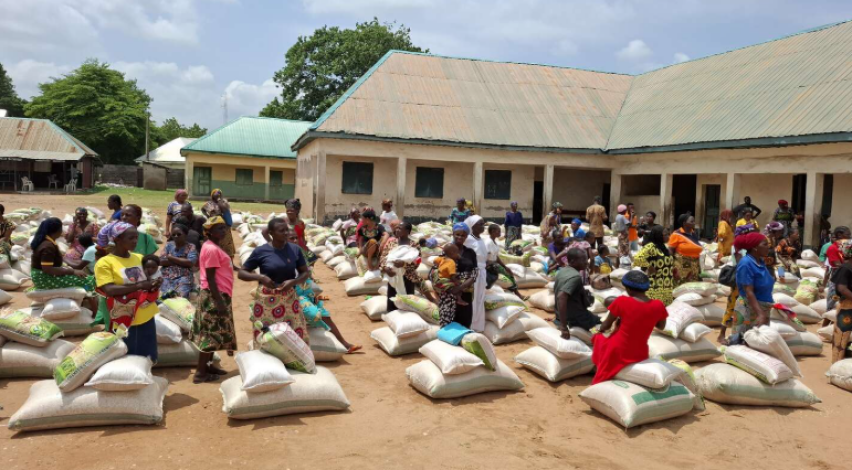
Many displaced families live in poorly resourced camps or with host communities already under economic strain. Repeated attacks and the occupation of abandoned land have made it particularly difficult for displaced residents of Plateau, Benue and southern Kaduna states to return.
The movement of people is also changing the geographical distribution of Christians. Rural Christian communities have declined in parts of Borno, Adamawa, Yobe, Benue, Plateau, southern Kaduna and Nasarawa states as displaced families move to Maiduguri, Yola, Jos, Makurdi, Abuja and other cities.
Urban churches have received displaced congregations, placing additional pressure on their finances, facilities and pastoral ministries. Many of the displaced families previously depended on farming and have no access to their land or an alternative source of income.
The full extent of damage to church buildings cannot be verified because Nigeria has no central database documenting how many have been destroyed or abandoned. Available evidence nevertheless shows widespread disruption of rural congregations in northern Nigeria.
Abductions and ransom payments
The abduction of pastors and other church leaders has placed another financial burden on churches and families, which are frequently pressured to raise ransom payments. Congregations are also left without leaders when pastors are abducted, displaced or killed.
Women-led households are among those facing the greatest hardship. Many women lost access to their farms and livelihoods after their husbands were killed, abducted or forced to flee. Church and humanitarian programmes have responded with vocational training, small-business assistance, trauma care and informal education.
Badoo, a displaced mother of six featured in the brief, received vocational training and sewing equipment through an Open Doors-supported program in Benue state. She subsequently established a business, moved her family out of an internally displaced persons camp and returned her children to school.
The brief acknowledges several steps taken by the Nigerian government. President Bola Tinubu declared a nationwide security emergency in November 2025, ordering additional recruitment of armed forces and police. He also directed that police officers assigned to protect prominent individuals be redeployed to areas facing insecurity.
Authorities have made arrests and secured convictions in several terrorism cases. The brief describes these measures as limited in relation to the scale of the violence and says it remains unclear whether they mark the beginning of sustained accountability.
Nigeria also strengthened its legal framework for protecting displaced people by incorporating the African Union’s Kampala Convention into national law. UNHCR welcomed the legislation in March, saying it provided a stronger basis for preventing displacement, protecting affected communities and pursuing lasting solutions.
Other initiatives include a resettlement partnership in Plateau state and efforts to document displaced communities and address the occupation of their land. These programs remain small compared with the number of people requiring protection and assistance.
Open Doors called on the Nigerian government to strengthen security in affected communities, disarm violent groups, investigate attacks and prosecute those responsible. It also urged the government and international partners to increase humanitarian support, involve local faith leaders in coordinating assistance and establish conditions for displaced people to return voluntarily and safely.
The organization appealed to churches in Nigeria and abroad to support affected communities through prayer, humanitarian assistance, trauma care and advocacy.
Open Doors reiterated the appeal of a displaced Christian interviewed for an earlier study: “The global church needs to know that many people are displaced. The global church needs to pray for the people to be able to return.”