
When U.S. President Donald Trump redesignated Nigeria as a Country of Particular Concern (CPC) in late October 2025, few anticipated the fierce debate that would follow. Trump declared that Christians face systematic persecution in the country and accused the Nigerian government of failing to address the crisis.
Disagreement erupted over whether Islamic militant forces deliberately target Christians or whether the violence stems from broader security failures. Voices joined the debate even after the U.S. threatened action against Nigeria.
While the controversy has intensified over the last three months, accounts from Nigerians on the ground now reveal decades of incidents that have escalated into the brazen violence and kidnappings plaguing parts of the country, particularly in the Middle Belt and northern regions.
A webinar organised by Open Doors International on Dec. 16 examined the claims and counterclaims of deliberate Christian persecution from the lens of people at the frontline. Jabez Musa (pseudonym), a human rights lawyer and seasoned journalist explained, that the conflict in Nigeria, which has come to be known as “persecution of Christians,” started in 1999, when Sharia (Islamic law) took effect in most northern states.
“This [Sharia law] conflicts with Nigeria's constitution, which prohibits state religion. Today, 12 northern states operate under Sharia law," Musa noted.
Open Doors has documented numerous attacks targeting Christians in several countries, including Nigeria. Research from Open Doors on these attacks prompted the U.S. government to focus attention on the country.
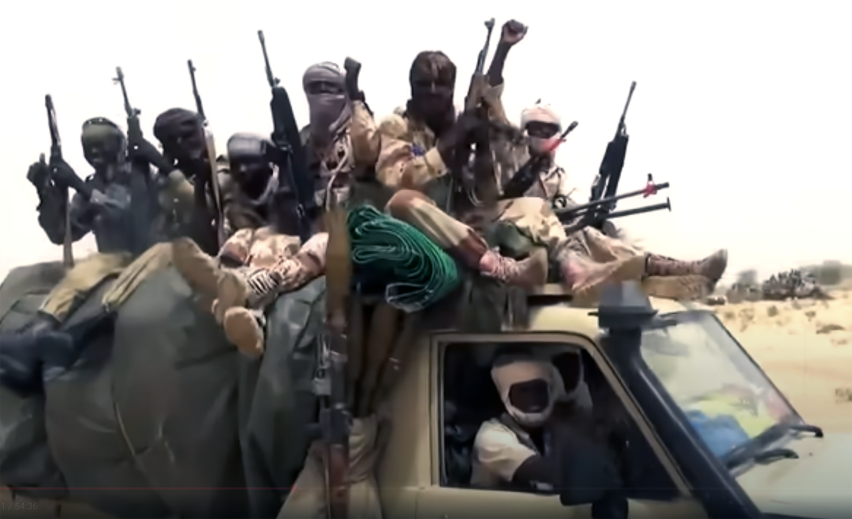
The emergence of Boko Haram in 2009, an Islamic militia front, marked a turning point for the country—violence that would eventually strike close to home for Musa. Since then, numerous violent extremist groups have surfaced, including Fulani militants, the Islamic State-West Africa Province, Lakawara, and Mahmuda.
"Boko Haram amplified the ideology of Sharia and Islam. The group's brutal tactics, bombings, kidnappings, abductions, rape, forced marriages, and killings, have disproportionately affected Christians and other vulnerable groups," Musa emphasized.
Musa explained that Boko Haram rejects anything Western, particularly education. The group views Christianity as Western culture that must be eliminated. The northeast serves as its epicenter, where conservatively over 50,000 Christians have died since the group emerged, with many displaced or forced to flee the region.
"Nigeria has dominated headlines for 20 years or more,” observed Steven Kefas, founder of Middle Belt Times and senior research analyst at the Netherlands-based Observatory for Religious Freedom in Africa (ORFA), an organization that monitors religious violations across Africa. “Most recently, in late October, the conversation gained momentum with the country's redesignation as a Country of Particular Concern."
He contributed his opinion and experience during the webinar after conducting investigative reporting that sparked significant reforms in Nigeria. His experience gathering reports on the ground convinced him that what unfolds in parts of the country represents targeted persecution against Christians.
"As someone who has worked on the ground for at least 15 years, reporting on most of these atrocities, I can state with complete responsibility that Christians face persecution in Nigeria," he affirmed. "For instance, in the Middle Belt, where I've lived my entire life, other faiths exist. But when you examine the pattern of violence in the Middle Belt, only one faith – the Christian faith – faces targeting."
In a July report by ORFA, Kefas highlighted a paradox regarding the visibility of these dangerous groups.
“In 2015, when the Global Terrorism Index (GTI) ranked Armed Fulani militants as the fourth deadliest terror group in the world, Nigeria already grappled with multiple brutal security threats," he wrote. "Yet, nearly a decade later, these same militants have grown exponentially more lethal. They have mysteriously vanished from international terrorism rankings, despite becoming what many security experts now consider Nigeria's deadliest non-state armed group.”
Violence against Christians or communities?
Amid the arguments, some Nigerian government officials deny that attacks target one faith. They claim all religions suffer under what they describe as terrorist attacks.
In November, Minister of Information and National Orientation Alhaji Mohammed Idris dismissed any faith-related dimension to the attacks. The Vanguard news outlet in Nigeria quoted the minister stating that terrorism-related attacks on Nigerians, regardless of faith and political affiliations, have declined steeply during President Bola Tinubu's two years in office.
Steven Kefas disagreed. While evidence shows Muslims also fall victim to attacks, Kefas demonstrated in his ORFA research that Christians suffer disproportionately, even in Muslim-majority areas.
"In our four-year report, we discovered that more Christians died in that local government than Muslims. This occurred in the heart of the Muslim North, where Sharia operates," he stated. "What we found reveals that even where Muslims outnumber Christians in population, the number of Christians killed proves this isn't random violence."
He added that in the 12 Sharia states of the North, the data shows Christians are particularly targeted when considering the population ratios of Christians versus Muslims in those regions.
According to Open Doors' 2024 report "No Road Home," citing data from the ORFA, Christians were three times more likely to be attacked compared to Muslims. Between 2019 and 2023, there were 16,769 Christian deaths compared to 6,235 Muslim deaths.
Conflict not about land or climate change
The webinar panelists also challenged the notion that some attacks result from conflicts between herder communities and farmers. Some have attributed this violence to fights over local resources driven by climate change.
Honourable Terwase Orbunde vehemently rejected that notion, declaring that land ranks lowest among the reasons for attacks. He has served as Kwande Local Government Chairman in Benue State, Nigeria, as a member of the House of Representatives in Abuja, as an advisor to the Senate President for six and a half years, and as Chief of Staff to the former Governor of Benue State, a position that made him a statutory member of the State Security Council.
"In 2018, an attack occurred and 73 people were murdered. Killers struck people in their houses at night. How can you pursue land by killing people in their sleep? An old man of 80 years, a child of five years," Orbunde said.
Orbunde carries his own personal experience of the violence. On April 12, 2024, attackers shot him in the arm while Fulani militia kidnapped his wife and her assistant from their farm just outside Makurdi in Benue State. He firmly asserts this has nothing to do with natural resources.
Kefas offered a different perspective on the debate. He argued that news outlets often frame the attacks as clashes between herdsmen and farmers.
"This has nothing to do with climate change. Climate change affects everyone in the world, not just Nigeria," Kefas stated. "Since 2014, I have interviewed people from over 70 communities. Of the 70 villages attacked in the last 10 years, 55 percent reported they never had problems with the herders. They lived peacefully around our communities for 20, 30, 40, 50 years."
Based on his research, Kefas noted that the other 35 percent of farmers who experience issues with herders complain only about damaged crops, yet the herders attack them.
Most panelists believe that Nigeria's redesignation as a Country of Particular Concern will help other nations understand the dynamics of violence unfolding in the country.
"We welcome, as Christians, that intervention has started, particularly from the U.S.,” Musa said. “We urge other Western nations, particularly in Europe, to join the US or develop their own measures against Nigeria to stop the persecution."








