
A newly released national study by the American Bible Society finds that while Bible reading and engagement in the United States have declined from last year’s levels, openness to the Bible has grown significantly, with 9 million more Americans expressing interest in its message since 2024.
The findings come from the first chapter of the organization’s 2026 State of the Bible report, published April 9, which analyzes Americans’ attitudes toward Scripture, faith practices and church involvement. The report indicates that 28% of U.S. adults now fall into what researchers call the “Movable Middle”—those who are curious about the Bible but not deeply engaged—marking a notable increase over the past two years.
The new data mark a shift from 2025, when researchers reported a surprising rise in Bible engagement—particularly among younger men—prompting discussion of a possible spiritual renewal. In an interview with Christian Daily International last year, ABS Chief Innovation Officer John Farquhar Plake described the trend as unexpected. While that increase has since leveled off, the 2026 findings point instead to a growing pool of Americans who remain open to Scripture but are not yet actively engaged.
Researchers said the expansion of this “Movable Middle” appears to come largely from individuals who were previously disengaged from Scripture, a segment that has declined by 5 million adults since 2024. Meanwhile, the proportion of Americans considered “Scripture Engaged” has returned to about 17%, similar to levels recorded two years ago.
“Though Scripture engagement has come back down, the number of Americans who are interested in and open to the Bible has swelled,” said Plake, who also serves as the editor-in-chief of the report series. He added that many in this “Bible Curious” group indicated a willingness to explore Scripture if guided by others, pointing to what he described as an opportunity for churches and individual believers.
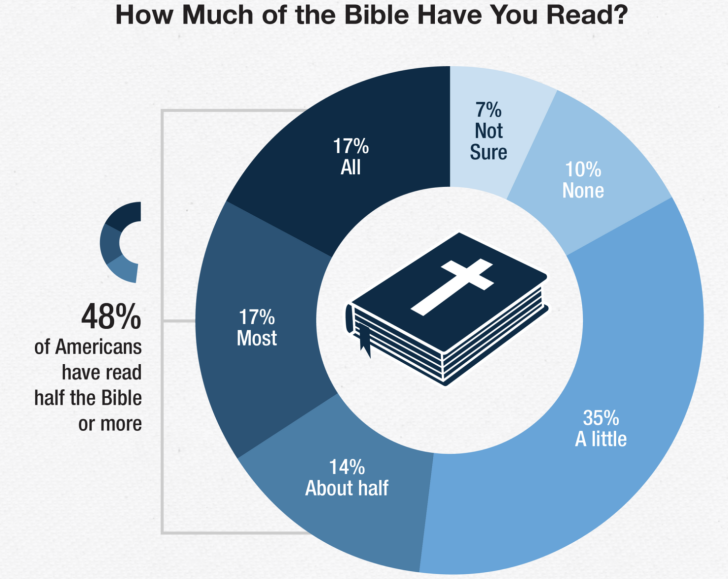
The report also highlights long-term familiarity with the Bible among Americans. About half of respondents said they have read at least half of the Bible, including one-third who reported reading most or all of it. Seventeen percent said they have read the entire Bible, while only 10% reported not reading any of it.
In terms of format, printed Bibles remain the most widely used, with nearly 80% of Bible users reading a physical copy at least monthly. Digital formats are also common, with 62% of users engaging Scripture digitally each month. Among younger generations, including Millennials and Generation Z, digital use slightly exceeds print, though most report using both formats regularly.
The study also found a connection between reading habits and attitudes toward the Bible. Among respondents who said the Bible has transformed their lives, 64% reported reading most or all of it. By contrast, 60% of those who view the Bible as a tool for control or manipulation said they had read little or none of it.
Use of structured reading plans was also associated with higher engagement. Nearly three-quarters of respondents who follow a reading guide or program said they had read most or all of the Bible.
The findings are based on a nationally representative survey of 2,649 U.S. adults conducted between Jan. 8 and Jan. 27, 2026, by NORC at the University of Chicago using its AmeriSpeak panel.
According to Dr. Jennifer Holloran, President and CEO of the American Bible Society, the report is intended to help church leaders respond to shifting patterns in Bible engagement. She said the accompanying resources, including a podcast series and ministry toolkits, are designed to support churches in engaging those who are curious about Scripture.
The 2026 State of the Bible report will be released in seven chapters through November, with upcoming installments expected to address topics including parenting, artificial intelligence and questions of calling and purpose.