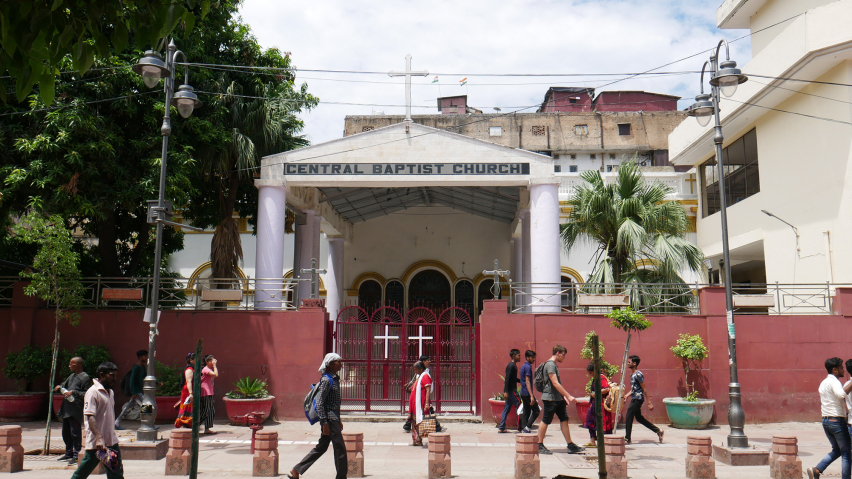
A sweeping foreign funding bill in India could hand the government control over faith-based schools, hospitals and charitable institutions built over decades, church leaders said.
While the bill’s reach includes charitable institutions as a whole, not just faith-based ones, Christian bodies are mobilizing on multiple fronts as parliament prepares to reconvene in July.
The government of India introduced the Foreign Contribution (Regulation) Amendment Bill, 2026 in the Lok Sabha (lower house of parliament) on March 25, describing it as a technical fix to close gaps in how foreign-funded assets are managed when an organization loses its registration.
The Catholic Bishops’ Conference of India (CBCI), the National Council of Churches in India (NCCI), the Evangelical Fellowship of India (EFI), the All India Catholic Union (AICU) and the Kerala Catholic Bishops’ Council (KCBC) responded with immediate and formal objections. Opposition political parties, Muslim organizations, legal experts and civil society groups across the country also protested.
In Parliament, members of the Congress party, Samajwadi Party, the Indian Union Muslim League and several other parties staged protests and demanded the bill’s withdrawal. Congress Member of Parliament (MP) Manish Tewari called it “arbitrary, malafide, and capricious.” Muslim social and educational organizations in Kerala state warned about its implications for minority institutions. Legal experts warned of sweeping executive overreach and the near-total absence of judicial oversight.
Parliamentary Affairs Minister Kiren Rijiju on April 1 announced the bill’s deferral to the next parliamentary session, expected in July. For Christian leaders, the reprieve is welcome but insufficient, as the bill has not been withdrawn.
The Rev. Vijayesh Lal, general secretary of EFI, said Christian institutions have no quarrel with the principle of accountability.
“For us, accountability, transparency, and integrity are not concessions to the State; they are convictions rooted in our faith,” he told Christian Daily International (CDI). “At the same time, in a climate like this, concern must be expressed with credibility and restraint.”
John Dayal, veteran journalist and human rights activist, sees the 2026 amendments in a longer and darker arc.
“The FCRA was born in the emergency of 1975 to silence inconvenient voices,” Dayal told CDI, referring to the period of authoritarian rule under Prime Minister Indira Gandhi during which civil liberties were suspended and political opposition suppressed. “It has been sharpened by successive governments ever since. This bill is not a departure from that history. It is its logical destination. What it proposes is expropriation dressed in the language of accountability.”
The FCRA has regulated how Indian non-governmental organizations receive foreign donations since 1976 and was substantially rewritten in 2010. Organizations wishing to receive foreign funds must register with the Ministry of Home Affairs and renew that registration every five years. About 16,000 organizations are registered and receive approximately 22,000 crore rupees (approximately $2.6 billion) in foreign contributions annually.
Since Prime Minister Narendra Modi’s government came to power in 2014, the cancellations have accelerated sharply. As of March 26, a total of 21,933 organizations had lost their FCRA licenses according to Amnesty International, depriving them of essential funds and often resulting in their closure or severe restrictions on their activities.
The impact on Christian organizations has been disproportionate. According to Ministry of Home Affairs data analyzed in January 2022, more than 72 percent of religious-category NGOs that had lost their FCRA status at that point were aligned with Christian programs, a pattern that church leaders say has continued and intensified since. Hindu-aligned NGOs were a distant second at 11 percent, Muslim-aligned at 8.6 percent.
Among the Christian organizations that have lost licenses in recent years are World Vision India, the Church’s Auxiliary for Social Action, the Church of North India’s Synodical Board of Social Service and the Evangelical Fellowship of India itself.
Minister of State for Home Affairs Nityanand Rai, who introduced the bill in the Lok Sabha, defended it as necessary to prevent the misuse of foreign funding for activities against national security and public order, specifically citing forced religious conversions as a concern.
The bill is not, however, creating something entirely new, according to senior experts on NGO compliance and FCRA law. The vesting of assets in a government authority was already present in Section 15 of the 2010 Act. What the bill does is operationalize and dramatically expand that framework.
It creates a dedicated government-appointed “designated authority” empowered to take provisional control of an organization’s foreign-funded assets whenever its FCRA registration is cancelled, surrendered, or lapses, including in cases of simple non-renewal, or even where registration is merely suspended pending a final decision. If the organization fails to restore its registration within a prescribed period, the assets vest permanently in the designated authority, which may then transfer them to government ministries or local bodies, or sell them with proceeds credited to the Consolidated Fund of India, the government’s main public account.
The Rev. Asir Ebenezer, general secretary of the NCCI, termed the bill “intrinsically unconstitutional.”
“It strips institutions of assets without any judicial process, no court order, none of the due process we extend even to those accused of tax violations,” he told CDI. “An Income Tax Officer is known, gives notice, and is open to tribunal and court challenge. Here, someone sitting somewhere does something to someone else, and an institution built over generations disappears into government hands.”
The lack of due process runs deeper than the asset vesting mechanism itself. In a detailed memorandum submitted to Union Home Minister Amit Shah on March 31 and signed by Anil J. T. Couto, metropolitan archbishop of Delhi and secretary general of the CBCI, the bishops’ conference argued that the bill conflicts with Article 300A of the Constitution, which protects the right to property and requires that any deprivation be just, fair and reasonable, and with Articles 25 and 26, which guarantee freedom of conscience and the right of religious denominations to manage their own institutions. The memorandum also pointed out that organizations are routinely denied renewal without being told what deficiencies exist in their applications or given any opportunity to address them.
“Provisions enabling the Centre to take control of the foreign funds and assets of NGOs upon the expiry of their FCRA registration are undemocratic, unconstitutional, and contrary to the principles of natural justice,” the CBCI stated.
Ebenezer told CDI that the bill criminalizes what is most often innocent administrative failure.
“Most cancellations have arisen not from fraud but from misunderstandings, technical interpretations, petty causes, a beneficiary detail missing from a report, a document not legible when uploaded online,” he said. “The bill treats these with the same severity as deliberate wrongdoing. It criminalizes charitable intent.”
He added that the bill’s ambiguity compounds the injustice.
“How do you determine foreign contribution percentages in a property built from mixed sources?” he said. “The bill does not answer that. It simply gives the government the power to decide, and to take.”
Assets created even partly from foreign contributions vest wholly in the designated authority, and the organization must apply separately to recover any domestically funded portion, a process experts describe as practically unworkable. The bill also broadens the definition of “key functionary” to include anyone exercising control over an organization, making them personally liable for FCRA violations unless they prove due diligence, effectively reversing the presumption of innocence.
Lal said that if the bill passes, the impact at the grassroots level would be swift and direct.
“Many organizations operate with limited resources but deep local trust, running small schools, health initiatives, or community support programs,” he told CDI. “If funds or assets can be taken over even in cases of procedural issues, the consequences can be immediate, and communities that depend on these services are the first to be affected.”
EFI’s own experience gives that warning concrete weight. In December 2023, the Ministry of Home Affairs denied EFI’s FCRA renewal on the stated ground that the organization would “prejudicially” affect “public interest” and “harmony between religious, racial, social, linguistic, regional groups, castes or communities.”
The EFI, India’s evangelical umbrella body and a charter member of the World Evangelical Alliance, has now been without FCRA registration for almost three years.
Lal said the government’s characterization bears no relationship to what EFI actually does.
“It is deeply troubling that the umbrella body of evangelical Christians in India, an organization whose central work includes inter-faith engagement, reconciliation and charitable service to bless this nation, is officially deemed a threat to social harmony,” he said. “We have spent decades building bridges across religious and social divides. To be labeled as working against harmony is not only inaccurate, it turns the truth on its head.”
The timing of both the bill’s introduction and its deferral raised troubling questions. Kerala state, where Christians form nearly 18 percent of the population, was heading into an Assembly election on April 9. The Bharatiya Janata Party (BJP), India’s ruling party, has been actively cultivating Christian voters there for several years. Political observers noted that the bill was put on hold because of backlash from Christian bishops in Kerala, adding that the BJP had used the legislation almost like a pressure tactic, withdrawing it when the electoral costs became visible.
On April 1, hours after the deferral announcement, BJP Kerala president Rajiv Chandrasekhar convened a press conference assuring the public that the government would factor in churches’ concerns before proceeding.
A delegation that included Meghalaya Chief Minister Conrad Sangma, Cardinal Anthony Poola, Archbishop Couto and other senior church leaders On April 8 met Kiren Rijiju, who also holds the portfolio as the Union Minister for Minority Affairs, in New Delhi. He assured them that wider consultations would take place before the bill is finalized.
The AICU was unconvinced. In a press statement, AICU National President Elias Vaz said the deferral offered neither relief nor satisfaction.
“Such a temporary suspension would constitute nothing more than political expediency, revealing a tactical approach rather than a principled adherence to constitutional values,” Vaz said.
Dayal s said the deferral should not be mistaken for a change of direction.
“The government’s deferral was a tactical retreat forced by Kerala’s election arithmetic, not a principled withdrawal,” he told CDI. “The bill remains on the table. Parliament reconvenes in July. The community would be wise to use these months not for reassurance-seeking but for preparation, legal, political and ecumenical. The Constitution guarantees these rights. The courts must be asked to enforce them.”
Faith-based institutions – including Catholic, Protestant and Orthodox denominations – run thousands of schools, hospitals, orphanages and rural development centers across India, particularly in states where the government’s own reach has historically been limited. The NCCI has also warned that assets built using funds from friendly foreign governments could end up administered by the Indian state, potentially exposing India to international legal challenges.
Ebenezer said the human cost must not be lost in the legal debate.
“Who ultimately bears the consequences? The poor,” he told CDI. “The communities that depend on mission schools and hospitals where the state has never reached. Some argue this bill will stop ‘forced conversions.’ To say so is a gross intelligence failure. Conversion will not stop with this bill being passed. What will stop is service to the most vulnerable. In principle the bill has broader implications for all of civil society. But most of the properties that will be taken are those of Christian missions. That must be stated clearly and on record.”
Lal said his most significant concern goes beyond any single amendment.
“Over time, the regulatory framework has moved in a direction that raises wider questions about proportionality, due process and the space available to civil society,” he said. “What may now be required is not further tightening, but a careful review of the framework itself, so that accountability is upheld without constraining legitimate service.”
Senior experts on NGO compliance broadly agree. In their assessment, renewal should become automatic where compliance records are in order; organizations should be given a chance to correct procedural shortcomings before renewal is denied; and assets built by an organization should remain with it regardless of FCRA status, since an organization is a separate legal entity whose right to own property cannot be conditional on holding a government license.
The CBCI, NCCI and EFI have all called for the bill to be referred to a Parliamentary Standing Committee for detailed scrutiny, with the NCCI additionally calling for a Joint Parliamentary Committee review. Legal observers note that constitutional writ petitions – formal challenges before India’s higher courts – remain a live option if the bill passes without significant modification.
The three major Christian bodies are already involved in legal battles on related fronts. The EFI has challenged anti-conversion laws in the high courts of Jharkhand, Himachal Pradesh and Karnataka since 2011. The CBCI filed a Supreme Court petition in December challenging Rajasthan’s anti-conversion law. And in February, the NCCI filed the most sweeping challenge yet, a writ petition before the Supreme Court targeting anti-conversion laws in 12 states simultaneously, on which the court has already issued notices to the central and state governments.
The CBCI memorandum captures where they have drawn the line.
“India’s development has always been a shared partnership between the State and civil society,” it states. “Regulation is necessary, but it must not become excessive control or result in unintended expropriation.”