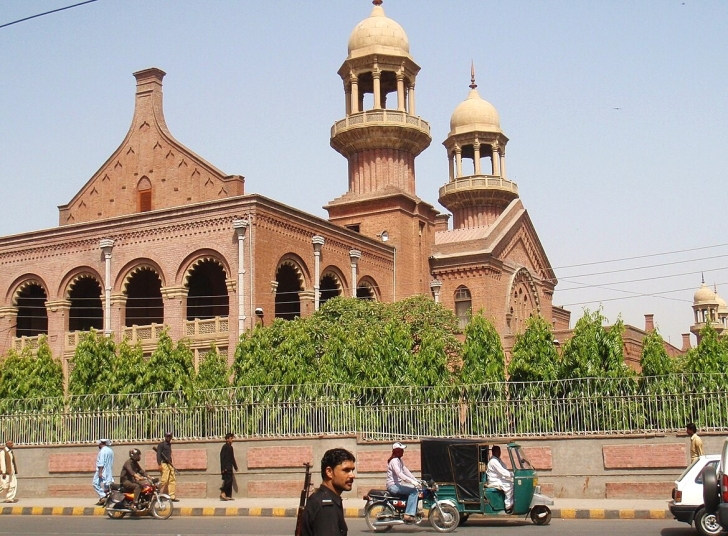
Rights groups, including Christian organizations advocating for persecuted communities, are warning that a recent high court ruling in Pakistan could significantly expand government oversight of civil society and restrict the ability of nonprofits to operate, particularly those reliant on foreign funding.
The decision, issued April 13 by the Lahore High Court, reinstates a federal policy regulating how non-governmental and nonprofit organizations receive and use international financial support—reversing an earlier ruling that had struck down the framework as unconstitutional. Advocates say the move could narrow civic space in a country where rights groups already face mounting pressure.
A two-judge bench comprising Justice Chaudhry Muhammad Iqbal and Justice Syed Ahsan Raza Kazmi allowed three intra-court appeals filed by the federal government, overturning a September 2024 decision by a single-judge bench that had invalidated the policy for lacking legislative authority.
The restored framework, titled the “Policy for Local NGOs/NPOs Receiving Foreign Contributions 2022,” sets out procedures for the receipt, use, monitoring and accountability of foreign funding by civil society organizations, a mechanism critics say grants authorities broad discretionary powers over registration and financial approvals.
Several organizations, including the Human Rights Commission of Pakistan, Dastak, and the Cecil and Iris Chaudhry Foundation (CICF), had challenged the policy before the court. They argued that the cabinet-approved framework lacked legislative backing and violated constitutional guarantees, including freedom of association and the right to conduct lawful business.
On Sept. 5, 2024, Justice Asim Hafeez accepted these arguments, ruling that the federal cabinet could not exercise legislative authority without explicit legal authorization, and struck down the policy. The federal government appealed the decision, maintaining that the policy constituted a lawful exercise of executive authority under the Constitution and had been approved in accordance with the Rules of Business, 1973.
In its judgment, the division bench framed two central questions: whether the federal government has the authority to regulate NGOs receiving foreign contributions, and the extent to which constitutional courts may intervene in executive policymaking.
The court answered both in favor of the government, holding that under Articles 90 and 99 of the Constitution, the federal government is empowered to conduct its affairs and formulate policy. It further noted that the Rules of Business, 1973—framed under constitutional authority—provide a binding framework for executive decision-making.
The bench observed that the policy had been duly approved by the federal cabinet and issued by the Ministry of Economic Affairs, which it described as the competent authority to regulate foreign assistance and related financial flows to NGOs.
Describing the framework as a “comprehensive regulatory instrument,” the court said it establishes criteria for eligibility, registration, monitoring, suspension and accountability of organizations receiving foreign funds.
On judicial review, the bench emphasized that courts should exercise restraint in policy matters unless there is clear evidence of violations of fundamental rights, statutory provisions, constitutional limits or bad faith.
“In the absence of such violations, policy-making remains the exclusive domain of the executive,” the judgment stated, adding that courts cannot substitute their own assessment regarding the “wisdom, suitability or adequacy” of executive policies.
The court also underscored the central role of the federal cabinet in a parliamentary system, stating that it cannot be reduced to a “rubber stamp” and must remain the primary decision-making body of the executive.
Allowing the appeals, the bench set aside the Sept. 2024 judgment and restored the 2022 policy, effectively reviving the regulatory regime governing foreign funding of NGOs and NPOs in Pakistan.
Advocate Saqib Jillani, counsel for the petitioners, expressed disappointment with the ruling, arguing that the policy, like a similar 2013 framework previously struck down by courts, lacks statutory backing and infringes constitutional protections.
“The federal government cannot regulate NGOs through executive policy alone. Such matters require parliamentary legislation under the constitutional scheme of separation of powers,” he said.
He added that the policy imposes unreasonable restrictions on civil society organizations and violates Article 17 of the Constitution, which guarantees freedom of association subject to reasonable limits. He also noted that existing legal frameworks already provide mechanisms to regulate NGOs and foreign funding.
In a statement to Christian Daily International, CICF President Michelle Chaudhry described the restored policy as “overly bureaucratic and discretionary.”
“The NGO policy and MOU procedure with the Economic Affairs Division undermine constitutional guarantees of freedom of association, expression and civic participation,” she said. “Rather than enabling civil society to operate as an independent partner in development and rights-based advocacy, the system is bureaucratic, opaque and discretionary, with extensive controls over registrations, renewals and foreign funding approvals.”
She further alleged that the mechanism is being used to delay, restrict and indirectly pressure organizations, particularly those working on sensitive issues such as human rights, governance accountability and minority rights.
Asher Sarfaraz, chief executive of Christians’ True Spirit (CTS), echoed these concerns, warning that smaller rights organizations may struggle to operate under the restored framework. CTS provides legal aid and shelter to Christian women and minor girls affected by forced conversions and marriages, abductions, and sexual violence.
“CTS is already registered with the Economic Affairs Division, and we have not faced significant hindrance in receiving funds,” he said. “However, several NGOs and ministries operate without EAD approval, and the restored policy may be used to restrict their operational capacity.”
Pakistan ranked eighth on the 2026 World Watch List published by Open Doors, which tracks countries where Christians face severe persecution. The report cited forced conversions, abductions and gaps in legal protections among key concerns.