Senior leaders of Christian ministries serving persecuted believers have begun a new joint prayer initiative, bringing together chief executives from multiple organizations in a move aimed at strengthening cooperation across the sector.
The effort, initiated by International Christian Concern (ICC), was shared during remarks by its president, Shawn Wright, at the recent annual consultation of the Religious Liberty Partnership (RLP).
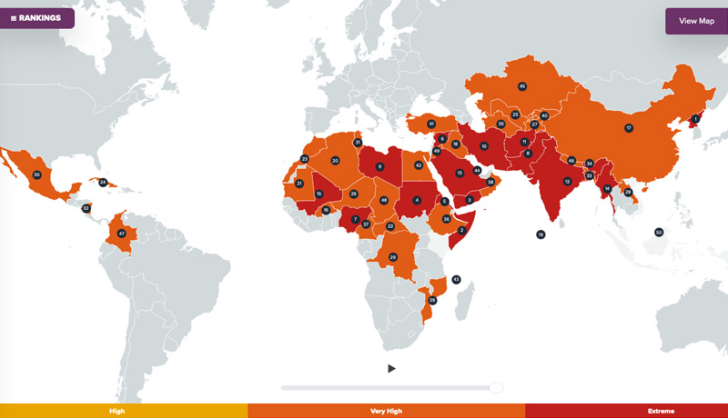
According to participants, nine ministry CEOs met online for prayer on April 27, with plans to continue meeting regularly. The initiative is intended to foster deeper alignment among organizations serving an estimated 388 million Christians facing persecution worldwide.
The announcement came days after the RLP marked its 20th anniversary during its consultation in Prague, held April 20–23. The network, founded in 2006, connects dozens of Christian organizations working in religious freedom advocacy and support for persecuted believers, emphasizing collaboration, information-sharing and coordinated response.
Wright presented the prayer initiative as one expression of that broader collaborative ethos, encouraging leaders to move beyond institutional silos.
“I believe God gave me a burden for ICC to holistically serve 10 million persecuted Christians,” Wright said, describing a period of prayer and discernment early in his tenure. Reflecting on that figure, he said it led him to consider the wider global need.
“What about all the other persecuted Christians? How can we choose not to help them?” he said.
While many organizations are already engaged in what Wright described as “God-ordained, meaningful projects,” he noted that efforts can at times overlap or lack strategic coordination.
The joint prayer gatherings, he said, are intended as a starting point—bringing leaders together spiritually before exploring practical collaboration.
“To first pray together, then discuss and partner on initiatives from the global field to Capitol Hill and everywhere in between,” Wright said.
The initiative builds on existing cooperation within the RLP, which was established to encourage trust and partnership among ministries working in complex and often sensitive environments.
Over the past two decades, the network has facilitated joint advocacy efforts, shared research and coordinated responses to crises affecting Christian communities. Its annual consultations provide a forum for leaders to exchange information and identify opportunities for collaboration.
The new CEO-level prayer meetings, Wright said, represent a further step in that direction, with a particular emphasis on unity at the leadership level.
“Because Jesus did not envision a divided effort,” he said. “He makes His expectation crystal clear … ‘that all of them may be one.’ Unity is not optional.”
“Our unity is not just about effectiveness — it is about our witness,” Wright added. “When we are aligned, the world believes. When we are divided, the message is damaged.”
As the RLP enters its third decade, the emphasis on unity—expressed through both longstanding partnerships and new initiatives such as the CEO prayer gatherings—was highlighted as a continuing priority for Christian organizations seeking to respond to the global realities of religious persecution.