I was born into a land where the language of war is more familiar than the language of peace. In the Holy Land—where the message of peace first echoed through the words of Christ—we continue to live under the shadow of conflict.
War has become normal in our region—but it should never be acceptable.
For most of my life, I have witnessed the relentless rhythm of violence: it rises, it devastates, and it returns again, each time leaving deeper wounds in our people and in our future. War has become normal in our region—but it should never be acceptable.
As a father, I find myself asking what kind of world my children will inherit. Will they grow up knowing peace, or will they carry the same fears that have shaped my generation? As a pastor, I look into the eyes of my congregation and see both deep faith and quiet anxiety.
Young men and women... dream not merely of survival, but of dignity, purpose, and a future beyond war.
And as the president of a Christian college, I carry the hopes of young men and women who dream not merely of survival, but of dignity, purpose, and a future beyond war.
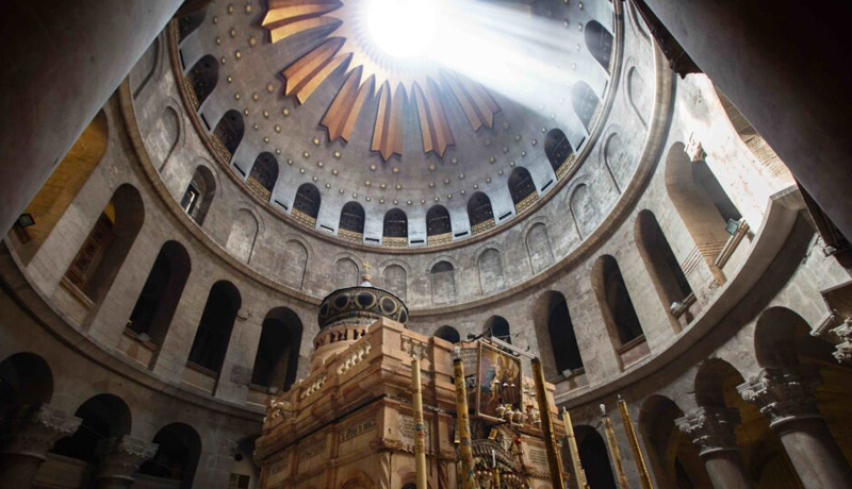
Standing in this place—sacred to billions, yet scarred by conflict—I find myself living between two realities: the pain I have witnessed all my life, and the vision of peace that God has placed in my heart. I refuse to accept that violence is our destiny. We were not created for war. We were created for peace.
War... is a deeply spiritual crisis that wounds the very fabric of God’s creation.
In times like these, when the sound of war fills our news, our streets, and even our prayers, we are compelled to ask: what is God’s heart in the midst of such suffering? As pastors, leaders, and followers of Christ, we cannot remain silent. War is not merely a political reality; it is a deeply spiritual crisis that wounds the very fabric of God’s creation.
War does not distinguish between the innocent and the guilty. It does not ask who is righteous and who is not. It does not spare children, nor does it protect the elderly. It does not honor homes, nor does it respect sacred spaces.
In our region, we have witnessed the devastating truth: churches in Gaza damaged, mosques struck, and even synagogues not immune to violence. War consumes everything in its path, leaving behind not only rubble, but trauma, bitterness, and generations shaped by pain.
Today, countless hearts are broken. Families are torn apart.
The psalmist declares, “The Lord is close to the brokenhearted and saves those who are crushed in spirit” (Psalm 34:18). Today, countless hearts are broken. Families are torn apart. Communities are living under fear. And yet, even in this darkness, God remains near. He sees every tear, hears every cry, and holds every life in His hands.
But we must also be honest: the consequences of war go far beyond the immediate destruction. War reshapes the future. It robs children of their innocence and replaces it with fear. It cripples economies, fractures societies, and plants seeds of hatred that can last for generations.
As the prophet Isaiah reminds us, “Woe to those who call evil good and good evil” (Isaiah 5:20). When violence becomes normalized, when destruction is justified, we lose our moral clarity and drift further from God’s vision for his world.
God’s desire has always been peace.
God’s desire has always been peace. From the beginning, His intention was for humanity to live in harmony—with him, with one another, and with creation. The Hebrew word shalom is not merely the absence of war; it is the presence of wholeness, justice, and flourishing. This is the vision of God’s Kingdom.
The prophet Micah paints this picture beautifully: “They will beat their swords into plowshares and their spears into pruning hooks. Nation will not take up sword against nation, nor will they train for war anymore” (Micah 4:3). This is not a distant dream; it is God’s declared future. And as his people, we are called to live as witnesses of that future in the present.
Jesus Himself affirms this calling in the Sermon on the Mount: “Blessed are the peacemakers, for they will be called children of God” (Matthew 5:9). Notice that Jesus does not say “peace-lovers” but peacemakers. This is an active calling that requires courage, humility, and sacrifice.
The gospel calls us to a higher standard.
To be a peacemaker in a time of war is not easy. It is far simpler to take sides, justify violence, or remain silent. But the gospel calls us to a higher standard.
The Apostle Paul urges us, “If it is possible, as far as it depends on you, live at peace with everyone” (Romans 12:18). This does not mean ignoring injustice, but confronting it without surrendering to hatred.
As Christians in this land, we are uniquely positioned—and uniquely challenged—to embody this message. We live in the tension of conflict, yet we are called to be ambassadors of reconciliation. “God… reconciled us to Himself through Christ and gave us the ministry of reconciliation” (2 Corinthians 5:18).
Therefore, we must take a clear and faithful stand.
- We stand against the dehumanization that war brings. Every person—regardless of nationality, religion, or background—is created in the image of God.
- We stand against the destruction of life and the desecration of sacred spaces. Places of worship—churches, mosques, and synagogues—should be sanctuaries of peace, not targets of violence.
- We stand against the normalization of war as a solution. War may promise security, but it delivers suffering.
- And we stand for peace—not a fragile or superficial peace, but a just and lasting peace rooted in truth, dignity, and mutual recognition.
But how do we respond?
- First, we pray. We pray for peace, for protection, for comfort, and for leaders—that God would grant them wisdom and courage to choose peace. As Scripture commands, “I urge… that prayers be made for all people—for kings and all those in authority” (1 Timothy 2:1–2).
- Second, we speak. Silence in the face of suffering is not neutrality; it is complicity.
- Third, we live differently—choosing forgiveness over revenge, dialogue over division, and love over fear.
- Finally, we hold on to hope.
Our hope is... in the God who is making all things new.
Our hope is not in political systems, but in the God who is making all things new. “He will wipe every tear from their eyes. There will be no more death or mourning or crying or pain” (Revelation 21:4).
Until that day, we remain faithful.
In a world torn by war, may we be known as people of peace.
Rev. Dr. Jack Sara is the President of Bethlehem Bible College. Born and raised in the Old City of Jerusalem, Jack studied at Bethlehem Bible College after committing his life to Christ and his teachings. Jack is an ordained minister with Evangelical Alliance Church in the Holy Land where he still maintains an overseeing role with the leadership of the churches. He is the General Secretary for the Middle East & North Africa Evangelical Alliance and works extensively in the areas of peace & reconciliation.