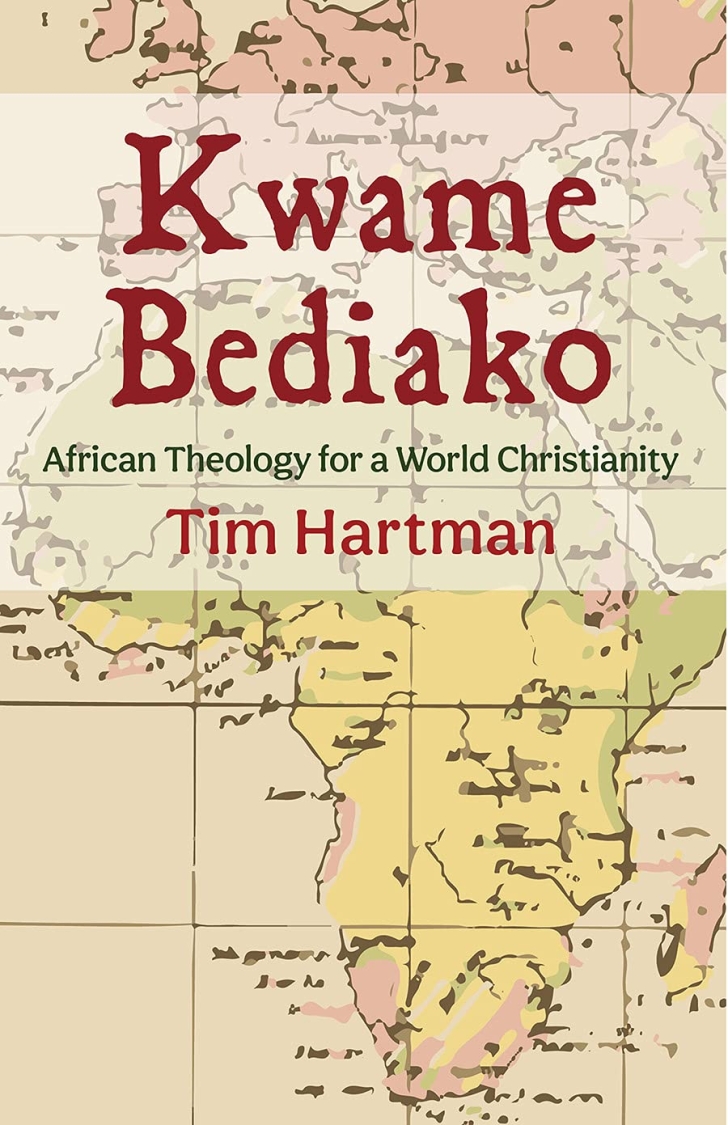
Western thought has dominated Christian theology for centuries, making it difficult to distinguish between theology and its cultural baggage. In his book Kwame Bediako: African Theology for a World Christianity, Hartman summarises the work of Ghanaian theologian Kwame Bediako, drawing on his three books and more than 75 articles and addressing that cultural baggage from a contemporary African perspective. As he notes, ‘Bediako asks what it means to be African and Christian after the shortcomings of colonialism.’
Hartman suggests that ‘other Christians can learn from Bediako’s belief that African Christianity is a laboratory for theological innovation that can benefit the whole world.’
‘Bediako believed that Western culture had corrupted the Christian faith. As soon as Emperor Constantine yoked political power with the Christian faith in the fourth century, Christianity became poisoned.’ ‘His theology presents an alternative non-Western foundation for theological reflection.’
‘Reading Bediako may help Western Christians to identify, name and work to lessen the harmful effects of the cultural blinkers they unconsciously wear.’ ‘For Christians in the non-Western world, reading Bediako can affirm the value of their insights and perspectives.’
Well trained in Western thought, Bediako was suddenly and unexpectedly converted to Christ in France before returning to his native Ghana. ‘In becoming Christian, I was becoming African again.’ Hartman charts the influences on Bediako’s thought, with insights into incarnation, culture, Bible translation, relevance, spiritual and religious heritage, ancestors, the nature of the atonement, and, repeatedly, identity.
Langham Publishing and Hartman have done the world church a service by bringing Kwame Bediako’s provocative thinking to a wider audience, challenging how Christians read and expound Scripture (of which Bediako had a very high view). I would love to hear a group of Majority World theologians debating Bediako’s thought, which is not without its critics (whom Hartman faithfully records), particularly the fifth chapter’s controversial material.
Personally, I hope that this book encourages fresh debate about all the issues it covers – and fresh collaboration between Majority World theologians to develop new theological insights for the world church in the mid-twenty-first century (see Chapters 6 and 7).
Kwame Bediako: African Theology for a World Christianity, Tim Hartman, Langham Partnership UK and Fortress Press USA & Canada (2021), ISBN 978-1-83973-073-3 (print), ISBN 978-1-83973-489-2 (ePub), ISBN 978-1-83973-490-8 (Mob), ISBN 978-1-83973—491-5 (PDF)