

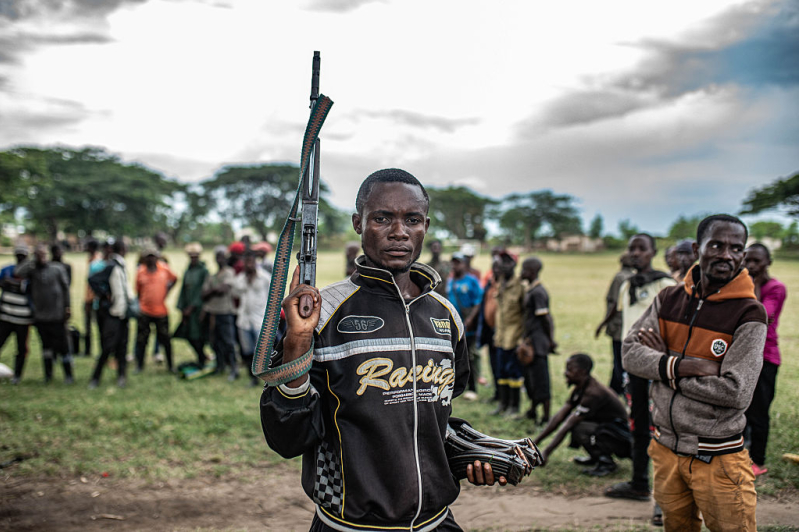
Tens of thousands of Congolese civilians have crossed into Burundi in recent weeks, fleeing a violent offensive by M23 rebels in eastern Democratic Republic of Congo that has overwhelmed border communities and prompted churches to appeal for urgent international support.
According to UNHCR, more than 88,000 people have crossed from eastern DRC into Burundi since Dec. 5 amid the ongoing M23 offensive in South Kivu province. Overcrowded camps, long lines for food and water, and outbreaks of disease are among the most urgent challenges facing both refugees and host communities, the agency reported.
The crisis intensified after M23 seized the strategic port city of Uvira on Dec. 10, an action the United States described as a violation of the Washington Accords signed just days earlier by President Trump and regional leaders, according to the U.S. Department of State.
The leadership of the Alliance of Evangelicals in Burundi described the unfolding situation as more than a humanitarian emergency. Edmund Gakiza, general secretary of the Alliance, told Christian Daily International the influx represents a “moral and spiritual” crisis requiring a response grounded in the theology of the “one body” of Christ. “This is no longer a situation the state or humanitarian agencies can manage alone,” he said. “Churches have become the first point of contact for many families arriving with nothing but fear and exhaustion.”
The fighting has continued despite intensive diplomatic efforts. In early December, regional leaders met in the United States to sign the Washington Accords, a U.S.-brokered peace agreement aimed at de-escalating tensions between Congolese President Félix Tshisekedi and Rwandan President Paul Kagame. Implementation faltered almost immediately following the M23 takeover of Uvira.
U.S. Secretary of State Marco Rubio publicly criticized actions he said undercut the agreement, signaling rising frustration in Washington. In a post on social media platform X, Rubio wrote: “Rwanda’s actions in eastern DRC are a clear violation of the Washington Accords signed by President Trump, and the United States will take action to ensure promises made to the President are kept.”
Gakiza said churches are struggling to meet growing needs as violence and displacement persist. “We understand this crisis as the visible consequence of prolonged violence, insecurity, and broken governance,” he said. “We are doing everything we can to help families who arrive with nothing. Local congregations are providing meals, blankets, and basic medical care, but the needs are far greater than what we can meet.”
He highlighted worsening conditions at transit and reception sites such as Ndava and Musenyi, pointing to rising cases of malaria, cholera and measles. “Children are especially vulnerable, and families are arriving in shock and trauma,” Gakiza added. Citing field assessments, he said approximately 83% of the refugees — the vast majority women and children — are suffering from severe emotional distress.
The response reached a critical stage on Dec. 18, 2025, when Burundian Interior Minister Leonidas Ndaruzaniye launched a comprehensive emergency response plan. An interagency flash appeal was issued to raise $33.2 million to support 90,000 new arrivals over a four-month period. At the same time, the ministry ordered refugees living in private housing to return to government-monitored transit sites to address security concerns and a worsening cholera outbreak at the Gatumba transit camp.
Medical organizations report deteriorating conditions in reception areas. Doctors Without Borders said on Dec. 23 that the Ndava site is housing families in mud-soaked tents, with 42% of malaria tests returning positive.
“We call the global church for prayer, solidarity, and practical support to these victims,” Gakiza appealed.


