At least 84 cases of abduction and forced religious conversion of minority girls and women were reported across Pakistan in the first 10 months of 2026, including 49 Christian victims, according to a new report.
The Centre for Social Justice (CSJ), which monitors violations against religious minorities, documented 49 Christian and 35 Hindu victims in Punjab, Sindh and Balochistan provinces between January and October, according to an update issued on Nov. 3.
The findings point to a significant shift from previous years, when Sindh consistently accounted for the overwhelming majority of reported cases. Punjab recorded 47 cases during the 10-month period, compared with 36 in Sindh and one in Balochistan.
Of the 47 cases in Punjab, 46 involved Christian girls and women and one involved a Hindu. In Sindh, 33 of the 36 cases involved Hindu victims and three involved Christians. The greater number of cases in Punjab compared with Sindh marks a reversal of the trend documented over the previous five years, when Sindh accounted for 70 percent of reported abductions and forced conversions, compared with 28 percent in Punjab.
The report found that 37 of the 84 victims, or 44 percent, were between 14 and 17 years old, while six, or 7.1 percent, were younger than 14. Another 31 victims were adults, and the ages of 10 could not be established. At least 43 victims were therefore younger than 18, highlighting the vulnerability of minority children to abduction, forced conversion and underage marriage.
Lahore District topped the list of districts with 18 reported cases, followed by Sanghar District in Sindh with seven, Faisalabad District with six and Tando Allahyar District with five. Hyderabad District and Mirpur Khas District each recorded four cases, while Sahiwal, Toba Tek Singh, Umerkot and Tharparkar districts reported three each.
The CSJ documented eight additional cases in Punjab outside the districts listed among the top 10, including two each in Kasur, Multan, Rahim Yar Khan and Sialkot districts. Sindh Province recorded two further cases in Matiari District, specifically in Hala and Saeedabad.
The latest figures add to a persistent pattern of violations against Christian and Hindu girls and women, who are frequently reported to have been abducted or coerced into changing their religion and subsequently married to Muslim men.
Between 2021 and 2025, the CSJ documented 515 cases of abduction and forced conversion of minority girls and women across Pakistan.
During that time period, Sindh accounted for 363 cases, or 70 percent of the total, while Punjab recorded 146, representing 28 percent. Balochistan accounted for four cases and Khyber Pakhtunkhwa two.
Annual figures showed 78 cases in 2021, rising to 124 in 2022 and 136 in 2023, before declining to 83 in 2024 and increasing to 94 in 2025. Mirpur Khas in Sindh recorded the highest number over the five-year period, with 55 cases, followed by Umerkot and Lahore, each with 39. Sanghar recorded 34, Ghotki 32, and Badin and Faisalabad 29 each.
Despite repeated concerns raised by human rights organizations and minority rights advocates, the CSJ said law enforcement agencies and courts had responded sluggishly in most cases.
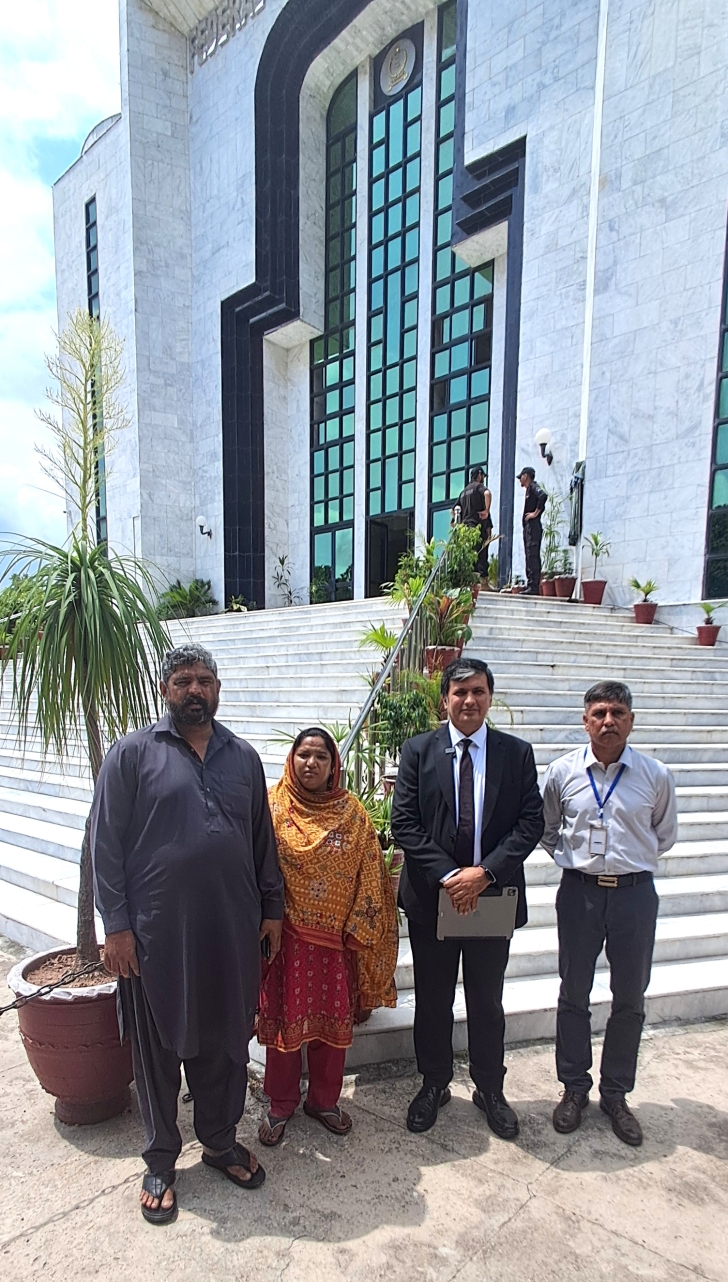
The report also highlighted the case of Maria Shahbaz, a 13-year-old Christian girl from Lahore who was allegedly abducted, forcibly converted to Islam and married to her abductor. Pakistani courts have upheld the marriage despite her minor status.
An decision by the Federal Constitutional Court (FCC) in March upholding her marriage to the alleged kidnapper sparked widespread criticism and renewed concerns about judicial protection for underage girls from religious minorities.
The FCC subsequently admitted a review petition challenging the decision, and a larger bench began hearings. The CSJ expressed concern that the proceedings could take considerable time to conclude.
The report also cited the case of Rita, a 21-year-old Hindu woman from Sanghar District who was allegedly lured into a relationship and persuaded to convert to Islam by a man from Gujranwala, Punjab. In August, a judicial magistrate rejected a police request to transfer Rita to a shelter home and ordered that she be returned to her family’s custody.
According to the report, the Muslim accused in her case had previously married a Christian woman after converting her to Islam, raising concerns about a possible pattern of organized exploitation involving women from religious minorities.
More recently, the reported conversions of two Hindu girls, Bindiya Kumari from Sibi District in Balochistan and Kalpana Meghwar from Umerkot in Sindh, have raised further concerns about alleged abduction, forced conversion and underage marriage.
Both girls were reportedly converted at Bharchundi Sharif shrine in Sindh, allegedly with the involvement of Islamist religious figure Mian Mithu. Bindiya is 14, while Kalpana’s school records indicate that she is 13. The Sindh High Court have reportedly directed police to present Bindiya before it on Nov. 23.
Concerns remain over the girls’ whereabouts, their access to their families and the status of legal proceedings, the report said.
The CSJ noted that national human rights institutions, including the National Commission for Human Rights, National Commission on the Rights of the Child and National Commission on the Status of Women, had repeatedly drawn the government’s attention to the issue. However, despite recognition of the problem by these institutions, preventive and protective measures had been delayed, allowing violations to continue.
The CSJ called on parliament to take up a draft bill on the regulation of religious conversions submitted to the Ministry of Human Rights by the National Commission on the Rights of the Child, in consultation with the CSJ, in October. It also urged the government to take administrative measures to identify and apprehend those responsible for exploiting minority girls and called for a public awareness campaign to establish safeguards against the misuse of religion and legal processes.
The findings underscore the continuing vulnerability of Christian and Hindu girls in Pakistan, particularly minors whose cases often raise serious questions about their age, consent and the circumstances surrounding their religious conversion and marriage.
The CSJ said its figures were based on reported and verified cases and remained subject to updates.