
Chad has formally given legal recognition to a national interfaith platform that brings together Muslim, Catholic and Protestant leaders, marking a significant step in the country's efforts to strengthen peace and social cohesion at a time of political transition and growing regional instability.
The statute and internal regulations establishing the platform were signed June 25 during a ceremony in N'Djamena led by Deputy Prime Minister Limane Mahamat. The new framework unites the National Council for Islamic Affairs of Chad, the Catholic Bishops' Conference of Chad and the Alliance of Evangelical Churches and Missions in Chad under a legally recognized body that will coordinate initiatives promoting dialogue, peaceful coexistence and national unity.
Until now, cooperation among the country's major religious groups had been largely informal. Government officials said the new legal status gives the platform the authority to operate like other recognized associations and receive support under Chadian law.
“There was no appropriate framework that allowed religious leaders to carry out their shared mission effectively. Thanks to the platform's statute and internal regulations, it can now operate like any legally recognized association and benefit from the support provided by law,” Mahamat said during the signing ceremony.
The move comes as Chad seeks to reinforce national institutions following the end of its political transition while confronting security threats and humanitarian pressures that continue to test the country's social fabric.
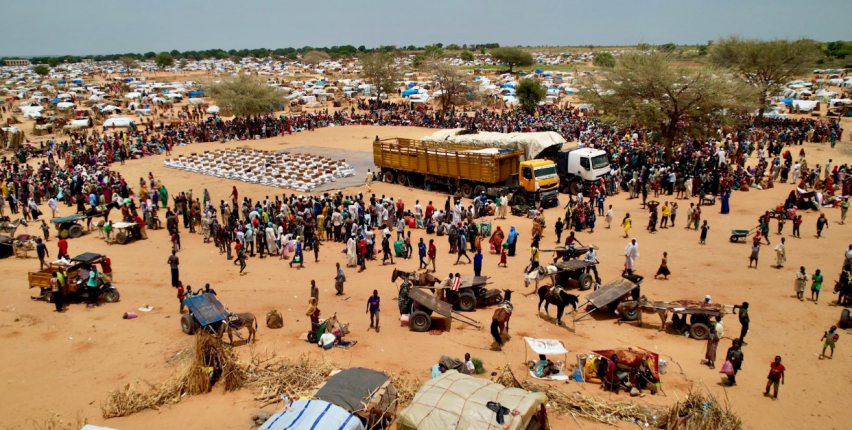
Religious organizations have played an important role in providing humanitarian assistance and mediating tensions within affected communities, exacerbated by the civil war in neighboring Sudan which has driven hundreds of thousands of refugees into eastern Chad. At the same time, insecurity linked to extremist groups remains a challenge around the Lake Chad Basin.
Archbishop Edmond Djitangar Goetbé of N'Djamena, one of the signatories, said the platform reflects a shared commitment to building the country's future.
“We will continue to work so that everyone can contribute to human development and to achieving our common goal of building a united, prosperous Chad that looks confidently to the future,” Djitangar said.
The initiative also seeks to prevent religion from being used as a source of division in a country where Muslims and Christians have long lived alongside one another. Chad's religious diversity has generally been accompanied by cooperation among faith communities, despite periodic political and security crises that have affected the wider region.
Shared responsibility
Tao Élysée, secretary of the Alliance of Evangelical Churches and Missions in Chad, said the platform recognizes that religious communities have a responsibility that extends beyond their own congregations.
“There is no benefit in allowing religions to become a cause of mutual rejection. We certainly have our own faith and our own beliefs, but we also share the responsibility of building our nation together,” Élysée said. “We live in a secular state, but one founded on cooperative secularism, in which God must have his place in society. Without this spiritual dimension, our society would lose an essential part of its meaning.”
Sheikh Abdadayim Abdallah Ousman, president of the National Council for Islamic Affairs of Chad, said the three faith communities have worked together for years to encourage peaceful coexistence and mutual respect.
“Together with our Catholic and Protestant brothers and sisters, we have been working for several years to promote peaceful coexistence and mutual respect. We support the State's efforts to strengthen national unity and to make our fellow citizens aware that, above all, we are Chadians, called to live together,” he said.
President Mahamat Idriss Déby Itno, through remarks conveyed during the ceremony, praised the contribution made by the country's religious communities in promoting peace and social cohesion. Government officials described the platform as a practical mechanism that will enable faith leaders to coordinate conflict prevention efforts, strengthen dialogue among communities and work more closely with public institutions.
Formal recognition is expected to strengthen its ability to respond to future national challenges while preserving the tradition of interfaith collaboration that has distinguished Chad despite periods of political uncertainty and regional conflict.








