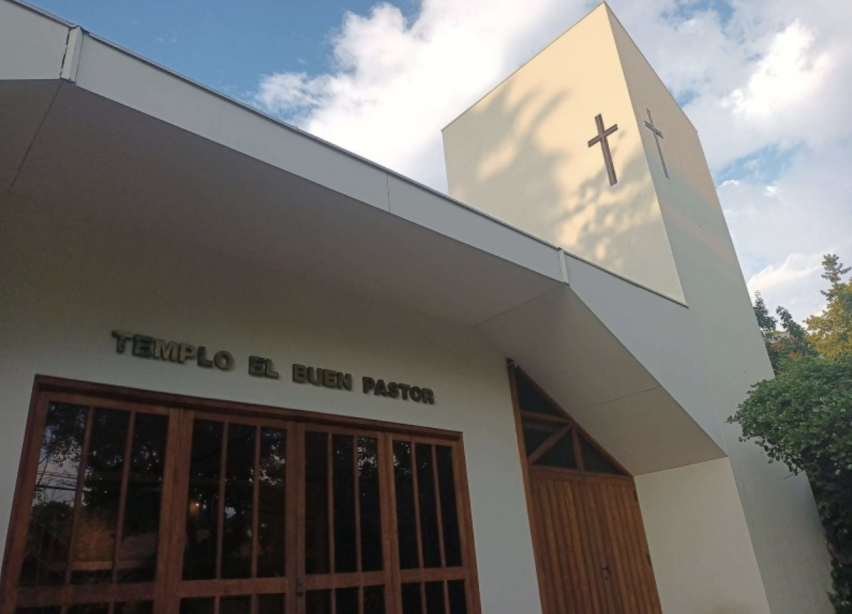
The government of Chile has launched a coordination effort across multiple ministries to advance the legal regularization of churches located on state-owned and privately owned land — a situation affecting numerous evangelical congregations that, in some cases, has remained unresolved for decades.
The initiative was addressed at a meeting led by Minister of National Assets Catalina Parot, together with the Director of the National Office of Religious Affairs (ONAR), Christian Jara, representatives of various evangelical churches, and members of Congress Benjamín Lorca and Macarena Santelices.
During the meeting, the authorities heard the concerns of Christian leaders and reviewed different alternatives for resolving the situation of churches operating on state-owned or privately owned land. Among the options examined were free-use concessions, property transfers, and title deed regularization processes, depending on the legal circumstances of each case.
In statements to Diario Cristiano, Christian Daily International's Spanish edition, Congressman Benjamín Lorca explained that the meeting is part of a broader coordination effort driven by the government.
"There is a willingness on the part of the government to support the work of faith communities and evangelical churches, because there is recognition of the important role they play from a spiritual perspective, but also a social and cultural one," he stated.
According to the congressman, the effort does not involve only the Ministry of National Assets. Also participating are the General Secretariat of the Presidency — through the National Office of Religious Affairs — as well as the Ministry of Housing and Urban Planning and the Ministry of Finance.
"This meeting is part of a series of inter-ministerial coordination meetings. The idea is to provide answers, streamline processes, and create all the necessary channels so that churches and faith communities can carry out their work with greater legal certainty and with the facilities needed to continue serving their communities," he said.
Lorca indicated that the government has begun a national survey to determine how many churches require a legal resolution.
"There is no clear number yet, because a national survey is currently being conducted. But it could be hundreds of churches that might benefit, considering the various legal situations that exist," he explained.
The congressman added that one of the main objectives is to recognize and strengthen the contribution that churches make throughout the country.
"The important thing is to emphasize that there is a willingness to move forward, to support, and to recognize the comprehensive work carried out by faith communities and evangelical churches in Chile," he stated.
Diario Cristiano attempted to obtain a response from representatives of the Expanded Table of Evangelical Entities of Chile (Mesa Ampliada de Entidades Evangélicas de Chile). However, at press time it was not possible to obtain a reply.
Different Cases
During the meeting, the authorities and church representatives reviewed different situations affecting congregations throughout the country.
There are churches built on state-owned land granted under loan-for-use agreements (comodato), others located in properties administered by various public agencies, and also churches that need to regularize title deeds on privately owned properties.
For this reason, the Ministry explained that each case will be evaluated individually and may be resolved through free-use concessions, transfers, or regularization processes, as appropriate.
The Ministry of National Assets currently records 304 free-use concessions granted to various churches across the country — a mechanism by which religious organizations can use state-owned properties to carry out their activities without the state losing ownership of those assets.
A Recognized Contribution
During the meeting, representatives of various denominations expressed appreciation for the government's willingness to advance on a matter affecting numerous congregations.
Bishop Israel Aravena Reyes of the Pentecostal Church of Chile (IPECHI) noted that his denomination has approximately 500 churches in the country and that between 20 and 30 currently operate under a loan-for-use arrangement, expressing his expectation of moving toward a definitive solution.
For her part, Minister Catalina Parot stated that the purpose of this effort is to provide greater legal certainty to institutions that, in addition to carrying out religious activities, fulfill an important social role in their communities.
Although the first meeting was held with representatives of evangelical churches, the Ministry indicated that the regularization process will be carried out in coordination with the National Office of Religious Affairs and will seek to address the various situations presented by religious entities in accordance with the current legal framework.
Originally published by Diario Cristiano, Christian Daily International's Spanish edition.