
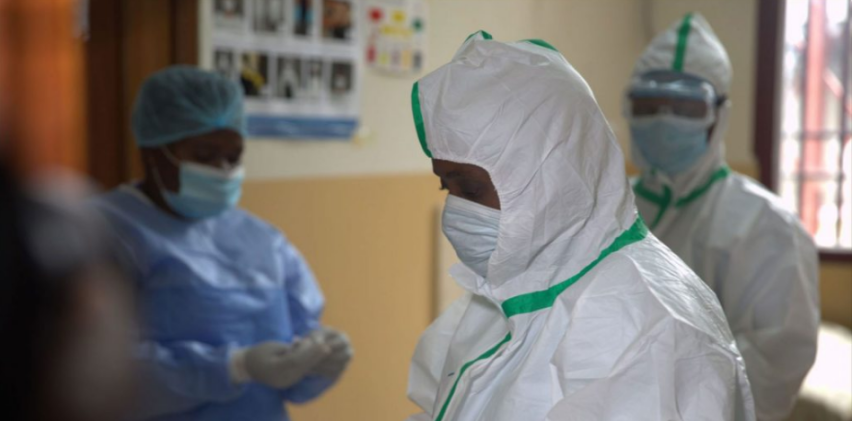
Christian health organisations are among the few entities forming a last line of defence in Eastern DR Congo, where a rare and deadly strain of Ebola has caused global concern. On May 17, the World Health Organisation declared the Ebola outbreak “a public health emergency of international concern” following 246 suspected cases and 80 deaths.
The outbreak, first identified earlier this month in Ituri Province in northeastern Congo, involves the Bundibugyo strain of Ebola, a less common variant for which there is no approved vaccine or specific treatment, according to the WHO.
Health officials said the outbreak has already spread across several health zones in Ituri and crossed into Uganda, raising fears of wider regional transmission. Church-run hospitals and mission clinics remain among the few functioning healthcare institutions in parts of eastern Congo where conflict has damaged state infrastructure and limited access to medical care.
The BBC reported that an American missionary physician working in the region, Dr. Peter Stafford, tested positive for the virus on May 19 while serving at Nyankunde Hospital near Bunia in eastern Congo. He was evacuated to Germany for treatment. Stafford is affiliated with Serge, a Presbyterian mission organization involved in medical and humanitarian work.
Serge confirmed the infection in a public statement and said several Americans who may have been exposed were being evacuated from the region. But Serge says the story extends far beyond one missionary doctor.
“Our medical teams labor in some of the most demanding settings in the world, serving vulnerable communities who have limited access to healthcare,” said Joel Hylton, Serge’s Senior Director of Mission. “We are profoundly grateful for their dedication to the people of the DRC, and we deeply lament the hardship they are enduring under this current threat. Our concern extends equally to our Congolese colleagues and friends in the region who face these same risks.”
Christian advocacy organizations, including International Christian Concern, say Christian communities in parts of eastern Congo have faced repeated attacks from militants linked to the Islamic State group.
Nyankunde Hospital, where Stafford served, has its own history linked to the violence in eastern Congo. The hospital was heavily affected during ethnic fighting in Ituri in the early 2000s, when militias attacked communities and forced many aid workers and medical staff to flee.
The worsening Ebola crisis is now adding another layer of instability to communities already struggling with displacement, insecurity and weak healthcare systems.
Health emergency against rising insecurity
During previous Ebola outbreaks in eastern Congo, attacks on health workers and treatment centers disrupted response efforts and fueled distrust among local communities.
WHO officials warned that insecurity remains one of the biggest obstacles to stopping the current outbreak.
“The combination of conflict, population movement and fragile health systems creates an extremely difficult environment for outbreak control,” the agency said in its emergency declaration.
The Bundibugyo strain is considered particularly problematic as vaccines developed during previous Ebola outbreaks target the more common Zaire strain.
Scientists say supportive treatment, rapid isolation and contact tracing remain the primary tools available to slow transmission.
Uganda has already confirmed cases connected to the outbreak, prompting heightened screening and public health measures along regional borders.
Some public religious gatherings have also been affected. Local media and church sources in Uganda reported that concerns over Ebola transmission contributed to the postponement of preparations linked to the country’s annual Martyrs’ Day commemorations, one of East Africa’s largest Christian pilgrimage events.
The outbreak has also renewed concerns about the state of humanitarian infrastructure in eastern Congo, where years of conflict have strained healthcare systems and displaced millions of people.
Former U.S. Centers for Disease Control and Prevention Director Dr. Thomas Frieden told Reuters that reductions in global health coordination and outbreak preparedness could weaken emergency response efforts during crises such as Ebola.
At the same time, the United States announced new travel-related measures tied to the outbreak. U.S. authorities invoked emergency restrictions aimed at reducing the risk of Ebola entering the country from affected regions.
The WHO has advised against broad travel and trade restrictions, saying such measures can disrupt humanitarian operations and discourage transparent reporting during outbreaks.
Despite the instability, faith-based medical organizations have continued operating in parts of the region, often becoming the main source of healthcare in isolated communities where government services remain limited.
Aid organizations say those same church and mission networks are once again playing a central role as Ebola spreads through eastern Congo.
Health officials say containing the outbreak will depend heavily on rapid diagnosis, local cooperation and restoring trust in communities already shaped by years of violence and instability.
WHO officials warned that the coming weeks will be critical in determining whether the outbreak can be contained before it spreads further across Central and East Africa.








