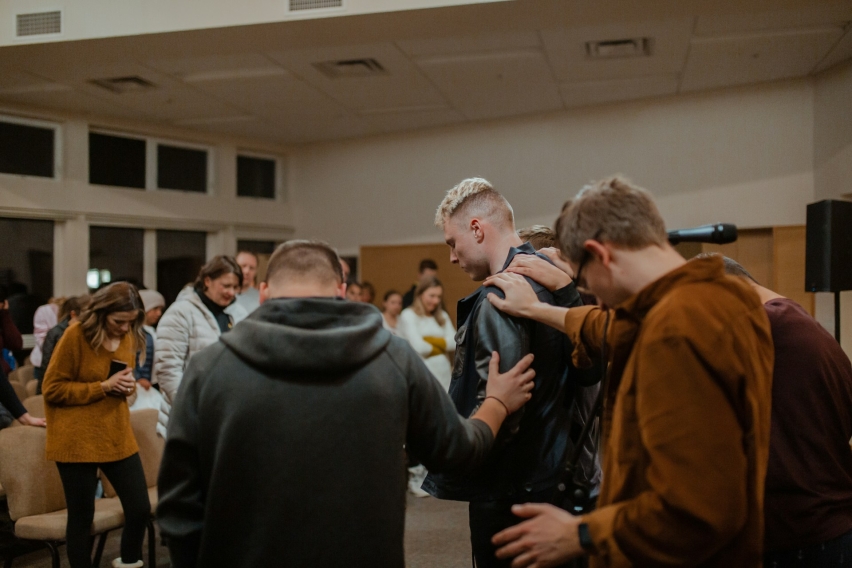
A Christian leader working to connect churches with orphan-support initiatives is urging congregations to better support young adults leaving alternative care, after new research highlighted ongoing challenges they face in adulthood.
The challenges were outlined in a paper titled “Perceived Support and Barriers in Transitioning to Adulthood from Alternative Care: A Multinational Study of 962 Adults with Care Experience,” published in the journal Child & Family Social Work in December 2025.
Five researchers with backgrounds in developmental psychology, social work and international child advocacy surveyed 962 care-experienced adults from 20 countries across multiple regions, including North America, Europe, Africa and Asia.
“Adults who experienced separation from parental care and resided in alternative care settings often face challenges transitioning to adulthood,” the study said.
Key findings showed that reasons for separation from biological parents included parental death (29.9%), abandonment (22.2%), family instability (19.1%) and poverty (19.4%).
The study identified three overarching themes: the importance of supportive relationships and psychosocial services; well-being and resilience; and access to resources and opportunities. Researchers said education and long-term support were vital, while financial difficulties and lack of resources often hindered progress.
Most of the researchers were part of the Christian Alliance for Orphans (CAFO), based in McLean, Virginia, just outside Washington, D.C., in the United States.
The CAFO contributors to the study included Nicole Gilbertson Wilke, director of the CAFO Center on Applied Research for Vulnerable Children and Families; Amanda Hiles Howard, senior scholar; and Megan Roberts, a research fellow within the CAFO Research Center. Researcher Paisley Williams, a frequent collaborator with the CAFO Research Center on studies related to child welfare and care-leaver outcomes, was also involved.
Jimmy Moore, director of Church Strengthening & Support at CAFO, told Christian Daily International he was not surprised by the findings.
“Nothing really surprises me about the results of this research,” Moore said.
“As much as an adolescent who is separated from parental care or who spent time in alternative care settings and later ages out wants to face adulthood, generally they are not prepared for various reasons,” he said.
“Trauma has gone untreated during placement, lack of financial literacy training, no support system, school disruptions because of many transitional placements, etc.”
Moore said it is never too late for churches to establish ministries to support adults who had this life experience as children.
He outlined three ways churches could extend support to such individuals.
First is life-skills training, including financial literacy, job interview skills, housing affordability, meal preparation, professional dress and transportation management.
Second is an apprenticeship program providing on-the-job training. Third is a mentorship program, which he described as “adopting a member.”
The same principles can also apply to children in similar situations, not just adults, when it comes to churches offering support, Moore added.
“Start the programs mentioned earlier before children age out, an intentional ministry for vulnerable children and families,” he suggested.
Moore said past approaches to alternative care often focused primarily on prevention — providing children with safe and loving homes — but did not fully recognize the long-term need for stability as they enter adulthood.
“Overall, I think that prevention was the main focus for so many years — giving kids a safe and loving place to call home,” Moore said. “Preservation is new to many alternative placements and to the churches as a whole.
“For years we were taught to give foster kids Jesus, love, shelter, food, and an education while they are in our care. If we would do these things children in care would become productive adults one of these days. What we failed to realize is that these young adults needed a place to call home — family, mentor, church, therapy — especially when things get tough.”
Looking ahead, Moore stressed the need for churches to remember adults with foster care experience in their prayers.
“That our eyes (Church) can see beyond foster care youth and realize that foster care adults is a real thing!” he said. “Church support needs to be embedded within ministries. To acknowledge that we can't do everything, but everybody can do something!”