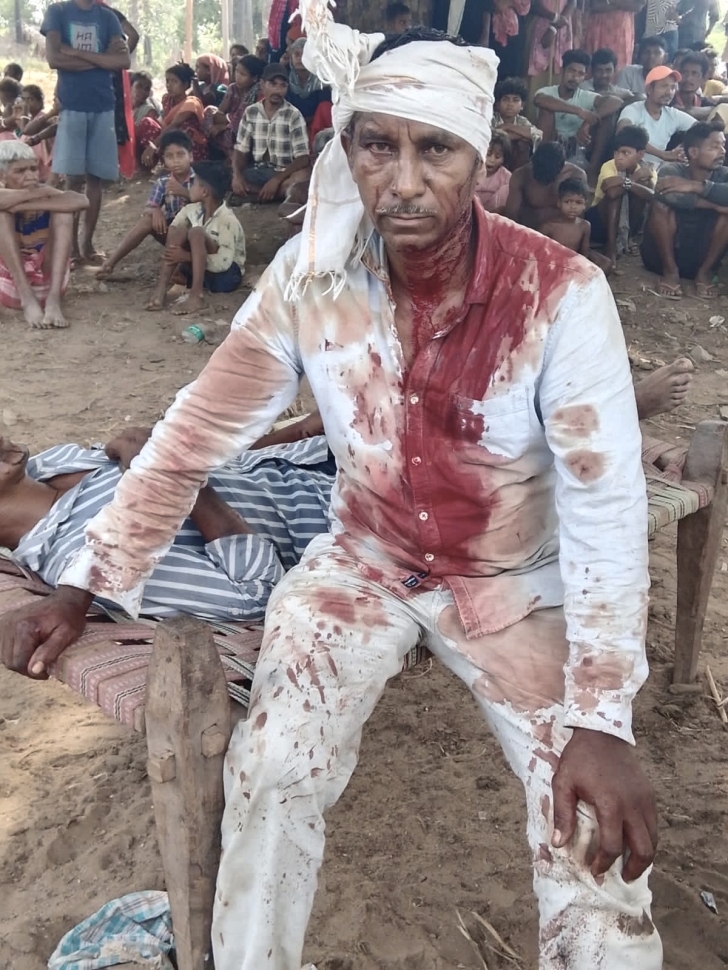
Hostilities against Christians increased in 2025, with 747 incidents of violence, intimidation and discrimination marking a continued rise over prior years, according to the Religious Liberty Commission of the Evangelical Fellowship of India (EFIRLC).
The figure represents a significant increase over the 640 incidents recorded in 2024 and over five times the 147 cases documented in 2014, continuing a decade-long upward trend against the Christian minority that constitutes about 2.3 percent of India’s population.
The Commission received more than 915 reports during the year; the 747 documented cases reflect only those that passed a rigorous multi-source verification process.
The Rev. Vijayesh Lal, general secretary of the Evangelical Fellowship of India, said 747 documented incidents in the report released on Tuesday (March 24) reflect patterns that require careful attention.
“At the heart of this issue is the need to ensure that the constitutional guarantees of freedom of conscience and the equal protection of the law are upheld for all citizens,” Lal said.
Entitled, “Hate and Targeted Violence Against Christians in India: Yearly Report 2025,” the report draws on a nationwide network of field coordinators, legal advisers, partner organizations and direct testimony from victims and church leaders. For an incident to be included, the Commission required confirmation from at least two independent sources, which could include the victim or family, local Christian leaders or police authorities.
Patterns of Persecution
Threats and harassment remained the most prevalent form of hostility, accounting for 204 cases, the largest single category of the year.
Physical violence was recorded in 112 instances, while 110 involved disruption of church services or prayer meetings. Legal pressure emerged as a particularly noticeable tool, with 86 arrests and 98 cases involving false accusations or criminal complaints, most of them tied to allegations of unlawful religious conversion.
The Commission also logged 42 cases of social boycott, 27 instances of organized hate campaigns, 24 of vandalism, eight of gender-based violence, seven in which church buildings were burned and one murder.
December saw the highest number of incidents with 85 cases, coinciding with the Advent and Christmas season, a period when Christian worship gatherings and public celebrations become more visible. March followed with 78 incidents and October with 73.
The second half of the year showed a pattern of sustained escalation. Despite falling below December and March, June (68 cases), September (67 cases), and July (66 cases) all recorded elevated numbers.
“The clustering of incidents during periods of heightened religious visibility suggests that Christian communities may face increased vulnerability to disruption, intimidation, and targeted hostility precisely when they are most publicly active in their faith,” the report notes.
Geographic Concentration
Uttar Pradesh led all states with 217 cases, accounting for nearly one third of the national total. Chhattisgarh followed with 177. Together the two states account for nearly half of all cases logged during the year.
The Commission also recorded significant numbers in Rajasthan (51), Madhya Pradesh (47), Haryana (38), Karnataka (31), Jharkhand (30), Bihar (25), Punjab (20), Maharashtra (20) and Odisha (19), with smaller but consistent occurrences across numerous other states.
The Commission noted that the data reflects hostility toward Christian communities occurring in varied local contexts, not as a regional anomaly confined to any single state.
Anti-Conversion Laws
Anti-conversion legislation, officially referred to as Freedom of Religion laws, continued to function as a significant driver of persecution.
In Uttar Pradesh, local groups repeatedly invoked the state’s Unlawful Religious Conversion Prohibition Act against pastors and other Christians conducting routine worship gatherings. Complainants filed allegations of inducement or coercion against prayer meetings held in private homes, frequently without any preliminary investigation. Police then detained or questioned Christians before establishing any evidence.
In several instances, authorities treated the mere act of gathering for prayer as presumptive grounds for a criminal complaint.
The report documents the arrest and jailing of Pastor Wazir Singh in Nohar city, Hanumangarh District, Rajasthan state, after Hindu extremists entered a church service on Sept. 28 and physically assaulted congregants. The mob demanded that the pastor renounce Christianity and teach Hindu scriptures instead. When he refused, police arrested him and filed charges against four other Christians present.
The Rajasthan state assembly passed the Prohibition of Unlawful Conversion of Religion Bill, 2025, adding to the roster of states with active anti-conversion legislation. Shortly after its passage, about 50 members of Hindu nationalist Bajrang Dal surrounded the Hindustan Bible Institute in Jaipur on Sept. 23 while two institute officials conducted a routine inspection. Police reportedly detained the officials for questioning and seized mobile phones, laptops, and property documents.
Violence
Among the most severe incidents the Commission recorded, the year began with violence in Bastar District.
Kunika Kashyap, a 25-year-old Christian woman, who was six weeks pregnant, was beaten with a wooden stick, kicked in the chest and abdomen, strangled, and repeatedly struck in the stomach by the village headman of Bade Bodal village and members of his family on Jan. 2, while she was visiting a neighbor.
Taken to the Government District Hospital in Jagdalpur, she suffered a miscarriage that same day. Her husband and church leaders filed a written complaint, though a First Information Report (FIR) had not been registered at the time of reporting.
On March 9 in Raipur, a mob of 70 to 100 persons, including members of Bajrang Dal, attacked a worship service at a Church of God congregation. The assailants cut electricity to the building, assaulted worshippers and damaged vehicles and property.
Easter Sunday saw violence to two congregations in Gujarat state. In Ahmedabad, about 25 persons entered Pastor Dinesh Parmar’s Western India Pentecostal Church on April 20 and intimidated worshippers during the service. The same day in Surat, attackers assaulted Pastor Ganesh Vijay Koli and Assistant Pastor Benjamin Gamit with sticks and damaged church property.
Four days later, in Durandarbha village, Sukma District, Chhattisgarh, villagers assaulted about 10 Christian families comprising approximately 45 persons and drove them from their homes. The attackers accused them of abandoning traditional tribal religion, destroyed Bibles and personal belongings, and warned them not to return unless they renounced their faith.
A group attacked worshippers at Peniel Prayer Fellowship in Borsi village, Dhamtari District, Chhattisgarh, during a church service on June 8, entering the building, vandalizing the premises, burning Bibles and Christian literature, and beating congregants. The attackers knocked Pastor Mannohan Sahu, 57, unconscious; Pastor Wakish Sahu and others required hospital treatment.
The violence extended behind prison walls. On July 20, five pastors including Pastor Moses Logan of Bhilai, Durg District, were reportedly assaulted while in jail custody after being arrested on allegations of forcible conversion. According to reports, jail authorities and guards inflicted lacerations and other injuries on the detained men.
Five days later at Durg Junction, Chhattisgarh state, two Catholic nuns, Sister Preeti Mary and Sister Vandana Francis of the Assisi Sisters of Mary Immaculate, were detained by railway police after members of Bajrang Dal accused them of human trafficking and forced conversion. The nuns had been accompanying three adult Christian women travelling to Agra for employment. Both were remanded to judicial custody.
In Titoli village, Haryana state, a mob of about 80 to 100 persons targeted two Christian couples on Nov. 7. Pastor Jehovah Das, 65, and his wife, and Vinod Masih, 42, and his wife, as well as their attorney, were attacked and threatened while they visited a Christian home for prayer. The mob accused them of forced conversion, beat them for several hours, forced them to burn Bibles, recorded videos, and held them inside a vehicle without food or water before police eventually intervened.
The year’s final weeks produced one of the most troubling cases. Chamru Ram Salam, a tribal resident of Bedetevda village, Kanker District, Chhattisgarh, was not a Christian. His family buried him on Dec. 16 according to local tribal customs. But because some of his sons are Christians, villagers and Hindu nationalist groups objected, claiming the burial had dishonored a village deity.
What followed was swift and violent. Mobs attacked the bereaved family and about 150 visiting guests, including many Christians, and set fire to the family home as well as three nearby church buildings, and looted property. On Dec. 18, district authorities ordered the body exhumed and relocated to a faraway Christian cemetery in Dhamtari, over the explicit objection of family members who maintained that the deceased had followed traditional tribal religion and deserved burial on his own terms. The family later challenged the administration’s order before the High Court.
That case was not an isolated one. The denial of burial rights to Christian families emerged as a distinct and recurring pattern across 2025.
An earlier case in the year set the same pattern in motion. On Jan. 27 in Chhindwada village, Bastar District, villagers opposed the burial of Pastor Subhash Baghel in the local graveyard, drawing the case into prolonged legal proceedings. His body remained in a mortuary for nearly three weeks before the Supreme Court directed that burial take place at a Christian cemetery approximately 25 miles away and instructed the state to demarcate Christian burial sites in the region.
Calls for Action
The EFIRLC was clear that 747 verified cases represent only a fraction of actual violations. Many go unreported due to fear of retaliation, social pressure or the absence of accessible legal remedies, particularly in rural areas where victims often have no practical path to formal complaint.
The Commission called on the Government of India and state governments to publicly reaffirm constitutional protections for freedom of religion, hold perpetrators of mob violence accountable, address the misuse of anti-conversion laws, and ensure that victims of religion-based violence receive timely support and legal redress.
The report also urged the central government to advise the states operating anti-conversion laws, including Uttar Pradesh, Madhya Pradesh, Gujarat, Karnataka, and others, to review whether amendments are necessary to prevent misuse against minority communities. On the question of Dalit rights, the Commission called for an amendment to the Constitution (Scheduled Castes) Order, 1950 to extend Scheduled Caste protections to Dalits who profess Christianity or Islam.
“Behind every number in this report is a person whose right to worship freely, guaranteed by the constitution of this country, was violated,” Lal told Morning Star News. “What concerns us deeply is not only the scale of what we are documenting, but the chilling effect it produces in communities where believers now hesitate to gather for prayer or bury their dead without fear. We are not asking for privilege. We are asking for the equal protection of the law, and we urge the government at every level to ensure that all Indians, regardless of faith, can live and worship without intimidation.”
The Evangelical Fellowship of India, founded in 1951, is the national alliance of evangelical Christians in India. Its membership includes more than 50 Protestant denominations encompassing over 65,000 churches, along with more than 200 mission agencies and organizations. The EFIRLC has published annual incident reports since 2009 and has documented incidents affecting religious freedom since 1998.
The hostile tone of the National Democratic Alliance government, led by the Hindu nationalist Bharatiya Janata Party, against non-Hindus has emboldened Hindu extremists in several parts of the country to attack Christians since Prime Minister Narendra Modi took power in May 2014, religious rights advocates say.
India ranked 12th on Christian support organization Open Doors’ 2026 World Watch List of the countries where it is most difficult to be a Christian, up from 31st in 2013 before Modi came to power.