Religious freedom advocates told a gathering in Texas that armed conflict and state surveillance are undermining the methods Christians have used to defend persecuted believers. They said a divided global church is poorly placed to respond.
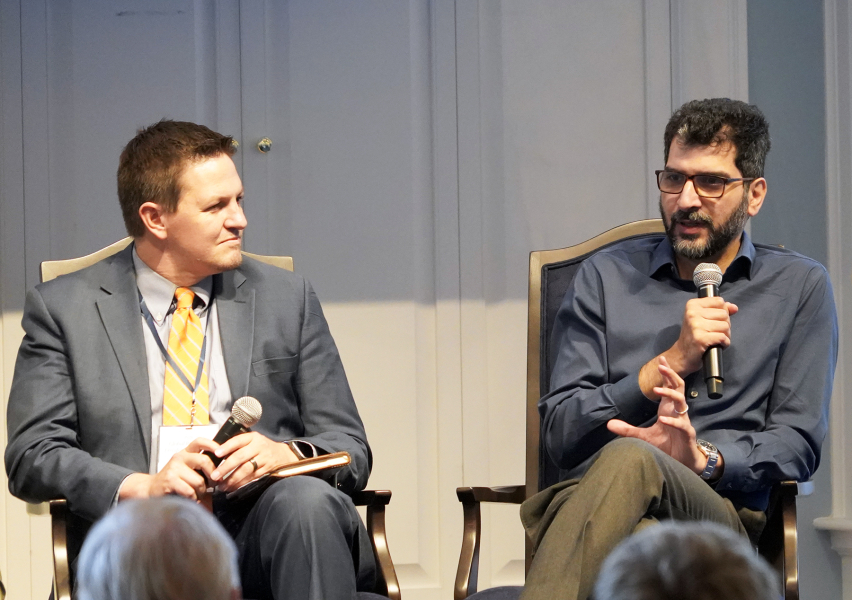
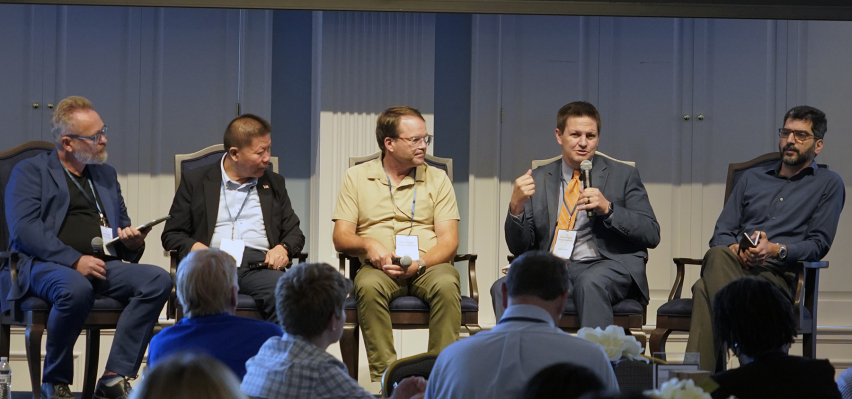
The panelists spoke at Dallas Baptist University on Tuesday (Sept. 29), the second day of the Global Religious Freedom Gathering. They urged churches to work across denominational lines and to take on peace building as well as traditional advocacy. Scot Bower of Christian Solidarity Worldwide moderated the session, titled "Advocacy in a Broken World: Faithful Action in Times of Conflict."
War closes advocacy channels and divides churches
Wissam al-Saliby, president of 21Wilberforce, said 65 armed conflicts are active worldwide, counting both wars between states and civil wars. Many more regions face violence from armed or separatist groups that falls short of formal armed conflict, he said.
According to al-Saliby, war damages religious freedom in three ways. Inside a country, it weakens or destroys civil society, as in Sudan. States at war also tend to restrict freedom of religion together with freedom of expression, he said, naming Russia and Iran.
War also disrupts international advocacy. Al-Saliby described a campaign concerning a country he did not name. U.S. lawmakers had already taken positions because of a conflict involving the United States, he said, so they would not take up the religious freedom case.
His team turned to the Swiss parliament, which was seen as neutral, and persuaded it to send letters to that country's government. The approach worked for a time, he said, but the threat of war eventually closed that route as well.
The third problem, he said, is that the United Nations and similar bodies carry less weight than they did five years ago.
Conflict also divides Christians themselves. Soon after al-Saliby became president of 21Wilberforce in May 2024, he asked a Christian leader in a conflict region how the organization could help. "Our community is divided. As Christians, we are divided," the leader told him, asking for help with unity before anything else.
That conversation moved the organization toward peace building, healing and reconciliation, al-Saliby said. Conflicts often split churches along tribal and ethnic lines, he said, and the pattern repeats in more than one country.
He also warned against resentment toward other communities, calling it "anti-missional" and an obstacle to resolving conflict. In one country, he said, local Christian leaders chose to advocate jointly with Muslims. Not everyone accepts that approach, he acknowledged, but he said it has greater impact.
Jeremy P. Barker, director of programs at the Mustard Seed Foundation, works in societies emerging from conflict. Barker has lived in northern Iraq for five and a half years. He said people he speaks with describe neighboring Syria as close either to real renewal or to new mass killings.
Such settings raise questions about whether a country will make room for ethnic and religious difference, Barker said. He asked whether Christians have a public theology to bring to those questions, beyond responding to persecution.
Surveillance reaches beyond China's borders
For Bob Fu, founder of ChinaAid, technology is now the greatest challenge in religious freedom work. China, he said, has entered an era of "digital tyranny."
Fu led a house church in Beijing and was imprisoned there before going into exile in the United States. About 15 years ago, he said, police raiding house churches would register everyone present and demand passwords for their phones and computers during interrogation.
That step is no longer needed, Fu said. A witness to one recent raid told him officers already had the information before they arrived.
Authorities now identify people through facial recognition and, increasingly, through the way a person moves, Fu said. Combined with large data systems and the social credit system, he said, that lets them know which house church a person attends, where and when.
Fu said China is exporting the technology and monitoring people beyond its borders, a practice known as transnational repression. He said Chinese agents are present on university campuses in the United States, Canada and the European Union, and that their monitoring now reaches beyond Chinese nationals.
His most practical advice was to remove China-developed apps from personal phones, some of which are used by many foreigners who live or work in China, including missionaries. Fu said authorities can activate some apps remotely from thousands of miles away. "So that basically you are carrying your own surveillance machine with you," he said.
Calls for unity across denominations
Ted Vail, chairman of the Pentecostal Commission on Religious Liberty, said the global church is growing in places few would have expected 10 or 20 years ago. Much of that growth is in non-Western movements that have no Western headquarters, he said, so they are disconnected from one another and from advocacy networks.
The gap is costly, Vail said. When a pastor is detained or a church leader killed, he said, many churches do not know whom to contact. Some local believers ask that authorities or foreign governments not be told, fearing it will make matters worse.
"There are suffering people all over that do not know you," Vail told the room of advocates.
He also warned against acting alone. Christians who use personal ties to a legislator to press a case abroad should recognize that other churches have people in the same country, he said. A government will not spare one denomination while punishing another, he said, so a single group's action can affect every Christian there.
"Today it's demanded of us to be in unity as the body of Christ," Vail said. Unity usually means unity within one's own structure, he said, but believers now need to know and trust one another across movements and denominations.
Western Christians, he added, should at times defer to believers elsewhere who understand local conditions. Church movements should also learn when to step back and let professional advocates work on policy.
Al-Saliby described a similar approach at 21Wilberforce. On the morning the panel appeared, he said, he received a petition circulating in the United States about one country. He said his organization would not sign it until its local partners there had seen and approved it.
"There is no right or wrong," he said of organizations that work differently, but he said his group is committed to following the local church.
During the gathering, al-Saliby said, he and Vail discussed how Baptists, evangelicals and Pentecostals could work together in particular countries. For Vail, the answer begins with relationships rather than business cards. He called for "more coffee, more tea, more breaking bread" among churches and advocates.
"I think this is our best chance forward," he said.