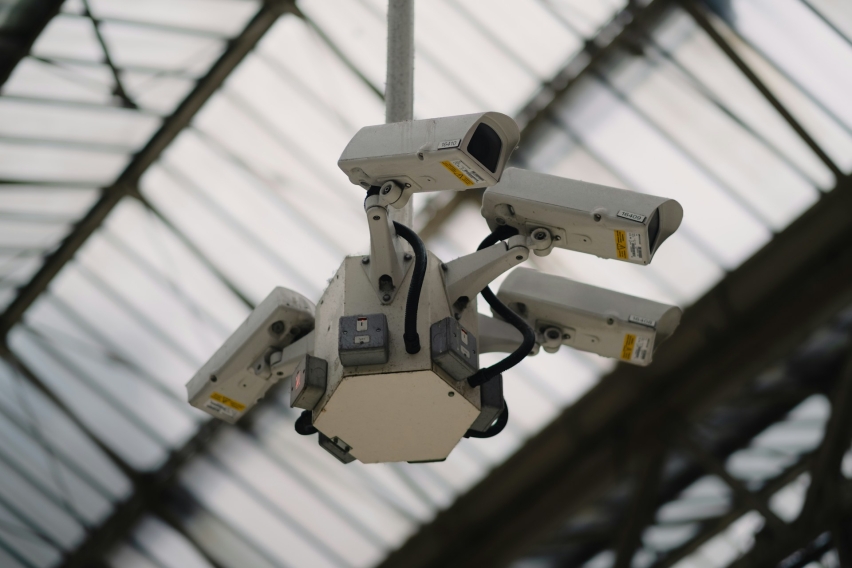
Hundreds of journalists from around the world have backed a call for the International Federation of Journalists to lead a coordinated campaign against the unlawful use of surveillance technology targeting reporters and their sources, following the publication of a major new study documenting what the IFJ describes as a worldwide infrastructure of digital control.
The resolution was passed unanimously by delegates at the IFJ's Centenary Congress in Paris, held May 4–7, after delegates heard from Samar Al Halal, the author of "Global Surveillance of Journalists: A Technical Mapping of Tools, Tactics and Threats." The report, commissioned by the IFJ and published April 28 as part of the EU-funded Brave Media project, examines how digital surveillance of journalists has grown into a systemic global problem.
As Christian Daily International reported earlier this month, the study found that monitoring technologies once confined to intelligence agencies are now widely available to governments and security services, including commercial spyware programs capable of silently accessing a device's messages, calls, photos, location data and microphone without the user's knowledge.
Al Halal, a computer and communications engineer who specializes in digital security and rights, told the Paris congress that the threat to journalism goes beyond technology. "When journalists are monitored self-censorship becomes normal," she said. "Even the perception of being monitored is enough to change behaviour."
In a separate interview published by the IFJ alongside the report, Al Halal described surveillance as having shifted from occasional targeted attacks to continuous, systematic monitoring. Journalists are no longer watched primarily because of a specific investigation, she said, but because they exist within data-rich systems — phones, SIM cards, platforms and networks — that generate enough information to track them constantly, often without sophisticated spyware at all.
She warned that in conflict zones the consequences can be lethal. Surveillance data can, she said, "contribute to increased physical risks for those seeking to hold power to account."
The study describes a recurring pattern across its case studies: the convergence of commercial spyware, state intelligence agencies and weak or nonexistent oversight. Al Halal argued this is not a problem limited to authoritarian governments. Democratic states, she said, use the same tools and legal justifications, with responsibility spread so thinly across governments, private vendors and regulators that no single actor is held accountable.
Delegates at the congress also heard from Seamus Dooley of the National Union of Journalists in the United Kingdom and Ireland, and Samira de Castro of the Brazilian journalists' union FENAJ, both of whom described how legal action and public campaigns had helped expose surveillance abuses in their countries.
The congress called on the IFJ to pursue stronger regulation of the spyware industry, greater transparency in spyware exports and government procurement, enhanced accountability for telecommunications providers, stronger protections for encryption and anonymity, greater investment in regional digital forensics capacity, and the integration of security training into journalism education.
IFJ General Secretary Anthony Bellanger said the stories heard from delegates worldwide painted a consistent picture. "From delegates across the world we have heard similar stories of abusive, unlawful and unregulated spying on journalists and their sources which threatens media freedom and leads to greater self-censorship and in too many cases physical threats and attacks," he said.
Bellanger said the IFJ would make the issue a priority, committing to expose unlawful surveillance, help journalists understand and respond to digital threats, and press for stronger laws and regulation at both the global and national levels.
Al Halal, in her IFJ interview, said the scale of the problem means individual self-protection can only go so far. Meaningful change, she argued, requires political and legal action — regulating spyware vendors, enforcing export controls, demanding transparency from platforms and telecoms companies, and holding governments accountable. "We cannot ask individuals to defend themselves against an industrial-scale system," she said.
The IFJ represents more than 600,000 media professionals across 148 countries.