
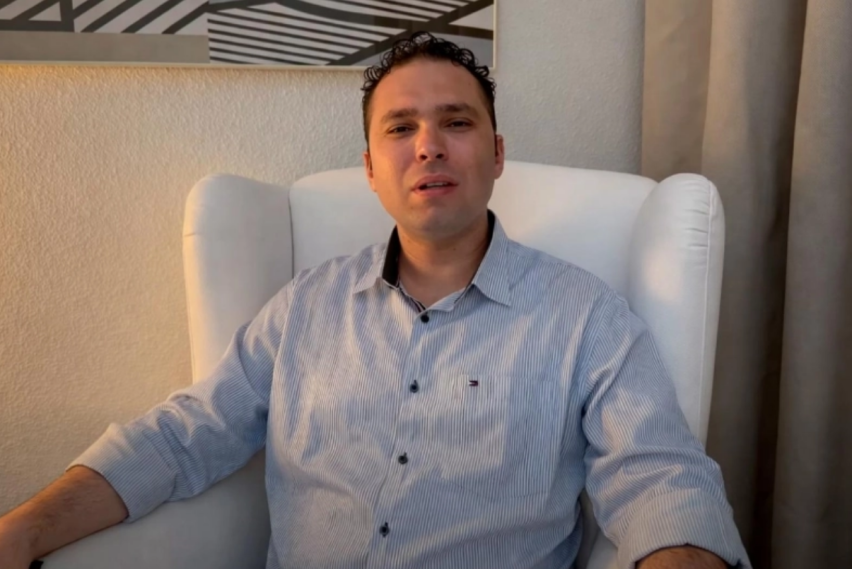
In a context of growing social and political tension on the island of Cuba, the voice of the evangelical church finds itself at a moral crossroads. Pastor Enrique de Jesús Fundora Pérez, a representative of the Alliance of Christians of Cuba, has issued a strong criticism directed at denominational leaders within the country, questioning what he describes as a complicit silence in the face of the persecution of young believers.
In exclusive statements to Diario Cristiano Internacional, Christian Daily International's Spanish edition, Fundora—who lives in exile—emphasized that his position is not intended to politicize the pulpit, but to fulfill an unavoidable ethical mandate.
“All of this is simply because we believe that the Church is not a political party, and that it will never turn to violence.” However, the religious leader stressed that spirituality should not be an excuse for indifference: “The Church must stand on the side of justice and on the side of victims, and support young Christians who are stepping forward and taking a stand.”
The abandonment of Christian youth
Fundora’s criticism arises from the harassment faced by young figures such as 21-year-old YouTuber Anna Sofía Benítez, who has been targeted with summons and threats from State Security due to her critical stance. The young woman, known on social media as “Anna Bensi,” was ultimately placed under house arrest last Wednesday by order of Cuban authorities.
This case is not isolated; it reflects a broader reality that, according to Fundora, is being ignored by institutions that should be providing pastoral care and protection.
Fundora reiterated that the Church must stand with victims and support young Christians taking a public stand.
The pastor also directed sharp criticism at the Western Cuba Baptist Convention, noting that many of the young people raising their voices belong to this denomination but are experiencing institutional abandonment.
“Neither the Baptist Convention nor the pastors of these young people have supported their families or stood alongside these young people. They have been left alone, and instead are being criticized and attacked.” For Fundora, this reaction is unacceptable, as “these are young people who need our support and our help.”
Neutrality vs. prophetic engagement
The debate over church “neutrality” in Cuba has intensified following recent statements from various missions and conventions.
While some institutions advocate for a strictly humanitarian and spiritual role in order to avoid state retaliation, leaders like Fundora believe this position amounts to abandonment.
“There will be an initial statement that is a call to neutrality,” Fundora explained regarding his posts on social media, clarifying that his second statement is a direct challenge to such passivity.
The pastor emphasized that his organization, the Alliance of Christians of Cuba, represents more than 70 leaders and represents thousands of congregants across the country, giving them a social responsibility they cannot ignore. “We cannot leave them alone, and we cannot let this situation pass.”
A call to action: “Let the regime tremble”
Fundora’s proposal does not call for an uprising, but for an act of public faith. He is calling on the Assemblies of God, Pentecostal groups, and Baptist conventions to make a statement, even if it is small.
“Make a statement, even if it is simply to say: we are going to pray for ‘so-and-so,’ who is suffering persecution. We are brothers in Christ, and we condemn the repressive actions being used against them.”
According to the religious leader, the power of a Church united in truth can have a systemic impact: “That alone is enough to make the regime tremble.”
The goal is to put pressure on religious leaders within Cuba to recognize the need to act, rather than simply repeating what he described as “the script the regime has given them.”
Originally published by Diario Cristiano, Christian Daily International's Spanish edition.








