The death sentences handed to three suspected Islamic extremists convicted of a church massacre in Jordan last month face opposition from hardline Islamists as well as the European Union, one of the country’s largest donors, sources said.
Jordan’s State Security Court handed down the sentence on Sunday (Nov. 15) for the Oct. 23 shooting that killed nine people and wounded 25 others during a funeral at St. George’s Orthodox Church in Hammoud village, Karak Governorate. The death sentence, however, must undergo a mandatory appeal to the Court of Cassation within 30 days.
The three shooters were found guilty of “executing terrorist acts using weapons and ammunition on two counts, possession of weapons and ammunition with terrorist intent, conspiring to commit terrorist acts using weapons, and promoting terrorist group ideology,” according to state news agency Petra.
Amer Halaseh, a former judge in the State Security Court, told Christian Daily International that he was “proud of the statement made by the court prior to announcing the sentence.” Halaseh said that he found the overall statement “balanced” and that the sentence was well received by the families of the victims.
Among those who welcomed the death sentence was the Rev. Amer Qsous, whose relatives were among those killed and injured.
“We and other relatives of those who were killed felt relieved by the death sentence,” Pastor Qsous told Christian Daily International, adding that the Jordanian monarch showed that all Jordanians are equal before the law. “His Majesty’s words and actions show beyond any doubt that all Jordanian citizens are treated the same, and the guilty must be punished as per the law.”
While Pastor Qsous said he would like to see the death penalty carried out as soon as possible, he understands that the legal and constitutional guarantees of a fair trial must be provided.
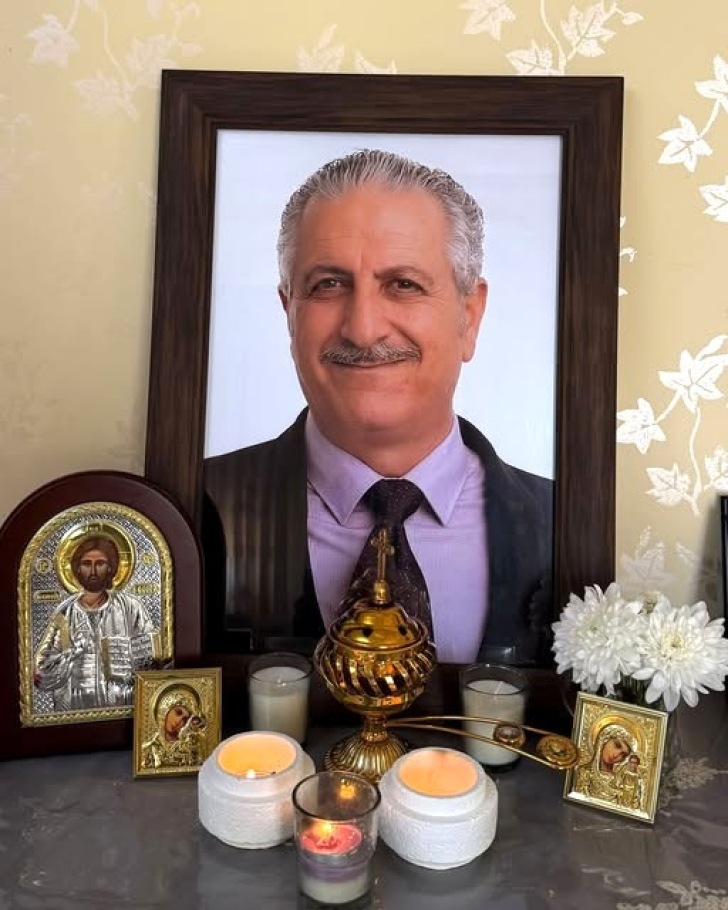
Also content with the verdict wa Mereal Zreiqat, who posted a photo of her father on her Facebook page stating, “Peace be with you, my dear father. Justice has finally spoken, the truth has prevailed, and the curtain has fallen on a long and painful wait. Today, justice is no longer merely a wish, nor is it a promise deferred. Today, the verdict we awaited has been delivered, and justice has been served for innocent souls taken away unjustly. If only you were here among us to witness this day – if only I could see you and tell you that your rights were not lost, that we have not forgotten, and that we never will. Rest in peace, Father; for even if justice is delayed, it never dies.”
Ayman Halaseh, a professor of International Law and Human Rights whose family members were among the dead, however, said he was opposed to the death penalty from a human rights perspective.
“There is no conclusive scientific evidence that capital punishment serves as a greater deterrent than life imprisonment,” Halaseh told Christian Daily International. “It is essential to distinguish between an offender’s responsibility for their crime and the responsibility of society and the state regarding the conditions that may contribute to the emergence of extremism and violence.”
While executing perpetrators may bring cases to a close, it fails to address the root causes of the crime, he said.
“If individuals or networks have exploited the social or intellectual vulnerabilities of these offenders, then uncovering their roles, holding them accountable, and addressing the conditions that facilitate such recruitment are just as important as punishing those who carried out the acts,” Halaseh said.
While the sentencing provided relief to families of those killed, it is unclear when and if the death sentence would be carried out. In addition to the necessary legal and constitutional phases, Jordanian decision-makers must weigh several issues. While they are under pressure from families who demand closure, officials have concerns about possible escalation of terror attacks if the death penalty is carried out.
By executing them, they fear, Islamic extremists will consider them martyrs and will attempt to carry out further attacks in revenge for their deaths.
In addition, Jordan could face opposition from the European Union, which views capital punishment as a serious violation of human rights and human dignity, considering it both inhumane and irreversible. Rejecting the argument that terrorism or other grave crimes warrant capital punishment, EU leaders maintain that counter-terrorism measures must respect fundamental human rights and the rule of law.
Jordanian-EU relations were temporarily shaken last June when six Jordanians were hanged for crimes committed against members of the Jordanian security forces. The EU strongly objected to the executions carried out on June 21, marking a break from the country’s de facto moratorium on capital punishment in place since 2017.
In the case of this terror attack, however, Jordanian officials will be under tremendous pressure from Christian tribes from Karak demanding closure. In a press conference following the verdict, the very first question asked of a lawyer from the families was when the executions would be carried out.
The court decision came three days before a major EU-Jordan investment conference scheduled to include senior EU and Jordanian officials at the King Hussein Conference Center at the Dead Sea. Ursula von der Leyen, president of the European Commission, is expected to participate in the conference, which is expected to implement the EU-Jordan Strategic and Comprehensive Partnership signed in January 2025 that is backed by a €3 billion financial and investment package spanning 2025 to 2027.
If Jordan does carry out the death penalty again, it will put EU funding in jeopardy, say experts who believe that Jordan will try to delay the executions as much as it can despite public pressure from powerful Jordanian tribes.
Jordanian decision-makers, especially King Abdullah II, will also need to make more immediate decisions on accountability. Both the Oct. 23 attack and a Nov. 5 terror attack against a policeman in Amman were carried out by recently released prisoners. In addition to legislative changes, there is a strong public demand for accountability at various levels, including ministerial, intelligence leadership, and counter-terrorism officials, under whose watch these attacks took place.
The leader among the three convicted killers had been released prior to the shooting after years of being imprisoned for Muslim extremist violence.