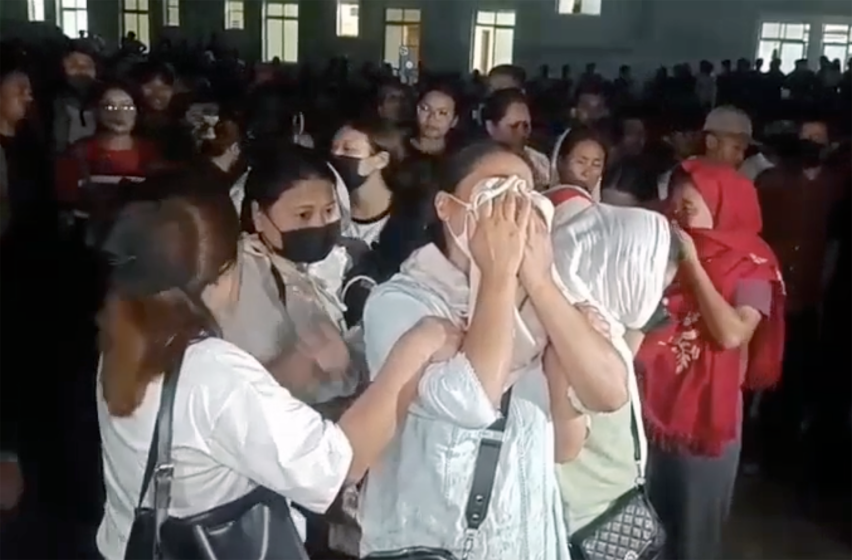
Editor’s note: This interview contains graphic descriptions of violence. Some readers may find it distressing.
“Some stories do not leave you when the session ends,” said Ritusha Joel, a counseling psychologist, while speaking to Christian Daily International on her work with the internally displaced people in Manipur, India’s northeastern state which has been reeling under severe ethnic religious violence since May 2023.
From November 2025 to end of February 2026, Joel worked in relief camps situated in Kangpokpi, Churachandpur and Bishnupur districts of Manipur. She visited 30-plus camps during her work with the Emmanuel Hospital Association (EHA). During this time, she counseled over 120 adults and worked with more than 170 children through group activities, art therapy and play therapy.
Ethnic-religious violence erupted between the mostly Hindu Meitei majority of the Imphal Valley and the largely Christian Kuki-Zo communities of the surrounding hills in May 2023. As a result of the violence at least 217 people lost their lives as per official count and over 300 church structures were destroyed. Estimates suggest that at least 260 people may have been killed. The official figures show that more than 58,000 people were displaced.
Earlier this year, Manipur witnessed ethnic clashes between the Kuki-Zo and Naga communities, both majority Christian, that have resulted in the killing of at least 42 people including some pastors.
On Sept. 17, the Supreme Court of India said that it was shocked by reports of unnatural deaths in the relief camps. It ordered the state’s chief secretary to file a comprehensive report.
These were some of the same camps where Joel spent months speaking mainly to Kuki-Zo displaced people. In the conversation below, she talks about what she saw and heard: the grief that families carry, the conditions that they are forced to live in, and how they have been coping and holding on.
Q. You spent time working as a counseling psychologist with internally displaced communities in Manipur. What brought you into this work, and what did your role in the relief camps involve?
A. Ever since I learned about the conflict in 2023, I kept wondering how people were managing to survive such a difficult situation. At the time, there was little I could do beyond praying for them, but I always hoped for an opportunity to help in a more practical way. Last year, while volunteering with one of EHA’s projects in Agra, I heard about the need for a counselor in EHA’s Medical Relief Project in Manipur. I applied and was selected.
My role involved offering individual and group counseling, conducting community awareness and psychosocial training sessions across multiple districts, promoting resilience and positive coping strategies, and facilitating referrals for individuals who needed specialized mental health support.
Q. When you first began visiting the camps, what struck you most about the situation on the ground?
A. What struck me most was how people were living with unimaginable loss yet still trying to survive each day. When you sit with them, you cannot separate yourself from their pain. I would often leave the camps feeling emotionally overwhelmed by the weight of what they had endured. Many had watched their homes, and entire villages burn in front of them. Some had witnessed the killing of their loved ones. Even after all of this, they continue to face harsh living conditions: limited food, poor sanitation, lack of privacy, overcrowded spaces, and almost no livelihood opportunities. There is also a constant fear of being asked to leave the camps, with nowhere to return to.
I had never encountered trauma of this magnitude before. One woman sat with me and recounted how her brother was captured, brutally tortured, and murdered right before her eyes. She described the horror so vividly, remembering how the bullet tore through his chest and scattered pieces of the money he had in his shirt pocket. The memory causes her intense anxiety and, at times, a complete loss of the will to live. Another mother of four described watching her husband killed during an ambush while they traveled together. Both he and another man were murdered while she and her small children watched.
Q. As you interacted with displaced Kuki families, what kinds of trauma or psychological distress did you observe? Was the wound individual, or did you sense something more collective?
A. I noticed acute individual trauma: severe anxiety, depression, flashbacks, insomnia, and hypervigilance from witnessing violence. But it was entirely inseparable from a profound collective wound. The destruction of entire villages broke their shared identity and support systems. The community was not just grieving individual losses but the displacement of their entire way of life.
The Kuki community has faced systemic injustice for many years, and the 2023 conflict had already severely impacted everyone, even those who were not displaced. But the recent escalation since January - with the Naga community - has aggravated those long-standing wounds to a point where the word “struggle” simply cannot describe the depth of what they are facing. Layer after layer of injustice, with no real help from the government, has left the entire community’s sense of safety and future completely shattered.
Q. In your conversations with displaced families, what did people most often share about their experiences? Were there accounts that were particularly difficult for you as a counselor to hold?
A. People often spoke about how difficult it was to move on from what they had experienced. Many said they still longed to return to their own homes and, because of that, struggled to fully accept what had happened. Even those who wanted to start over faced enormous obstacles. Many had lost their homes, land, savings, and livelihoods. Young adults frequently shared their frustration about not being able to continue their studies or apply for jobs because their educational certificates had been destroyed when their houses burned.
Common signs of psychological distress included insomnia, loss of appetite, and extreme anxiety triggered by loud noises or raised voices. Even after three years, many were still living in survival mode.
One account that was particularly difficult for me to hold came from a young man who described the night his village was attacked. Armed men entered his home in the middle of the night and killed his father by slitting his throat. Terrified, he, his mother, and his sister tried to escape. His sister managed to run, but his mother was captured, publicly stripped, humiliated, and murdered when she resisted. His sister remains missing to this day. He lives entirely alone, clinging to the hope that she is still alive. It is beyond difficult to imagine how a son could witness the brutal murder of both parents, lose his entire family and home in a single night, and have to carry all of that alone.
Q. From a psychological perspective, what were the most common mental health struggles you observed among displaced adults? Did these struggles sometimes touch their spiritual lives as well?
A. Many displaced adults experienced intense anxiety, persistent fear, hypervigilance, and profound grief rooted in the sudden loss of their homes, livelihoods, and sense of security. A recurring theme was the feeling of having lost control over their lives, combined with deep uncertainty about the future.
Spiritually, I observed a deeply human range of responses. For many, it was remarkable to see how strongly they leaned on their faith in moments of panic or when painful memories resurfaced. Prayer, singing gospel songs, and reading the Bible together as families became important sources of comfort and stability. For others, maintaining that same level of faith was difficult as the situation continued to worsen. Faith was both a source of strength for many and a space of genuine struggle for some.
Q. Children experience and express trauma differently than adults. What did you observe among children growing up in the camps? What concerns you most about their long-term development?
A. Children instinctively absorb the hatred around them because that is what they hear and see day in and day out. Many live in constant fear. Many struggle to concentrate in school because their minds are never at rest. Parents shared that children are becoming rebellious well beyond normal behavior: young boys are getting caught smoking marijuana, joining gang fights, and roaming in groups at night.
In several camps, entire families live together in a single hall with little privacy or personal space. As a result, some children have stopped opening up even to their parents. Without personal space, privacy, or stable education, these children are growing up deprived of basic care. This environment breeds bitterness and negative mindsets that could harm their futures.
The lack of support is even more devastating for children with disabilities. I met a mother, a domestic abuse survivor abandoned by her husband, who is raising her autistic son completely alone in a camp. With zero income, she cannot afford the specialized therapy he needs. For children like him, displacement is not just something they went through. It is the very environment shaping who they are becoming.
Q. In your experience, how has the trauma faced by the displaced Kuki community differed from trauma seen in other humanitarian crises? Is there something specific about ethnically or religiously targeted violence that creates a different kind of wound?
A. The trauma differs drastically because of the sheer, targeted brutality and the complete betrayal of safety by the state itself. Security forces, who existed to protect citizens, stood by as houses burned and people were hunted. Lives were violently taken. Women were paraded naked and gang-raped. Heads were severed and hung on fencing. Fingers were nailed to trees. Bodies were mutilated before being burned.
Ethnically and religiously targeted violence inflicts a distinct, identity-level wound. While it appears to be a communal conflict on the surface, religious persecution cannot be ruled out. Churches were systematically looted, desecrated, and burned, accompanied by taunts aimed directly at the faith of the victims. Perpetrators mocked survivors, saying, “Why is your Jesus not protecting you? Not even Jesus wants to intervene in your situation.” When violence deliberately targets a person’s life, culture, and faith, it shatters their fundamental sense of belonging and human dignity, leaving a deep, generational scar.
Q. Many families lost not only their homes but also their villages, churches, and community networks. How does losing an entire social and spiritual environment affect a person’s sense of identity? And what does “home” mean to someone who may never be able to return?
A. Losing an entire village, church, and community network takes away far more than a physical place. People lose the familiar faces, shared traditions, support systems, and spiritual spaces that gave them a sense of belonging and security. When all of that is suddenly gone, many feel uprooted, disconnected, and uncertain about where they belong.
For someone who may never be able to return, home becomes both a memory and a hope: a memory of the life and people they have lost, and a hope of one day building a place where they can feel safe and settled again. For many displaced families, that hope still feels painfully out of reach.
Q. When you sat with people during counseling sessions, what fears or memories weighed most heavily on them? Were there themes that seemed almost universal?
A. A recurring theme in many sessions was uncertainty about the future. People spoke about losing their homes, loved ones, livelihoods, educational opportunities, and access to parts of their own state. They carried deep concern about what the future would look like for themselves and their families.
What seemed almost universal was the feeling of being stuck in a prolonged state of displacement. What was meant to be a temporary arrangement has, for many, become an indefinite reality. Years on, the ongoing sense of fear, delayed justice, and lack of any meaningful resolution has taken deep root and begun to govern their daily lives.
Q. This kind of work takes a significant emotional toll. How have you cared for your own mental and spiritual health through this experience?
A. In this line of work, you quickly learn that you cannot be a sponge. You have to be an anchor. I rely on clear professional boundaries to protect my mental health. Clinically, we call this “compassionate detachment” - caring deeply and offering full support, without absorbing the client’s distress.
But I have to be honest: in practice on the ground, that is easier said than done. Some stories do not leave you when the session ends. I vividly remember a woman opening up about the severe domestic violence she endured every single night inside the camp. She described staying completely silent while being abused, swallowing her cries so the neighbors would not find out, and helplessly watching her children get beaten too. Pain that deep does not stay behind in the session. It follows you out of the room.
To process that weight rather than internalize it, I consciously reflect on my own emotional responses and speak with another mental health professional when needed. Staying connected with my family and friends every day has been my lifeline. They constantly encourage me and stand with me in prayer. Spending quiet time in the Word and praying after heavy sessions helps me reset. I often lift my clients up in prayer as well. It is my way of safely handing over what is simply too heavy for me to carry alone.
Q. Did you witness moments of resilience or solidarity among the people in these camps? Where does that resilience come from?
A. Yes. Despite immense hardship, I witnessed strong moments of resilience and solidarity. People supported each other emotionally, shared limited resources, and maintained a sense of community within the camps.
The resilience draws from two powerful sources: their deep, unwavering faith in God, and their unbreakable sense of community. Spiritual practices - praying together, singing gospel songs - give them the internal strength to endure, while their shared identity and collective suffering create a bond that keeps them fighting for survival together. They refuse to let the crisis strip away their humanity.
Q. Faith often plays a central role in how communities cope with suffering. What did you observe about the role of faith in how people processed their pain? Did you encounter people who were struggling with God - questioning, feeling abandoned?
A. Faith was a primary anchor for many people. In moments of anxiety, grief, and uncertainty, they turned to prayer, worship, and Scripture for comfort and strength. Many shared that these practices helped them cope when painful memories surfaced or when the future felt overwhelming.
At the same time, I met people whose faith had been deeply shaken. After enduring immense loss and years of displacement, some struggled to understand why their circumstances were not improving despite their prayers. They were not abandoning their faith, but they were wrestling with disappointment, exhaustion, and difficult questions.
As a counselor, I respected each person’s spiritual journey. When clients welcomed it, I practiced faith-integrated counseling, praying with them and using Scripture to encourage them. Many later shared that returning to prayer helped them regain a sense of strength and hope. I especially remember one father who, after our session, restarted a nightly family prayer time. He later told me that this simple practice helped his family find strength and some comfort again amid their ongoing challenges.
Q. What are the most urgent psychological and emotional needs for displaced communities in Manipur today? And what can ordinary people, churches, and individuals do to meaningfully respond?
A. The most urgent need is access to consistent mental health support. Many people are carrying deep grief, trauma, and uncertainty. What they often need first is a safe, nonjudgmental space where they can share their experiences and feel heard. During our work in the camps, we found that once people understood what counseling was and experienced it, many became far more open to seeking help.
But the emotional wounds cannot be separated from the realities people face every day: limited access to livelihoods, education, healthcare, and basic necessities. Some remain separated from loved ones because they cannot move freely across districts. Others live with total uncertainty about their future.
Ordinary individuals, churches, and communities can respond by refusing to look away. Practical support, financial assistance, medical care, educational opportunities, and sustained prayer all make a meaningful difference. The church - both local and global - has a vital role to play, not only in meeting physical needs but in offering hope, standing with those who suffer, and reminding them that they have not been forgotten. After over three years of displacement, many people are still living in survival mode. In the midst of that struggle, their greatest need is not only relief. It is the reassurance that they are seen, valued, and not alone.
Q. There is often a surge of attention right after a crisis, but sustained support is rare. What does long-term psychological accompaniment actually look like for communities like this?
A. Long-term psychological accompaniment means moving beyond short-term relief and ensuring continuous emotional, social, and mental health support for affected communities. It includes sustained counseling services, community-based psychosocial care, regular follow-ups, and strengthening local support systems so people do not cope alone. It also means reducing the stigma around mental health and building awareness so that seeking help becomes normal.
When the initial media attention fades, the deep-seated psychological wounds truly begin to surface as the reality of permanent displacement sets in. For communities like this, healing is not a one-time intervention. It is a long process that requires consistent presence, trust, and care over time.
Q. Is genuine psychological healing possible without justice or acknowledgment of what happened? How do you hold both of those needs together in your work?
A. No - psychological healing is very difficult under the current circumstances. You cannot find healing in the same environment where you were wounded. Without some form of recognition and resolution, the sense of injury often remains active and unresolved.
At the same time, counseling cannot provide justice or address material losses. What I can offer is a consistent, nonjudgmental space where a person’s pain is acknowledged and validated. Through counseling, I focus on helping people feel heard, supporting them in recognizing their own strengths, and guiding them toward what is within their control - so they can gradually rebuild stability and a sense of inner strength.
Q. Based on your experience walking alongside these families, what would you want the wider world to understand about the suffering, and the strength, of the people you met?
A. People in relief camps have lost everything they built over years: homes, land, property, and in many ways, their sense of future. In some camps, families live separated only by thin bedsheets, and living like that for years takes a deep toll on mental health. Livelihood remains one of the biggest struggles, with limited support making it difficult for families to meet even basic needs. Lack of proper medical facilities is a serious concern, and communicable diseases spread quickly among children in such conditions. For students, there is hardly any proper space to study. And there are no proper spaces for sleeping or even cooking, and so all daily living happens in the same confined area. For some, even faith feels tested after years of unanswered suffering, and the sense of being forgotten adds another layer of grief.
Yet despite everything, people are still holding on. They lean on their faith and on each other. They have survived more than three years of conditions that would break most people. That speaks loudly for their resilience.
They are broken. But they refuse to be defeated.