

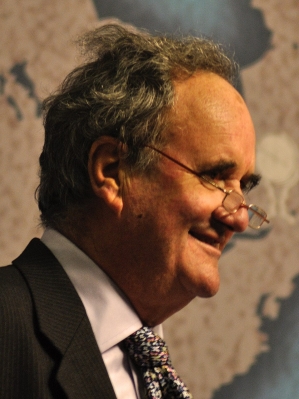
Sir William Mark Tully, the British journalist whose distinctive voice shaped the BBC’s India coverage for more than three decades and who made India his permanent home, died Jan. 25, 2026, at Max Super Specialty Hospital in Saket, New Delhi. He was 90.
Tully had been hospitalized since Jan. 21 for a kidney-related treatment and passed a few days later due to multi-organ failure following a stroke. His death was confirmed by Satish Jacob, a veteran journalist who had worked alongside Tully for 28 years and who remained a close friend for nearly five decades.
For millions across South Asia, Tully was simply “the voice of BBC India.” He was a foreign correspondent who chose to make India his permanent home, and his reporting shaped how the world understood the subcontinent across some of its most tumultuous decades.
“The profession was religion to him,” Jacob said, reflecting on a partnership that spanned 28 years. “If you are a journalist, treat this profession as a religion. That’s what Mark felt about journalism.”
Prime Minister Narendra Modi wrote, “Saddened by the passing of Sir Mark Tully, a towering voice of journalism. His connect with India and the people of our nation was reflected in his works. His reporting and insights have left an enduring mark on public discourse.”
Early life and the BBC years
Mark Tully was born Oct. 24, 1935, in Tollygunge, Calcutta, to British parents during British colonial rule. Despite being born in India, he was raised with a British nanny who scolded him for learning to count in Hindi from his driver, saying, “that’s the servant’s language, not yours.” At age 4, he was sent to boarding school in Darjeeling; by age 9, to England.
At Marlborough College, the chapel became his solace in an otherwise difficult adolescence. At Trinity Hall, Cambridge, he studied theology, aspiring to priesthood. But after two terms at Lincoln Theological College, he abandoned ordination. In a 1994 interview, he reflected: “I went through a long phase in my life not knowing what to do. The church had always been my vocation. There was a huge hole when I gave it up.” He turned to journalism instead. The profession eventually brought him back to India.
Tully joined the BBC in 1964. The organization sent him to New Delhi in 1965. In 1972, he became BBC South Asia bureau chief, a position he held for 22 years. This period encompassed some of modern India’s most significant chapters.
During the 1971 Bangladesh Liberation War, his broadcasts became a vital source of truth. Local media fell silent. But Tully kept reporting. His credibility was extraordinary. In his book Amritsar: Mrs Gandhi’s Last Battle, Tully recounted how on Oct. 31, 1984, Rajiv Gandhi, son of Prime Minister Indira Gandhi, was campaigning across India when he tuned in to the BBC to hear Satish Jacob report that his mother had been shot. Even the prime minister’s son turned to the BBC for news of his mother’s assassination.
The government expelled Tully during the Emergency, a 21-month period of authoritarian rule from 1975 to 1977. He returned after democracy was restored.
Reporting at the edge of history
In 1984, he covered Operation Blue Star, the Indian military’s controversial assault on Sikhism’s holiest site, the Golden Temple in Amritsar. He interviewed Jarnail Singh Bhindranwale, the Sikh separatist leader, days before the military action. He reported on the assassinations of both Indira Gandhi and her son Rajiv, who succeeded her as prime minister.
In December 1992, in the northern city of Ayodhya, Tully witnessed the demolition of the Babri Masjid, a 16th-century mosque destroyed by Hindu nationalist activists. It was one of the most dangerous assignments of his career.
Qurban Ali, part of Tully’s five-member team, later described the harrowing day when their team arrived at the site after the mosque had already been demolished. An angry mob, recognizing Tully from his BBC coverage, surrounded their vehicle.
Ali wrote that instead of immediately attacking them, the mob confined all five journalists in a nearby temple. Outside, protesters chanted “Death to Mark Tully.” The mob’s plan, Ali recalled, was to deal with the BBC team after completing the demolition. After two hours of detention, they were rescued by the mahant (head priest) of Bada Sthan temple, who disguised Tully with a shawl and provided the group with bandanas worn by kar sevaks, Hindu religious volunteers, before arranging their evacuation in a police vehicle.
Tully later called the demolition the “gravest setback” to secularism in India since independence.
The man behind the microphone
Tully didn’t report from hotel rooms. He traveled extensively, often by train, staying in modest conditions and spending long hours listening to people before filing stories. He spoke fluent Hindi and lived simply in the Nizamuddin neighborhood of South Delhi. People often spotted him driving his hard-to-miss, bright-red two-seater with his beloved Labradors.
Qurban Ali, a trilingual journalist who worked with Tully and lived as his neighbor in Nizamuddin for two decades, wrote: “At times, I envied him for his Indianness and wondered how he could love my motherland more than I did.”
This approach shaped how Tully built his team. In 1978, he met Satish Jacob on a flight to Hyderabad in southern India. Days later, Tully called him. When Jacob’s father died a month later, Tully invited him to the BBC office.
“He treated me as if I had known him for years,” Jacob recalled.
Over tea, Tully made an offer: “Satish, would you like to work for the BBC?”
“Sir, it will be a great honour,” Jacob began, but Tully cut him off. “No, no, no. Don’t give me speeches, just tell me whether you are free.”
Tully’s secretary later told Jacob: “I’ve never seen Mark teaching any other journalist the way he has treated you.”
What impressed Jacob most was the trust. Tully never checked his stories before sending them. “Mark made me a journalist,” Jacob said simply.
South Asian journalists who worked at the BBC when it was the “go-to media option” for millions across the subcontinent saw Tully as a father figure, a mentor and a teacher.
Subir Bhaumik, another BBC colleague, recalled Tully’s final days. His partner, Gillian Wright, had described his condition as “stable but critical” the day before he died. Bhaumik wrote: “Mark was 90 and had not been well for a while. His love for everything Indian was part of the problem. Gilly would often complain of health problems caused by his love for Indian curries, but Mark was unfazed.”
Qurban Ali, who first encountered Tully’s voice during the Emergency when his own father was jailed, described Tully as embodying “fearlessness and quiet rebellion.” Two years before Tully’s death, Ali wrote an essay that caught his attention. Tully dropped off a handwritten note requesting a meeting. Their discussion ranged across Hindu nationalism and secularism. “Mark personified fearlessness and quiet rebellion,” Ali wrote.
Faith shaped by India
Tully remained a regular worshipper at the Cathedral Church of the Redemption in New Delhi throughout his life. Yet India’s religious pluralism gradually challenged his earlier convictions. In 2019, he said he continued to identify as a Christian but that living in India’s religiously plural context had led him to no longer believe Christianity was the only path to God.
The pull of India shaped more than his faith. In 1994, he told an interviewer: “Journalism is not my vocation. I drifted into it. It doesn’t obsess me. India is what obsesses me.”
It was a striking contrast to how his colleagues saw him. To Satish Jacob, journalism was Tully’s religion. But to Tully himself, India was the true calling, with journalism merely the vessel.
From 1995 to 2019, he presented Something Understood on BBC Radio 4, exploring faith and spirituality. One woman told him his program had given her strength to attend church for the first time since her husband’s death. “That meant a lot to me,” he said.
Books, personal life and the BBC departure
Tully authored several books, including Amritsar: Mrs Gandhi’s Last Battle (1985) with Satish Jacob, and his landmark No Full Stops in India (1988), whose title reflected his insight: India’s Westernized elite wanted to “write a full stop in a land where there are no full stops.” He collaborated with Gillian Wright on India in Slow Motion (2002) and on other works.
Tully married Margaret in 1960; they had four children. From 1981, he lived in Delhi with Gillian Wright, while Margaret remained in London. He refused to divorce, saying, “I didn’t want a divorce, or have to write ‘finis.’ I wanted to remain friendly with her and my children.” The arrangement eventually became amicable.
Tully resigned from the BBC in July 1994, famously saying, “The BBC has been invaded by accountants.” He chose to stay in India rather than climb the BBC hierarchy. “I am much more interested in India and the region than in climbing the BBC ladder,” he said.
Legacy
Dr. John Dayal, veteran journalist and former president of the All India Catholic Union, paid tribute to his friend of nearly five decades.
“We never worked together, but I had a warm friendship with Mark Tully since 1977, which deepened as the decades flew by,” Dayal wrote.
Dayal noted that Tully, “a devout Anglican who would have been a cleric if he had not become a journalist, often spoke of the spiritual convergences between his Christian faith and the lived realities of Indian pluralism.”
“India has lost one of its most perceptive and affectionate chroniclers,” Dayal continued. “Mark Tully did not merely report on India. He listened to it, understood it, and loved it across its many contradictions. His legacy endures in the trust he built, the stories he told, and the quiet dignity with which he bridged worlds.”
Tully was knighted in 2002 and received the Padma Shri (1992) and Padma Bhushan (2005), two of India’s highest civilian honors, making him one of the few foreign nationals to receive such recognition.
When Qurban Ali jokingly asked how he “secured two Padma awards while criticizing government policies,” Tully bristled: “I didn’t manage it. I was offered.”
Final rites and remembrance
Christian priests offered prayers before Tully’s cremation rites in Delhi, a final blessing in the city he had called home for six decades.
On Feb. 1, 2026, the Cathedral Church of the Redemption held a Requiem Mass. The Anglican church where Tully had worshipped for so many years was jam-packed with colleagues, friends, and admirers.
Ashis Ray, who attended the service, reflected: “I was pleased I was able to bid farewell to a friend for 48 years.”
Subir Bhaumik wrote simply: “Deeply mourned by his former colleagues and tens of thousands of friends, Mark will go to his grave with no ‘full stops.’”
Satish Jacob offered this lesson for young journalists: “Be honest. Write your own views, whatever they are. Don’t copy what others have done. That was the lesson I learned from Mark Tully.”
Qurban Ali closed his tribute: “I hope another impressionable mind will read it and build upon Mark Tully’s path of fearless journalism.”
Tully is survived by his wife, Margaret; his partner, Gillian Wright; and his four children.
For more than half a century, Mark Tully’s voice carried across continents. He chose to stay when he could have climbed higher elsewhere. He chose to listen when others merely reported. Journalism was never his religion. India was. And India, in all its complexity and contradiction, challenged his faith even as it deepened his understanding of grace.
As he himself might have said, there are no full stops in India. And now, there is no full stop to the trust he built, the stories he told, and the quiet dignity with which he lived.


