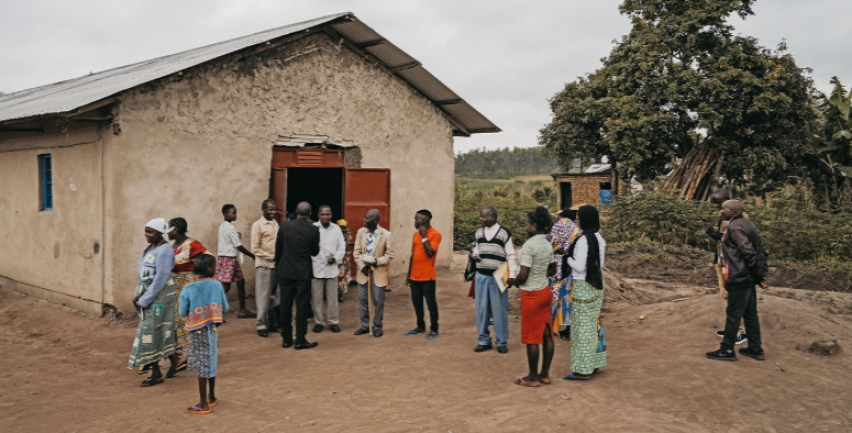
Church leaders in eastern Democratic Republic of Congo in partnership with Open Doors trained congregations about religious persecution as violence by armed groups continues to disrupt Christian communities in the region.
The training, described by Open Doors as persecution survival training, brought together church leaders from the Evangelical Community in Central Africa (CECA). Following the seminars in September, Reverend Adubango, who oversees 38 CECA churches in eastern DRC, instructed congregations under his leadership to dedicate a month to teaching Christians about persecution and their responsibilities towards affected believers.
The initiative subsequently reached more than 5,000 Christians across the 38 churches, although the training itself was directed at church leaders.
According to Open Doors, the seminars encouraged church leaders to take a more active role in preparing their congregations to understand persecution and respond to the suffering of Christians.
One church leader said the training had exposed a gap in how some churches addressed the subject.
“The seminars awakened us. The prophetic role of the church was ignored by some servants of God,” the leader said.
The churches organized teachings on persecution throughout the month of October, with plans to extend the lessons to home fellowship groups so that more members could understand the challenges facing Christians in the region.
The program comes amid continuing insecurity in Beni Territory, North Kivu Province, where attacks attributed to the Allied Democratic Forces (ADF) have killed civilians, displaced families and disrupted community life.
Reverend Adubango described the effects of the violence on Christian communities, including the loss of homes, livelihoods and access to essential services.
“Many Christians have abandoned their farms. They have become displaced and left their homes behind. Many of our schools are closed, our health facilities are closed, our churches are closed, and evangelism is no longer advancing as it once did because of the insecurity caused by the ADF,” he said.
The ADF is an armed group with links to the Islamic State group. Its operations in eastern DRC have included attacks on villages and civilians, with Christian communities among those affected.
In early November, at least 33 people were killed in an attack on Cantine village in North Kivu, according to a local civil society leader cited by The Associated Press. The attackers reportedly burned more than 50 houses, forcing residents to flee.
While the wider conflict involves several security and political dynamics, Christian organizations have documented attacks in which churches, Christian leaders and believers have been specifically targeted.
Open Doors has identified persecution preparedness training as one of its areas of support for Christians in DRC. Its work through local partners also includes trauma care, discipleship and economic empowerment.
The organization’s approach recognizes that communities affected by violence require more than emergency assistance. Church leaders also face the challenge of supporting congregations dealing with displacement, bereavement and the disruption of worship and other activities.
The training is part of a broader effort to strengthen the capacity of local churches to support believers living under pressure. By encouraging pastors and other church leaders to incorporate persecution into regular teaching, the program also seeks to make the subject part of congregational life rather than something addressed only after violence occurs.
The September seminars also coincided with the Arise Africa campaign, an initiative calling for greater attention to violence and persecution affecting Christians in sub-Saharan Africa.
More than 5,000 Christians from the 38 CECA churches signed the campaign petition on Sept. 27. However, church leaders said their involvement extended beyond signing the document, with congregations encouraged to discuss persecution and share information through home fellowships and other church networks.