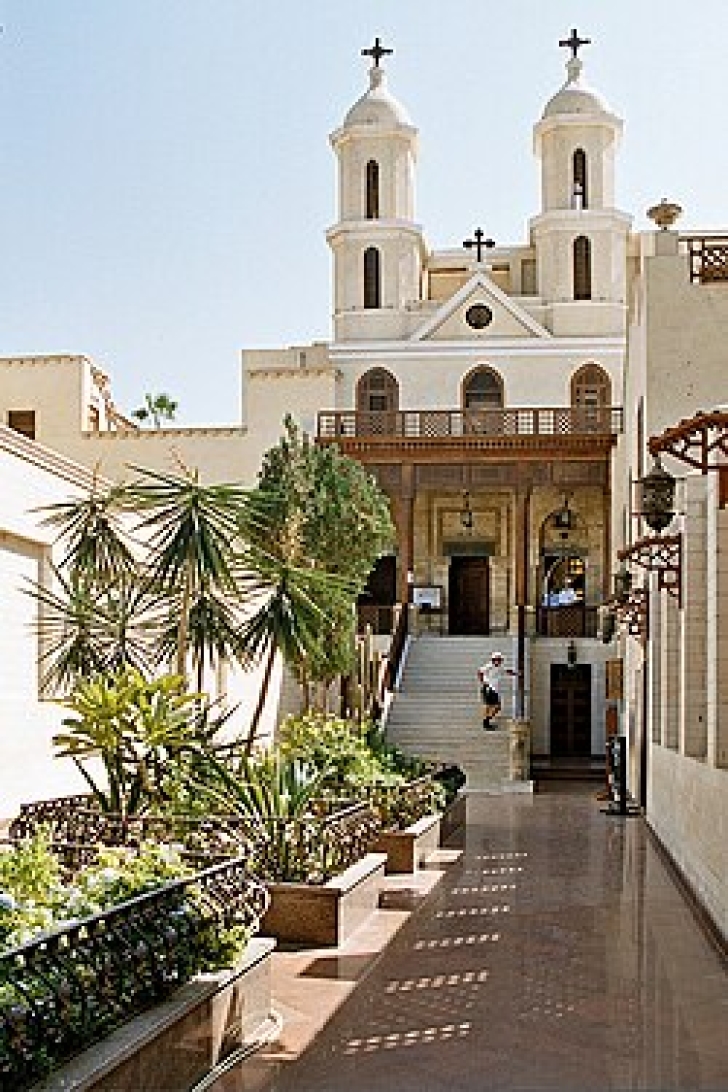
Christian leaders in Egypt were pleased with progress of a government effort to approve the existence of churches in the country following an executive order on May 19 legalizing 191 churches and affiliated buildings.
The order was issued following a cabinet meeting chaired by Prime Minister Mustafa Madbouli.
The Rev. Khalaf Barakat, president of the General Evangelical Baptist Assembly in Egypt, said Christians in Egypt welcome the ongoing efforts of the Egyptian state to legalize the status of churches and service buildings belonging to various Christian denominations.
“Baptist churches, like many others, have benefited from these measures, while some churches are still awaiting the completion of the legalization process according to the schedules and mechanisms approved by the state,” Barakat told Christian Daily International. “We appreciate the spirit of cooperation shown by the relevant authorities in dealing with this matter over the past years.”
The order brings to 3,804 the total number of churches and buildings granted legal status since the government in 2016 created a committee to oversee the process. This systematic review process is part of a broader state strategy to resolve the status of thousands of unlicensed religious buildings constructed over previous decades.
At the same time, a bill that would regulate personal status issues of Egyptian Christians is making its way to becoming law.
The Egyptian government on May 4 referred two bills regarding the family and personal status of Muslims and Christians to the Egyptian Parliament: the Personal Status Law for Muslims and the Personal Status Law for Egyptian Christians. Both bills address family law matters, including child custody and divorce.
The bills are under review by a joint parliamentary committee composed of the Constitutional and Legislative Affairs Committee and the bureaus of the Committees on Social Solidarity, Family and Persons with Disabilities; Religious Affairs and Endowments; and Human Rights. During the committee’s deliberations, the provisions in the draft law remain subject to amendment through the parliamentary discussion process.
The draft personal status law for Christians would, for the first time, establish a unified written code of personal status applicable to Christian communities in Egypt. The draft law would apply to several denominations, including the Coptic Orthodox, Syriac Orthodox, Greek Orthodox, Armenian Orthodox, Evangelical, and Catholic communities. It covers family law matters such as engagement, marriage, divorce, annulment, civil dissolution for certain denominations, child custody and visitation, parental guardianship in education, lineage, missing persons and inheritance.
The law would formalize engagement as a notarized contract and require a church announcement prior to marriage, according to a recent report. It would allow marriage contracts to include agreed-upon conditions, such as provisions regarding the wife’s employment status or financial obligations. The law would also regulate annulment, dissolution of marriage and divorce.
A recent news report in the Egyptian newspaper of record, Al Ahram, states that the law would grant men and women equal inheritance rights. Under the current framework, Islamic inheritance rules apply, resulting in a man receiving double the share of a woman.
The draft law also would introduce “host visitation,” allowing a child to stay overnight with the father and travel with him for one week each year. It would also allow electronic communication for noncustodial parents.
Under Egypt’s Church Construction Law (Law No. 80 of 2016), which was approved by the Egyptian Parliament on Aug. 30, 2016, the power to approve the building and renovation of churches was extended to provincial governors, having previously been limited to the country’s security agencies.