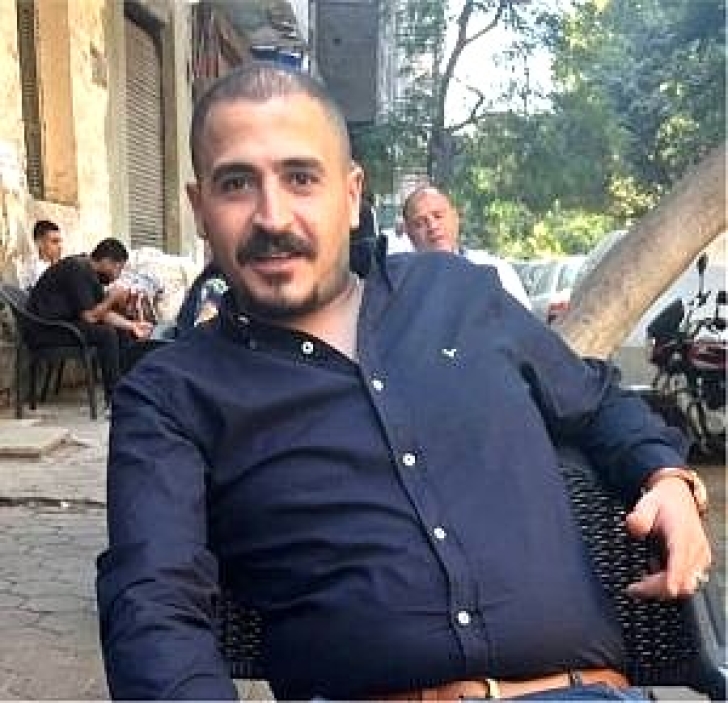
The trial of an Egyptian Christian imprisoned on charges related to his conversion from Islam and his attempt to change his religious designation on identity papers opened on Tuesday (April 21) in Cairo.
Said Mansour Rezk Abdelrazek was arrested in July under “terrorism” related charges. Apostasy is not illegal in Egypt, but changing the religious designation on official identity documents is practically impossible and leaves converts open to prosecution as a “national security threat.”
Prosecutors brought multiple charges against Abdelrazek, according to advocacy group Coptic Solidarity, including establishing and leading a group in violation of the law; joining a group that was allegedly founded unlawfully; financing the group; promoting ideas and beliefs deemed “harmful to national unity and social peace”; showing contempt for Islam and challenging its fundamental principles.
Abdelrazek’s legal team on Tuesday (April 21) submitted several key motions, including requests to adjourn the proceedings in order to prepare a full defense, according to Coptic Solidarity. The court granted the adjournment and scheduled the next hearing for June 15.
Abdelrazek has been held in Cairo’s 10th of Ramadan Prison, where he has reportedly been deprived of basic necessities including adequate food, clothing and medical care and hung in a “crucifixion” position.
The hearing took place at Egypt’s First Criminal Terrorism Circuit in Badr, in the eastern area of Cairo. International human rights groups have long criticized the Badr courts for opaqueness, lack of due process depriving defendants of basic legal protections. Prolonged pretrial detention and limited access to attorneys are common.
The U.S. Commission on International Religious Freedom (USCIRF) has designated Abdelrazek a religious prisoner of conscience, asserting that he was detained for his religious conversion and activity. On July 22, Egypt’s Supreme State Security Prosecution charged him with “contempt for Islam,” joining a banned terrorist organization, inciting unrest and disseminating false information, according to USCIRF.
“During detention, authorities and inmates physically and psychologically abused Abdelrazek for his conversion,” the commission noted.
The defendant was represented by a legal defense team including the Egyptian Initiative for Personal Rights and the Egyptian Commission for Rights and Freedoms, as well the office of Cassation lawyer Saeed Fayez.
Conversion and Asylum
Legal, social and civil difficulties resulting from Abdelrazek’s prior conversion to Christianity led him to flee to Russia in 2019, according to USCIRF.
He sought asylum on religious grounds, but in 2023 Russian authorities arrested him for his connection to a privately filmed video that was purportedly offensive to Islam. His online posts about Islam reportedly had upset Muslims in Russia.
In 2024 Russia deported him to Egypt, which rights advocates said violated the principle of non-refoulement as he held documentation from the U.N. High Commissioner for Refugees confirming that he qualified for international protection. The principle of non-refoulement is intended to protect refugees and asylum seekers from forced return to a country where they face threat of persecution.
Egyptian authorities arrested him, holding him incommunicado for about 10 days.
“When communication resumed, Egyptian authorities interrogated him about his religious beliefs and pressured him to reconsider his faith, monitor other converts, and asked him to delete his social media accounts,” USCIRF states on its website. “Authorities ultimately released him with instructions not to speak publicly or proselytize.”
In July 2025, Egyptian officials again detained Abdelrazek without a warrant and charged him after he resumed posting his religious beliefs online and asked an attorney to help him change the religion designation on his identification documents. Abdelrazek has reportedly said that that during that time he was coerced into undergoing painful removal of a Christian tattoo and was suspended for hours in a “crucifixion” position.
Abdelrazek is still awaiting a decision on an application he filed in May 2024 for a humanitarian visa to Australia.
“His fiancée is an Australian citizen and has appealed for urgent intervention, criticizing what she described as Australia’s lack of meaningful diplomatic engagement,” aid group Church in Chains stated.
The Cairo Institute for Human Rights Studies on Jan. 26 wrote an “urgent appeal” letter on behalf of an international coalition of human rights organizations, religious freedom advocates and independent experts, “to respectfully urge the Australian Government to take immediate humanitarian and diplomatic action on behalf of Mr Said Mansour Rezk Abdelrazek, an Egyptian national and Christian convert who has been arbitrarily detained in Cairo since 15 July 2025 for exercising his fundamental right to freedom of belief,” Church in Chains reported.
The letter states that Abdelrazek’s imprisonment reflects a persistent and alarming pattern of religious persecution in Egypt, particularly against individuals who convert from Islam.
“Mr. Abdelrazek converted to Christianity in 2016 after years of personal reflection. Since that time, he has endured severe and sustained persecution by Egyptian authorities, including repeated arbitrary arrests, torture and ill-treatment, forced divorce, separation from his young son, and continuous surveillance,” the letter states, according to Church in Chains. “His experience starkly contradicts Article 64 of Egypt’s Constitution, which states that ‘freedom of belief is absolute,’ yet in practice denies that right to those who leave Islam.”
The letter urges the Australian Government to grant Abdelrazek humanitarian or protection status, enabling his safe relocation and reunification with his fiancée in Australia; press Egyptian authorities, through bilateral diplomatic channels, to immediately and unconditionally release him, and raise his case at relevant international forums, including the United Nations, emphasizing Egypt’s obligations under international human rights law.
Egypt ranked 42nd on Open Doors’ 2026 World Watch List of the 50 countries where it is most difficult to be a Christian.