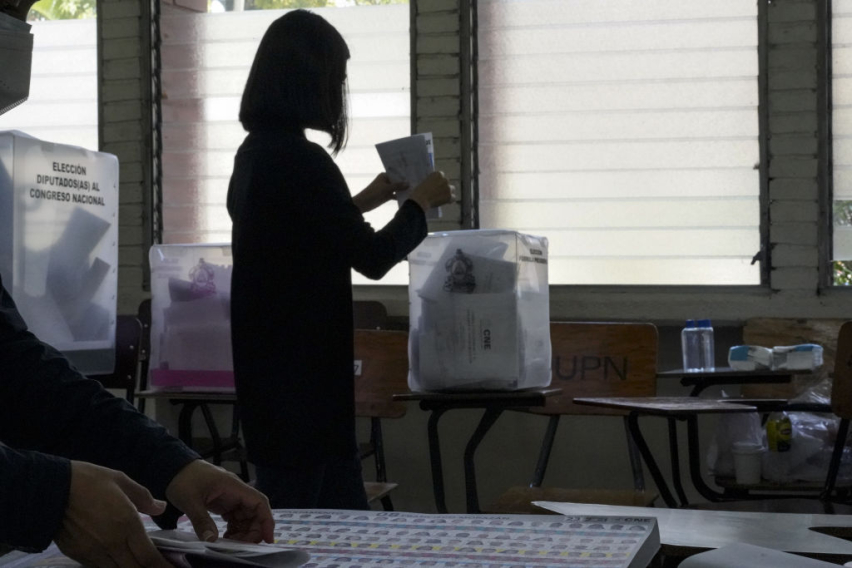
Honduras’ general elections on Sunday (Nov. 30) unfolded amid an unprecedented mobilization of the country’s evangelical community, whose leaders say their coordinated turnout marked a historic moment for civic and spiritual engagement.
In exclusive interviews with Diario Cristiano, Christian Daily International’s Spanish edition, Gerardo Irías, president of the Evangelical Fellowship of Honduras (CEH), and Mario Banegas, president of the Pastors’ Association of Tegucigalpa, said the vote represented a turning point in how evangelicals participate in the nation’s democratic life, with churches closing their doors to prioritize early and widespread voting.
At the time of publication, the tally showed a technical tie between Nasry Asfura and Salvador Nasralla with a difference of just 515 votes.
For Irías, the election day already qualified as a victory for the evangelical Church. “The Church played one of the most important roles as never in history. At this moment we have already won because the purpose was for Honduras to be free from a leftist [government],” he said.
He noted that nearly 90% of congregations closed their churches on Sunday to ensure members could vote. He said this decision, along with weeks of spiritual preparation, directly influenced the tight margin between the two leading candidates. Irías argued that either finalist would be acceptable so long as religious freedom and biblical values are upheld.
Asked about the impact of external actors — particularly U.S. President Donald Trump’s public endorsement of one of the candidates — Irías was firm. “The numbers were already set, the Church was convinced, certain, without even a speck of doubt,” he said. International messages, he added, “only inject hope,” but do not shape the spiritual or civic decision making of Honduran voters.
Banegas, offering a similar analysis but emphasizing the spiritual dimension, described the electoral contest as the culmination of months of prayer and community organization.
“We understood that it was a very strong spiritual battle,” he said. Hundreds of congregations, he explained, coordinated prayer meetings beginning at 2 a.m., held vigils and fasts, and built support networks. By his estimate, the Church deployed around 36,000 workers at polling stations, combining officially accredited representatives with volunteer observers.
The goal, Banegas said, was clear: mobilize the faithful to exercise their democratic right. “We sent a call to all the churches to close and go out early to vote. Ninety percent of the Church went out,” he said.
He estimated that evangelicals represent roughly 2.3 million voters — a bloc that, combined with extensive preparation and coordination, could have exerted decisive influence on the electoral trend.
Both evangelical leaders expressed caution as the vote count continued but agreed that the post-election period must prioritize reconciliation.
Irías said that once an official winner is declared, evangelical leaders plan to publicly bless the new president, “as we did with both candidates before the elections.”
Banegas called for a symbolic gesture of unity: that the defeated candidate “raise the victor’s hand for the sake of democracy, for the peace of the country.”
In a separate analysis of the election, Pastor Roy Santos, leader of the Manantial de la Mies Ministry, also spoke exclusively to Diario Cristiano. He described the preliminary results as more than an administrative change — calling them a supernatural intervention aimed at rescuing the nation.
For Santos, the Central American country is witnessing “the great work of the hand of God saving Honduras from the evil claws of communism.”
Santos, an influential figure within Honduran evangelical circles, argued that the country had been trapped in what he described as a “perverse scheme” by leftist groups that, he claimed, disguised themselves through an electoral alliance in 2021 in order to come to power.
According to his assessment, the outgoing Liberty and Refundation (Libre) government committed grave spiritual errors that led to divine judgment and public rejection.
The coming hours and days will determine who will assume the presidency in the next term. Still, evangelical leaders say the election has already produced a historic outcome: faith stepped outside the walls of churches and moved to the center of the democratic process, rooted in the belief that the nation’s destiny is also decided at the ballot box.
Under Honduran law, the National Electoral Council has up to 30 days to issue the official final results.
Original reporting by Diario Cristiano, Christian Daily International's Spanish edition.