
In a rare prosecution in Nigeria, nine Fulani herdsmen are on trial for their role in the massacre of more than 200 Christians in Yelwata, Benue state last year, as the U.S. administration is considering a bilateral agreement to combat persecution.
The Fulanis, including the head of the neighboring Nasarawa state chapter of the Miyetti Allah Cattle Breeders Association of Nigeria, face a 57-count charge in connection with the June 13-14 massacre in Yelwata, according to Sahara Reporters. The Miyetti Allah association is a Fulani herder advocacy group that has been accused of organizing and financing terrorist attacks on predominantly Christian villages.
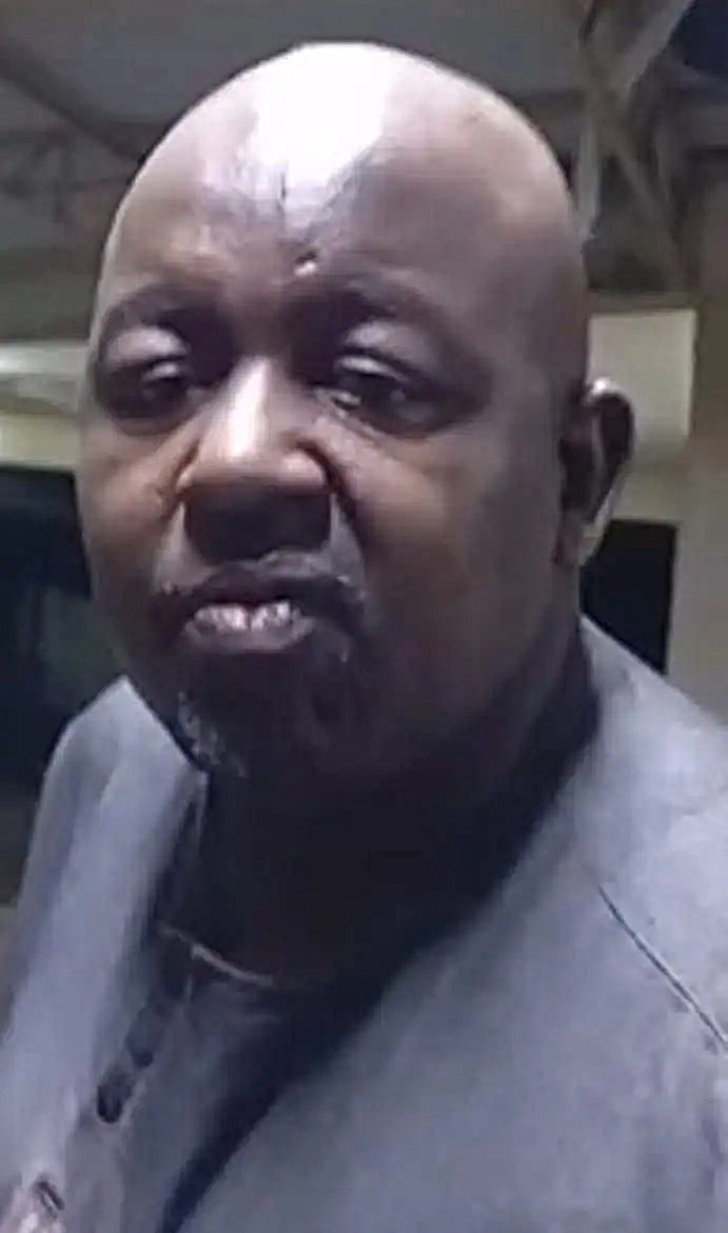
The head of Miyetti Allah in Nasarawa state, Ardo Lawal Mohammed Dono, and eight other Fulani tribal leaders pleaded not guilty to the charges in the trial that began in early February, according to Sahara Reporters. U.S.-based, Nigerian attorney Frank Utoo told outlet Truth Nigeria that Dono, a resident of the Nasarawa state capital Lafia, was the leader of the massacre.
A spokesman in the Office of the Attorney General of the Federation and Minister of Justice, Kamarudeen Ogundele, said the suspects would be brought before Justice Abdul-Malik of the Federal High Court in Abuja, according to Sahara Reporters.
The June 13-14 attacks on Yelwata, Guma County ignited nationwide outrage, prompting President Bola Ahmed Tinubu to visit Benue on June 20. Moses Paul of the Nigerian Police Force’s Intelligence Response Team testified that the attack was believed to be financed and organized by Fulani tribal chiefs, with prior meetings in Nasarawa state pooling funds and mobilizing armed assailants, Truth Nigeria reported.
Prosecutors said one of those charged, Haruna Abdullahi, confessed to attending the meetings allegedly held at the residence of a Fulani leader, and that the suspects were aggrieved that Fulani herders in Benue and Nasarawa states were unfairly treated, according to Truth Nigeria.
Dono was charged in counts 3 to 16 and 25 with directing and providing material and financial support for terrorism, including soliciting and collecting funds from Muhammadu Saidu Ardo, one of the other eight charged, and his kinsmen for the the Yelwata attack, according to the Premium Times.
Government prosecutors charged Ardo with providing material and financial support for terrorism by soliciting and collecting cash contributions, the Premium Times reported, adding that prosecutors further claimed that he received instructions from Dono, organized and led armed men to Yelwata and offered to supply AK-47 rifles for himself and others for use in the assault.
“He was also accused of recruiting fighters from Nasarawa, Kwara, Taraba, Giza, and surrounding communities, permitting meetings at the Ardo’s Palace in Kadarko to plan the attack, and directly soliciting funds with knowledge that the money would be used for terrorism,” Premium Times reported. “The prosecution further alleged that he aided and abetted the attack, procured the services of armed Fulani men, and attempted to commit terrorism by leading and dispatching attackers to Yelwata, both directly and through conspiracy with other defendants.”
In counts 32 to 39, prosecutors reportedly accused another defendant, Haruna Abdullahi, of soliciting funds at meetings held at Dono’s palace, offering weapons and making 300,000 naira ($220) available for the attack. He was also charged with aiding and abetting, conspiring with Dono and others to dispatch armed assailants, coordinating logistics, manpower and weapons and possessing a prohibited AK-47 rifle without a license.
The government said the offences violated sections 13, 17, 21, 26, 28 and 29 of the Terrorism (Prevention and Prohibition) Act, 2022, and Sections 3 and 8 of the Firearms Act.
The national president of the Miyetti Allah Cattle Breeders Association of Nigeria, Alhaja Baba Ngelzarma, denied on Feb. 15 any ties to crime, terrorism, kidnapping or cattle rustling, insisting the association has never condoned violent crime in Nigeria, according to Punch newspaper.
While some Fulani herdsmen, who are predominantly Muslim, still assert a claim on obsolete grazing routes of lands that have been owned for decades by predominantly Christian farmers, the cattlemen’s heavily armed assaults of the last several years on villages of largely weaponless farmers contradict the “herder-farmer clash” narrative still touted by Tinubu and Nigerian academics and parroted by officials of foreign governments and Non-Governmental Organizations.
Christian Solidarity Worldwide (CSW) reported last year that the terrorists initially targeted the Yelwata mission site, which sheltered more than 400 Internally Displaced Persons, at about 10 p.m. on June 13 but were repelled by military personnel. The assailants subsequently attacked the Yelwata Main Market, setting buildings on fire and mutilating and burning the bodies of victims, some of whom were trapped in their homes, according to CSW.
The assailants chanted the jihadist slogan, “Allahu Akbar [God is greater]” in the attack, which followed several days of terrorist violence in Guma County, where Yelwata is located.
On Feb. 24-26 police forensic experts exhumed about 105 bodies from mass graves linked to the massacre in an attempt to strengthen evidence for ongoing prosecutions. Security experts told Truth Nigeria that the Yelwata massacre was part of a coordinated campaign of ethnic cleansing and land seizures by Fulani ethnic militia.
Proposed Bilateral Agreement
The rare attempt to prosecute herdsmen attacks comes as the U.S. administration considers proposing a bilateral agreement with Nigeria as recommended in a report prepared by Rep. Riley Moore and others. U.S. President Donald Trump assigned Moore and Rep. Tom Cole to assess persecution of Christians in Nigeria and present the report.
Citing a “once-in-a-generation opportunity” to end the two-decade-old crisis, the report urges making Nigeria a strategic partner through a binding bilateral agreement that would protect Christian communities from persecution, eliminate jihadist terror, further economic cooperation and counter “adversaries” in the region, including “the Chinese Communist Party” and “Russian Federation.”
The report says Nigeria must demonstrate political will to put an end to the violence, something that has long been lacking, writes Hudson Institute Senior Fellow Nina Shea in Real Clear Politics.
The report recommends “action steps ranging from the easily achievable ‘compelling Fulani herdsmen to disarm’ and removing Fulani from confiscated farms so displaced owners can return, to the more complex ones of having security forces prevent and respond to attacks and ensuring Sharia’s repeal in Nigeria’s north,” Shea writes. “To foster the necessary political will, the report recommends U.S. government actions, including targeted sanctions, foreign assistance and visa restrictions, and the designation of Fulani militias with terrorist links as a ‘Foreign Terrorist Organization.’”
Fulani militias have attacked Middle Belt Christians for the 20 years with complete government impunity, in contrast with the government deploying the military to defeat Islamist terrorist groups in Nigeria’s northern states who victimize large numbers of Muslims and others, according to Shea.
The Nigerian Catholic Bishops Conference on Feb. 26 noted that farming communities in the Middle Belt face gunmen that “operate brazenly, freely and unchallenged,” Shea noted, adding that the International Religious Freedom Act mandates Country of Particular Concern (CPC) designation when a government thus “tolerates” persecution. CPC designation brings the possibility of sanctions and other measures for encouraging religious freedom.
Ngelzarma of the Miyetti Allah Cattle Breeders Association of Nigeria has refuted the claims of anti-Christian violence made by U.S. Congressmen who introduced the Nigeria Religious Freedom and Accountability Act of 2026, which would require the U.S. Secretary of State to submit to Congress a report on U.S. efforts to address religious persecution and mass atrocities against Christians in Nigeria. Ngelzarma has appealed to the Nigerian Senate Committees on Foreign Affairs and on National Security and Intelligence to pass a resolution correcting what he called a false characterization, Truth Nigeria noted.
“However, Mr. Adakole Adamson of Adamson Security Consultancy, backed up the assertions of U.S. Representatives calling for Miyetti Allah to be held accountable for murdering Nigerian Christians,” reported the outlet, operated by U.S.-based missions group Equipping the Persecuted.
Adamson told Truth Nigeria that Myetti Allah groups and many Fulani politicians are directly sponsoring attacks on Christians in the Middle Belt and northern Nigeria.
“This is what Congressman Riley Moore found when he visited Nigeria,” Adamson told Truth Nigeria. “The arrest of Dono, a chairman of Myetti Allah, is confirmation of that “…The rate at which terrorists are being arrested and tried in Nigeria today shows that the pressure mounted on Nigeria by the U.S. is working – but the United States needs to do more.”
More Christians were killed in Nigeria than in any other country from Oct. 1, 2024 to Sept. 30, 2025, according to Open Doors’ 2026 World Watch List. Of the 4,849 Christians killed worldwide for their faith during that period, 3,490 – 72 percent – were Nigerians, an increase from 3,100 the prior year. Nigeria ranked No. 7 on the WWL list of the 50 countries where it is most difficult to be a Christian.
Numbering in the millions across Nigeria and the Sahel, predominantly Muslim Fulani comprise hundreds of clans of many different lineages who do not hold extremist views, but some Fulani do adhere to radical Islamist ideology, the United Kingdom’s All-Party Parliamentary Group for International Freedom or Belief (APPG) noted in a 2020 report.
“They adopt a comparable strategy to Boko Haram and ISWAP and demonstrate a clear intent to target Christians and potent symbols of Christian identity,” the APPG report states.
Christian leaders in Nigeria have said they believe herdsmen attacks on Christian communities in Nigeria’s Middle Belt are inspired by their desire to forcefully take over Christians’ lands and impose Islam as desertification has made it difficult for them to sustain their herds.
In the country’s North-Central zone, where Christians are more common than they are in the North-East and North-West, Islamic extremist Fulani militia attack farming communities, killing many hundreds, Christians above all, according to the report. Jihadist groups such as Boko Haram and the splinter group Islamic State in West Africa Province (ISWAP), among others, are also active in the country’s northern states, where federal government control is scant and Christians and their communities continue to be the targets of raids, sexual violence, and roadblock killings, according to the report. Abductions for ransom have increased considerably in recent years.
The violence has spread to southern states, and a new jihadist terror group, Lakurawa, has emerged in the northwest, armed with advanced weaponry and a radical Islamist agenda, the WWL noted. Lakurawa is affiliated with the expansionist Al-Qaeda insurgency Jama’a Nusrat ul-Islam wa al-Muslimin, or JNIM, originating in Mali.








