Now that September’s family observances have ended, the Philippine Council of Evangelical Churches (PCEC) Family Commission is urging churches to make family discipleship a year-round priority, equipping parents to become their children’s first disciplers and creating more opportunities for families to grow in faith together.
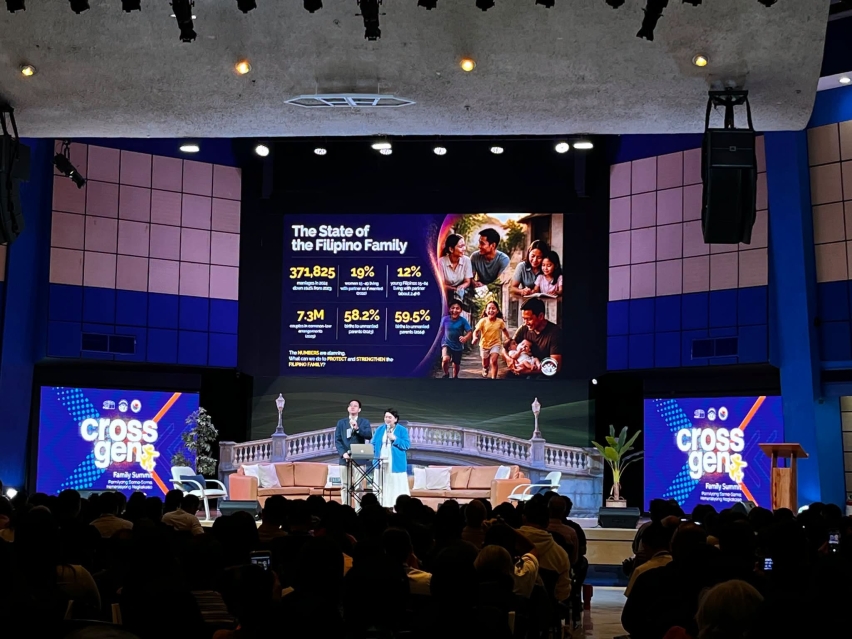
The initiative follows the CrossGen Family Summit, which brought together nearly 800 participants at GCF South Metro in Las Piñas to strengthen intergenerational relationships and encourage Christian faith formation within Filipino families. Organizers say lasting change will require churches to move beyond special gatherings and align their ministries around discipleship in everyday family life.
“After the CrossGen Family Summit, more doors have opened for the PCEC Family Commission to cast the vision for a family discipleship movement in the country,” the commission’s representative Maloi Salumbides said in comments to Christian Daily International..
The PCEC Family Commission plans to champion family discipleship, build partnerships, provide opportunities to equip parents and encourage churches to shift from being “events-oriented” to disciplemaking congregations.
An intentional focus on families
Salumbides said churches should intentionally incorporate family discipleship into their preaching and allocate more time and resources to help parents disciple their children. She also encouraged congregations to coordinate the schedules so families can spend more time together.
“How beautiful it will be if the different ministries in our churches (women, men, youth, children’s ministries) will have an alignment in their schedule of activities to give families the opportunity to spend more time with each other building authentic and loving relationships where discipleship can thrive,” she said.
An early example of the initiative’s influence has emerged in Batangas, where a church changed a planned women’s conference into a family discipleship gathering after the pastor’s wife and a church deaconess attended the CrossGen summit.
Salumbides said the organizing team decided to open the gathering to families and redirect its focus toward family discipleship.
The commission envisions holding larger CrossGen Family Summits every two years in different regions of the Philippines, with the possibility of expanding beyond the country as partnerships develop.
At the close of the summit, PCEC national director Bishop Noel Pantoja described CrossGen as “not just a moment but a movement,” reinforcing the organizers’ intention to sustain the initiative beyond a single event.
‘The Filipino family is not OK’
Salumbides said concerns about marriage and family formation among younger Filipinos underscore the need for intentional discipleship at home.
She recalled participating in a government radio program in 2025 ahead of National Family Week, during which all the young people interviewed in a man-on-the-street segment expressed support for living together outside marriage. She said the responses were consistent with findings from the Commission on Population and Development and the Philippine Statistics Authority.
Salumbides identified economic pressures and changing views on commitment and fidelity as factors influencing younger couples’ decisions to cohabit rather than marry. She argued that strong marriages provide security for spouses and children and expressed concern about the implications of changing family arrangements for the country.
The PCEC has also cited Philippine Statistics Authority figures in a pastoral directive urging churches to strengthen families. According to the statement, the total fertility rate has fallen to 1.7, more than 58% of children are born outside marriage, and more than 15 million solo parents face socioeconomic pressures.
“An honest acknowledgement that the Filipino Family is not ok - that it is experiencing surmounting pressures, threats and attacks in multiple fronts, will hopefully make all of us pause to re-evaluate our priorities and programs as churches and faith groups here in the Philippines,” Salumbides said.
She said the scale of the challenges requires churches and Christian organizations to work together rather than rely on individual congregations to address family needs independently.
“The work to strengthen and disciple families is massive and so it requires collaborative efforts and solutions from different churches and organizations,” she said.
A National Family Month observed across the country
The commission’s efforts to strengthen families also extend to public advocacy. The PCEC Family Commission and its partners in the National Coalition for the Family and the Constitution (NCFC) approached lawmakers to advocate for expanding the Philippines’ existing National Family Week observance into National Family Month.
Senate President Sherwin Gatchalian filed Senate Proposed Resolution No. 686, while Rep. Bienvenido M. Abante Jr. filed House Resolution No. 1455 on Sept. 17. Both measures seek to declare September National Family Month and encourage sustained programs to strengthen Filipino families.
As of Oct. 28, House Resolution No. 1455 remained pending with the House Committee on Population and Family Relations, according to the chamber’s legislative records.
The Philippines already observes National Family Week under Presidential Proclamation No. 60, issued in 1992. Presidential Proclamation No. 326, issued in 2012, designated the fourth Monday of September as “Kainang Pamilya Mahalaga” Day.
‘Faith is meant to travel’
The PCEC Family Commission has encouraged member churches and organizations to cultivate a culture of strengthening families throughout September through preaching, family-focused practices and programs.
At the summit, Christian leaders emphasized that the responsibility for passing on faith begins with parents and requires intentional practice across generations.
Pantoja said parents have the primary responsibility to transmit and model their faith so children can see how their parents love and serve God.
“The primary role of parents is to pass on the faith to their children. To model the faith. Our children will see that we really love God, love God, and serve God,” he said.
Pastor Rodel Lacson, one of the speakers, likewise stressed that faith does not automatically pass from one generation to another.
“Faith is meant to travel. Ang pananampalataya ay hindi lamang naka-standby sa iisang lugar. Faith is meant to travel from one generation to another... [But] faith is never automatically inherited. It should be passed on intentionally,” Lacson said.
He challenged parents and churches to consider not only how they disciple younger generations but also whether they are intentionally nurturing faith within their own households.
Pantoja also urged participants not to allow their generation’s experiences of God’s faithfulness to be lost, challenging them to preserve and share those stories with their children.
Space for intergenerational conversations
Held with the theme “Pamilyang Sama-Sama, Henerasyong Nagkakaisa,” (“A Family Together, A United Generation”), the CrossGen Family Summit also had a major focus on providing room for exchange between different generations.
The idea grew from a conversation between Maloi Salumbides, a Gen X mother, and her Gen Z daughter about bridging generational gaps. Her daughter envisioned a space where generations could discuss faith, mental health and gender.
Salumbides described it as “a God-ordained idea that grew into a vision that brought different people, churches, organizations and generations together to put together the first-ever CrossGen Family Summit.”
“Intentionally intergenerational. That’s CrossGen!” she said.
The event featured intergenerational panel discussions on discipleship, blended families, grief and the influence of grandparents on faith. The morning panel included a Gen X couple, a Boomer solo mother and a Gen Y pastor’s child, while the afternoon session featured Bishop Efraim Tendero and his grandson, Datu Tendero Pagdanganan.
Participant feedback highlighted the value of hearing different generations share their experiences. One attendee reflected, “We don't need to be perfect; we just need to be genuine.”
Discussions also addressed emotional safety and inclusion, emphasized the importance for Christians to show genuine love and acceptance, and encouraged churches to provide safe spaces where people can express their emotions.
A transformed nation start with transformed families
Salumbides said family is central to Christian discipleship and the nation’s future.
“In the Bible, before man learned to govern, before there was a church, there was family,” she said, pointing to the 1987 Philippine Constitution’s recognition of the family as the foundation of the nation.
With more than 117 million Filipinos living in over 26 million households, she called for churches and Christian organizations to work together to equip parents and nurture faith across generations.
“May the Lord give us the willingness and ability to make the shift - from being events-oriented to disciplemaking churches,” she said, pointing to a vision of a “truly transformed and discipled nation, beginning with transformed and discipled families.”