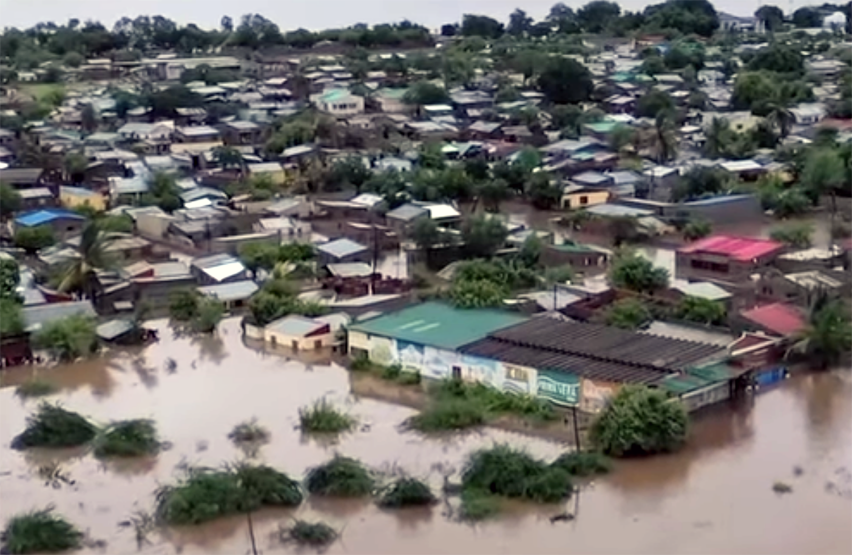
Torrential rains have killed more than 200 people and displaced hundreds of thousands across Southern Africa since late December, as churches across the region open their doors as emergency shelters and relief centers amid widespread flooding and infrastructure damage.
With roads washed out and entire communities cut off, local congregations in South Africa, Mozambique and Zimbabwe have become lifelines for displaced families, offering shelter, food and pastoral care even as officials warn the death toll is likely to rise as floodwaters recede and access improves.
South Africa declared a national disaster after floods killed at least 30 people in Limpopo and Mpumalanga. The South African National Defense Force deployed helicopters to the region, while Kruger National Park partially closed after evacuating staff and visitors from flooded camps.
Mozambique remains the hardest hit. The National Institute for Disaster Management (INGD) confirmed more than 100 deaths, mostly in Gaza and Sofala provinces, though local reports suggest the final toll could be much higher. President Daniel Chapo declared saving lives the “absolute priority” as the institute issued a red alert. Gaza Governor Margarida Chongo estimates 40% of the province is underwater, a crisis the INGD says has displaced more than 300,000 people.
In neighboring Zimbabwe, the Civil Protection Unit reported nearly 80 deaths and widespread damage in Masvingo and Manicaland. The CPU warned that destroyed bridges and schools left dozens of villages inaccessible, stalling the delivery of food and medicine.
Local churches open their doors
With roads impassable, local churches have become temporary shelters. In Chokwe, Mozambique, the Zion Christian Church opened its doors to more than 200 families.
“We have moved the hymnals to the rafters so families can sleep on the floor mats,” said the Rev. Alberto Bila. “The water is at our doorstep, but the church is on the only high ground left.”
In Limpopo, the Methodist Church of Southern Africa provided hot meals and dry clothing. Sva Waqu, the church’s mission director, said families are grieving the loss of loved ones and the church must provide the sanctuary they cannot find elsewhere.
Speaking to Christian Daily International, Rev. Moss Nthla, General Secretary of the Evangelical Alliance of South Africa (TEASA), noted that the effects of climate change are "beginning to hurt South Africa, especially its vulnerable populations."
Nthla said that while churches are formulating "pastoral interventions," they are also seeking a new "theological language" to describe the challenge. He expressed a hope for "language that will hopefully make it possible for evangelicalism to speak without stammering about climate change and what to do about it."
Concern about spreading disease and more rainfall
UN agencies have warned of a “lethal combination” of waterborne diseases and malnutrition as floodwaters cut off access to care. The UNFPA confirmed a concurrent cholera outbreak is complicating relief efforts in Mozambique, where the INGD reports more than 100 health facilities are damaged or at risk.
In Gaza province, authorities in Xai-Xai issued urgent warnings for residents to avoid floodwaters, not only due to contamination but because crocodiles have been spotted moving into submerged urban areas.
The South African Weather Service predicts rain throughout the week, keeping the region on high alert for flash flooding.