
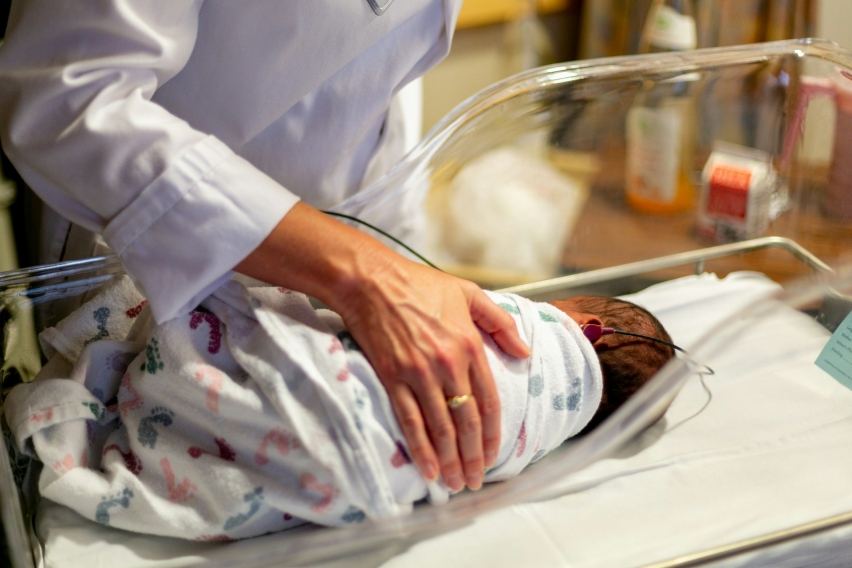
Germany’s population recorded its largest natural decline in the postwar era in 2025, driven by a historic gap between births and deaths, according to the Federal Statistical Office. Births fell again, while abortions saw a slight decrease, according to reporting by Jesus.de.
The country registered about 654,300 births last year, down 3.4% from 2024. Destatis said this marks the fourth straight annual decline and the lowest number since 1946, the first full year after World War II.
Deaths, meanwhile, reached about 1.01 million. With fatalities outpacing births by roughly 352,000, Germany experienced its largest birth deficit since records began in the postwar period. Officials pointed to demographic shifts, including smaller cohorts born in the 1990s now entering their childbearing years and a continued decline in fertility rates since 2022. Germany last saw a natural population increase in 1971.
The trend varied by region. Eastern Germany saw a sharper drop in births, down 4.5%, compared with a 3.2% decline in the west. Hamburg was the only state to post growth, edging up 0.5%. Mecklenburg-Western Pomerania recorded the steepest fall at 8.4%.
Family groups warn of long-term consequences
The German Family Association described the figures as a “dramatic wake-up call,” arguing that structural policy issues are contributing to the decline.
“That the number of births has fallen to its lowest level since 1946 is not a historical coincidence, but the result of decades of structural disadvantages for families,” said Sebastian Heimann, the group’s federal managing director, according to the Evangelical Press Service (epd).
Heimann said the country’s social systems place an unfair burden on parents. He cited the pension system in particular, saying it disadvantages those who raise children, especially mothers. He added that failing to adjust family benefits or address the needs of larger households makes the decline predictable rather than surprising.
The Catholic Family Federation also called for policy changes, telling epd that many people would like to have more children than they ultimately do. It said the decline reflects not only shifting preferences but also financial pressure, limited support structures and uncertainty about the future.
Immigration offsets demographic decline
Preliminary data from several European Union countries show similar trends, with France, Austria, Italy and Sweden all reporting lower birth rates in 2025. Spain, the Netherlands and Finland, however, showed signs of stabilization.
A Federal Statistical Office analysis found that Germany’s population would have declined significantly by 2024 without increased immigration since 2015. Experts expect the gap between births and deaths to remain large for decades and possibly widen further. Without higher fertility rates and continued net immigration, they warn, Germany’s population is likely to shrink substantially.
Abortions edge lower but remain elevated
The number of abortions in Germany decreased slightly in 2025, with about 106,000 reported cases, a 0.7% drop from the previous year, according to Destatis. Despite the decline, the total remains above levels seen between 2014 and 2020.
Roughly 96% of procedures were carried out under Germany’s statutory counseling framework, while medical or criminal indications accounted for a small share. About four in five abortions occurred within the first eight weeks of pregnancy.
Age patterns also shifted. Compared with 2015, abortion numbers declined among women aged 15–17 and 20–24, while increasing significantly among those aged 30–44.








