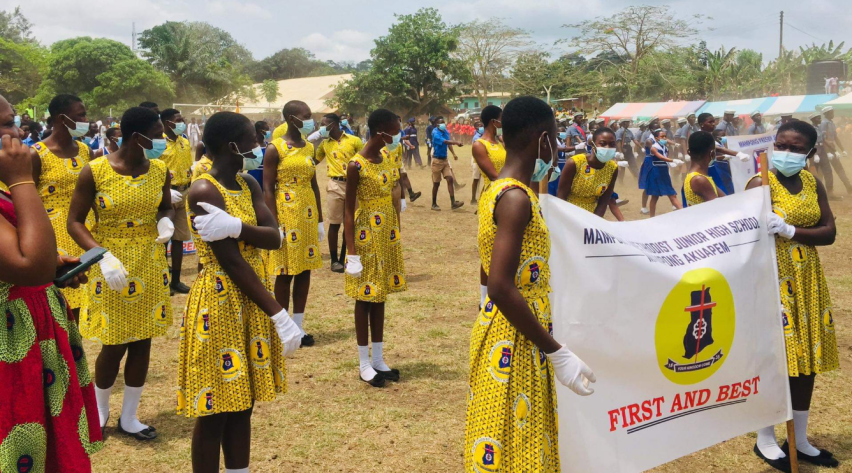
The Christian Council of Ghana has called for constitutional reforms to protect the religious identity of mission-founded schools while safeguarding students’ freedom of religion, as debate intensifies over how faith-based institutions should operate with government support.
The Council made its position known at a forum organized by the Institute of Economic Affairs in Accra on Oct. 5, where participants discussed recommendations by Ghana’s Constitutional Review Committee on religious freedom and education.
The Most Rev. Dr. Paul Kwabena Boafo, immediate past presiding bishop of The Methodist Church Ghana, said the proposed reforms should protect students’ constitutional rights without undermining the legitimate religious character of mission schools, according to the Ghana News Agency.
Boafo said Article 25 of Ghana’s 1992 Constitution guarantees the right to education, while Article 21 protects freedom of thought, conscience, belief and religion.
The Council welcomed recommendations to strengthen protections against religious discrimination in school admissions, boarding arrangements, discipline, student leadership and participation in school activities. However, it maintained that schools should retain the freedom to preserve their religious traditions, provided these do not infringe students’ constitutional rights.
The appeal comes amid renewed national debate over the responsibilities of churches that founded and continue to manage schools receiving public funding.
Johnson Asiedu Nketiah, national chairman of the ruling National Democratic Congress, separately backed calls for greater church involvement in managing mission schools, arguing that the founding religious bodies should retain a meaningful role in shaping their institutions.
Speaking at the centenary celebration of the Seventh-day Adventist Church in Sekyedumase on Oct. 3, he said, “The main driving force for religious bodies to invest in the building of schools is the need for their members to bring up their children in the core beliefs and discipline of their faith.”
Nketiah emphasised that government financial support should not automatically deprive churches of their role in preserving the identity of schools they established.
“The fact that most of the so-called Grade 'A' schools are mission schools implies that there is something they are doing right which must be encouraged rather than diluted,” he said.
He also maintained that parents and students make a choice when applying to a particular school and should understand its disciplinary requirements. His remarks add political weight to the debate, although they do not in themselves establish the government’s formal position on the proposed constitutional changes.
The Constitutional Review Committee’s recommendations seek to balance institutional religious identity with individual freedom of conscience. They propose that mission-assisted schools retain chaplaincies, religious symbols and their distinctive ethos while ensuring that participation in worship and doctrinal instruction is voluntary.
The proposals also call for protections against religious discrimination in admissions, boarding access, discipline and student leadership. They envisage alternatives for students who do not participate in worship, alongside oversight mechanisms to address complaints and prevent coercion.
The recommendations have prompted concern among some church leaders, who fear that restrictions on established religious practices could weaken the spiritual and moral foundations of mission education.
In a November 2025 joint statement, the Christian Council and the Ghana Catholic Bishops’ Conference argued that the churches’ historical contribution to education should be recognized alongside students’ rights. They maintained that government assistance does not automatically transfer ownership or religious identity to the state.
The dispute has also involved Muslim students and families who have raised concerns about alleged restrictions on Islamic practices in Christian mission schools, including fasting and prayer. Those concerns have featured prominently in the legal dispute involving Wesley Girls’ Senior High School.
The competing positions have highlighted the challenge of accommodating religious diversity in institutions founded to provide education within a particular faith tradition, especially when those institutions receive public resources.
Addressing tensions
Ghana has already taken steps toward addressing the tensions. The National Peace Council launched a memorandum of understanding on religious tolerance in government-assisted and private mission schools in September 2025. The framework was intended to guide relations between schools and students from different religious backgrounds and promote peaceful coexistence.
In February 2026, an education director called for stronger religious tolerance in schools during a sensitization workshop on the agreement, according to the Ghana News Agency.
The latest appeal therefore raises questions about whether existing guidelines are sufficient or whether further constitutional and legal safeguards are needed to clarify the relationship between religious freedom, public funding and mission-school autonomy.
The Constitutional Review Committee’s recommendations form part of a broader review of Ghana’s 1992 Constitution. The government presented its position on the committee’s proposals in July 2026 and subsequently established a Constitution Review Implementation Committee to examine the recommendations and develop an implementation framework.