The Global Summit on Fostering Hope for Children, held June 3–5 in Vatican City, convened researchers, humanitarian leaders, policymakers, and faith-based organizations to develop a shared global framework for child wellbeing. It was organized by the Society for Global Flourishing in collaboration with World Vision International, Harvard University, the Institute for Global Human Flourishing at Baylor University, and Gallup.
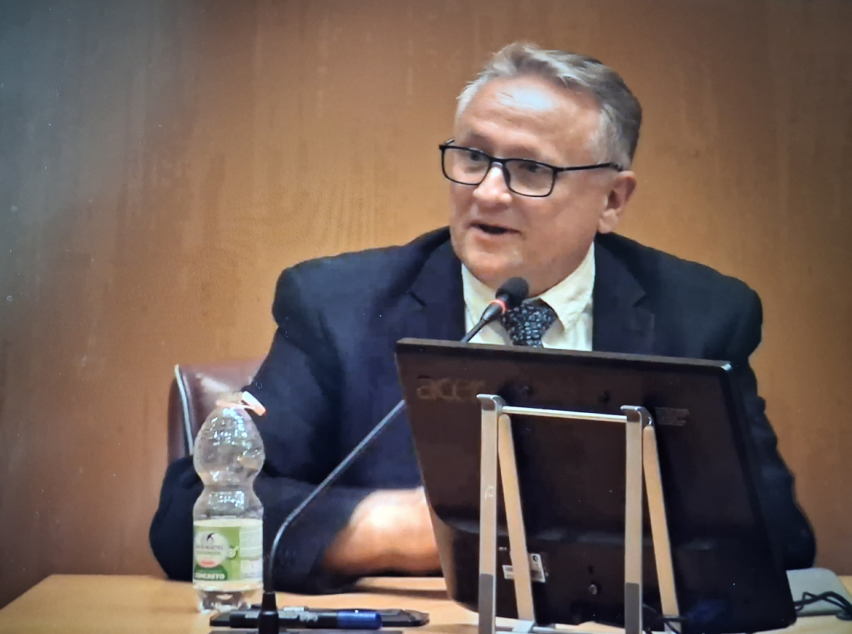
Alan Charter, Co-Coordinator of the WEA Children's Network, attended as a representative of the World Evangelical Alliance and spoke with Christian Daily International following his return.
"Its primary purpose is to move beyond just survival," Charter said. "For children facing compound crises — conflict, climate change, displacement — the goal has to be something more holistic: nurturing their physical, social, emotional, and spiritual worlds."
The WEA was invited to participate as an organization whose work on child discipleship aligns with the summit's faith-based framing of child flourishing. Charter said the invitation gave the WEA an opportunity to connect with global research and bring it back to its network of more than 160 National Alliances.
"As WEA, we were invited to better hear the voice of children, understand their world, and help connect with our WEA community," he said.
He noted that the summit's focus corresponds directly with the WEA's Commitment for the Discipleship of Families and Children, which frames children as active participants in God's mission rather than passive recipients of care.
Charter said the summit defined hope in specifically theological terms, distinguishing it from optimism or psychological resilience. In the summit's framework, hope is described as "a confident expectation rooted in God's faithful presence and promises."
"Hope is central to a child's flourishing because it acts as an internal engine — a critical buffer in times of despair," he said. "It allows children facing extreme adversity to imagine a future beyond their current suffering."
Charter said the foundation of this hope is the experience of God's love, expressed through family, caregivers, and community. "We see hope through the people in our lives: our parents, friends, caregivers, communities," he said. "When we watch others be kind and caring, hope grows within us."
The summit outlined a set of beliefs that, as children internalize them, reflect this growing sense of hope — among them: that God is always present, that their life has meaning, that they are loved unconditionally, and that they can contribute to a more just world.
The Signs of Hope Measure
A key output of the summit is a validated research tool called the "Signs of Hope" measure, developed to track children's spiritual flourishing across six dimensions: Compassion, Joy, Purpose, Resilience, Wisdom, and Spirituality.
Charter said the tool is significant because it treats spiritual wellbeing as a measurable program outcome, comparable in status to physical health or education indicators.
"It provides evidence of spiritual impact," he said. "By using data-driven insights, ministry leaders can move away from good intentions toward outcome-based ministry, allowing them to identify specific gaps and demonstrate the transformative power of God's love to partners and donors."
He said the measure tracks how hope, as it grows, begins to express itself in observable ways: compassion toward others, resilience in adversity, a sense of purpose, and active participation in faith communities.
Charter said the WEA's network of National Alliances is well-positioned to adopt the Signs of Hope framework, and that doing so would strengthen the alliance's ability to engage both churches and external institutions with evidence of spiritual impact.
He said validated data on child hope would also strengthen the WEA's voice in policy settings. "The WEA can be bolder and more effective when speaking in secular halls of power," he said, "to influence policies that further the peace and well-being of all children."
Ultimately, Charter said, the goal is to see the framework take hold at the local level — in families, churches, and communities — and produce visible change in children's lives. "By God's grace we might see a multiplication of hope," he said, "where children are taking part in spreading love, fairness, peace, and care for others — helping to make things right in a broken world."