
A recent podcast by the World Evangelical Alliance’s Peace and Reconciliation Network examined how Indigenous art forms can play a vital role in reconciliation, cultural recovery and Christian discipleship, drawing on the personal stories of two Indigenous artists shaped by creative practice and theological reflection.
The Dec. 11 episode of All Things Reconciled featured Melodie Turori and Mackenzie Griffin, both graduates of the North American Indigenous Institute of Theological Studies, in conversation with Phil Wagler, global director of the World Evangelical Alliance Peace and Reconciliation Network.
Wagler said the podcast seeks to inspire Christians to recognize their calling as everyday peacemakers by engaging deeply with stories of healing, justice and reconciliation rooted in faith. The episode focused on how artistic expression—ranging from drumming and textiles to poetry and oral storytelling—has helped unlock personal and communal transformation.
Turori, an artist, educator and community scholar based in San Diego, described her journey of reconnecting with her Pacific Islander heritage after growing up largely immersed in her European family background. Her father is from the Cook Islands, while her mother’s ancestry traces to Europe.
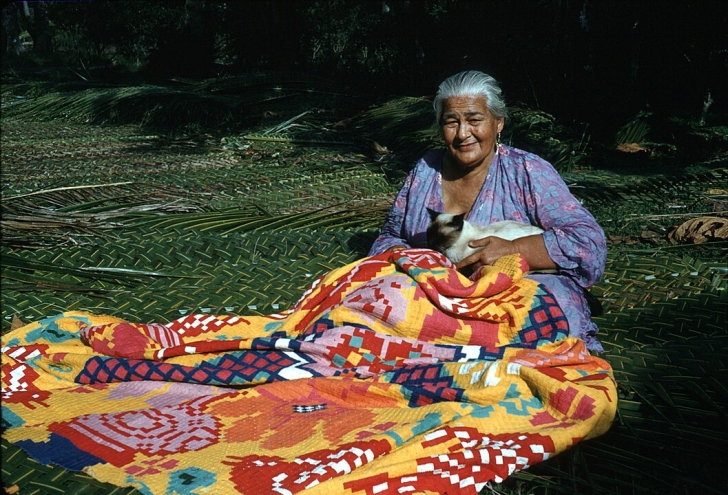
She said her reconnection began through the traditional Cook Islands textile art known as tivaivai, a form of hand-stitched quilting developed by Island women after the arrival of Christian missionaries. While earlier generations produced bark cloth, the introduction of cotton fabrics and vibrant colors led to a distinctive new art form that blended cultural continuity with historical change.
Turori explained that her grandmother had been a tivaivai maker before taking factory work, and several quilts had been passed down in her family. Learning the art as an adult, she said, became an entry point into deeper cultural understanding and self-awareness.
Her initial attempt to document the practice through film, however, proved unsuccessful. Turori said she approached the project with a Western mindset focused on efficiency and outcomes, rather than the relational rhythms central to Indigenous communities.
She later returned without cameras or equipment, choosing instead to sit, listen and learn from elder women who shared stories while stitching together. That shift, she said, revealed how art-making is inseparable from relationship, memory and patience.
“It’s not fast,” Turori noted during the conversation, describing the slow, intentional nature of the work. She said the shared process of creating together allowed stories, grief and identity to surface naturally.
One of her most significant projects emerged in the aftermath of the COVID-19 pandemic, which disproportionately affected Pacific Islander communities in California and other parts of the United States. Turori participated in a community altar project that invited people to share stories of loved ones lost during the pandemic.
She said receiving those stories felt like receiving a sacred gift that demanded a response. In Pacific cultures, she explained, gifts are reciprocated, and for her, that meant creating a finished tivaivai in honor of the shared grief.
The quilt became a tangible expression of mourning and remembrance, incorporating bright colors and floral imagery common in Pacific grieving practices. Turori said the project illustrated how art can help people process loss by giving shape and visibility to pain while fostering communal healing.
Griffin, a Cree and Saulteaux writer living in Kelowna, British Columbia, shared a parallel journey of rediscovering her Indigenous identity after growing up off-reserve in rural Alberta. She said her understanding of Indigenous culture was initially shaped by stereotypes and negative portrayals, rather than lived experience.
Writing became an early outlet for Griffin, who began storytelling as a child through imaginative play and later through poetry. During her university studies, she discovered poetry and nonfiction as tools for exploring family history, identity and emotion.
She said Indigenous traditions of oral storytelling influenced her approach, leading her to experiment with poems designed to be both read visually and performed aloud. Words on the page, she explained, could reflect movement, volume and rhythm, echoing oral forms passed down through generations.
Griffin said this artistic exploration eventually intersected with her theological studies at the North American Indigenous Institute of Theological Studies, where creative expression was welcomed alongside academic research.
Unlike many conventional graduate programs, she said, the institute allowed students to present final projects in artistic forms, including poetry collections, while still engaging deeply with Scripture, theology and scholarship.
For Griffin, drumming became another powerful means of connection. She described joining a women’s drum group made up of members from different Indigenous nations, calling drumming a form of ceremony rather than performance.
She said the drum symbolizes the heartbeat, linking individuals to one another and to the earth. In that sense, she added, drumming embodies reconciliation by reminding participants of shared humanity and interconnectedness.
Both Turori and Griffin said their theological formation helped them see art not as a peripheral activity but as a core expression of faith. Turori said making things mirrors the creative nature of God, while Griffin emphasized that reconciliation involves restoring right relationships with God, others and creation.








