I woke up very early Saturday morning (January 3, 2026) and checked my phone. There was a message from a contact in Cuba of all places, telling me the news.
Within minutes, more messages flooded in: “Are you following the news?” “I can’t believe it.” “No one expected this.”
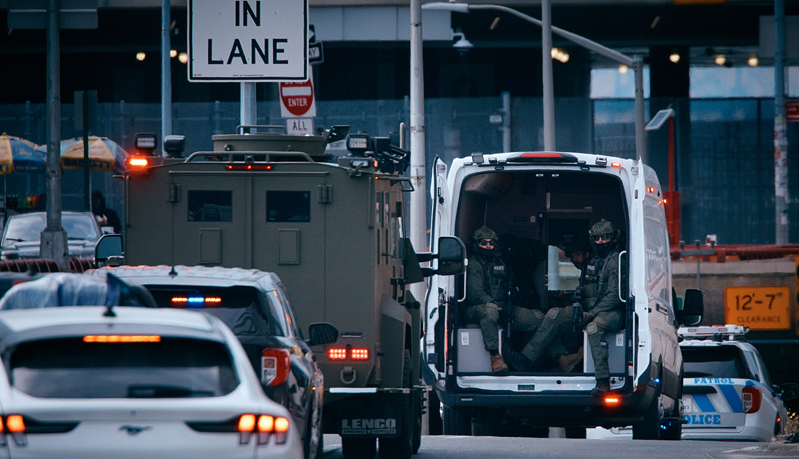
The unthinkable had happened. The Maduro regime in Venezuela—one that had survived international sanctions, mass protests, and years of diplomatic isolation—had suddenly collapsed. President Trump announced the U.S. would be “running Venezuela for the time being.” Just like that, the United States of America found itself in charge of another country.
But what does this dramatic intervention mean for religious freedom and faith communities in Venezuela? And should people of faith support what’s unfolding?
The Religious Freedom Context
The Maduro regime has systematically used religion as a tool of control and division.
To understand what’s at stake, we need to understand what Venezuelan faith communities have endured. According to research by the Observatory of Religious Freedom in Latin America (OLIRE), the Maduro regime has systematically used religion as a tool of control and division.
The playbook was borrowed from Cuba and Nicaragua: reward religious groups that align with the government, harass those that don’t. Evangelical churches close to the regime received government positions, financial benefits, and even proposals for their own university.
Meanwhile, Catholic bishops who criticized human rights violations faced threats from regime-backed gangs called colectivos. Some priests received stones thrown at their houses in the middle of the night; others had their phones stolen in what researchers identify as deliberate intimidation.
The regime created competing religious councils—one independent, one government-controlled—to sow division. President Maduro even tried to claim Jesus Christ as “the greatest socialist in history” while calling election days “Resurrection Day.”
Organized crime became a tool of religious repression.
But here’s what makes Venezuela’s religious persecution unique: it wasn’t just the government. Organized crime became a tool of religious repression.
Drug cartels, Colombian guerrillas like the ELN (National Liberation Army), and Hezbollah-linked networks all operated with regime support, creating what researchers called a “narco-state.” These groups controlled border regions and rural areas, threatening priests who spoke out and forcing Christian schools to distribute guerrilla propaganda to children.
This weaponization of organized crime against faith communities represents an overlooked dimension of religious persecution in Latin America—one that could have implications far beyond Venezuela’s borders.
Three Critical Questions for People of Faith
1. Will removing the cartel-state actually help religious freedom?
The drug cartels, Hezbollah, and the party are still there. Removing Maduro is one thing. Dismantling the networks of organized crime that have been terrorizing religious communities? That’s something else entirely.
The degree of lawlessness in Venezuela is hard to grasp from the outside.
The degree of lawlessness in Venezuela is hard to grasp from the outside. All these gangs and cartels—heavily armed, deeply entrenched—they’re not going anywhere just because Maduro is gone. They’ll create a mess. Just like in Syria.
Research I conducted with my colleague Teresa Flores at OLIRE for the USAID-USIP Closing the Gap project identified four types of criminal groups restricting religious freedom in Venezuela: regime-backed colectivos, drug trafficking networks run by military officials, Islamist groups, and Colombian guerrillas. A U.S. intervention that doesn’t address these power structures could leave faith communities just as vulnerable—or more so.
2. What about the legitimacy crisis?
What’s troubling is that President Trump said nothing about installing the legitimate winners of Venezuela’s 2024 election. Instead, he made it “sound like a USA money grab,” as one colleague noted.
Under international law, this intervention raises serious questions. Venezuela held elections. Opposition leaders likely won. Why not prioritize restoring democratic legitimacy rather than U.S. control?
Venezuelan religious leaders have risked everything for democratic principles.
For faith communities that have suffered for speaking truth to power and defending democracy, this matters enormously. As the OLIRE report documents, Venezuelan religious leaders have risked everything for democratic principles—some forced into exile, others arrested under “hate speech” laws for criticizing the regime. They advocated for the rule of law, not for replacing one authoritarian system with another, however well-intentioned.
3. Can the USA actually do this right?
Regime change has not worked well for the U.S.
Regime change has not worked well for the U.S. Iraq is doing okay, now. It also worked in Panama. But definitely not in Afghanistan, Syria, Libya, Yemen, etc.
The track record should give us pause. Iraq’s “okay” status came after hundreds of thousands of deaths and the rise of ISIS, which specifically targeted Christians and religious minorities. Afghanistan’s Christian converts remain in hiding. Libya descended into chaos where both Christians and Muslims face violence from militias.
Venezuelan faith-based organizations have maintained crucial humanitarian networks through the crisis—Catholic Caritas distributing food and medicine, Fe y Alegría schools serving the poorest neighborhoods, Protestant groups running feeding programs.
These networks operated despite regime harassment, import restrictions, and threats. Will a U.S. occupation strengthen or undermine them?
What should happen now?
If the U.S. is serious about supporting freedom—religious and otherwise—in Venezuela, several things must happen:
-
Prioritize Venezuelan democratic legitimacy over U.S. control
-
Address the organized crime networks that have become tools of religious persecution
-
Support, don’t supplant, faith-based humanitarian organizations that know the country
-
Ensure religious freedom for all, not just groups aligned with U.S. interests
-
Have a real plan for what comes next, not just the intervention itself
The Venezuelan faith community has shown remarkable resilience through years of persecution.
The Venezuelan faith community has shown remarkable resilience through years of persecution. They’ve mediated local conflicts, defended human rights, and maintained hope through extraordinary hardship. They deserve better than to trade one form of control for another.
As people of faith watching these events unfold, our response should be shaped by both principle and prudence—supporting genuine freedom while questioning whether this intervention will actually deliver it.
Originally published as a Five4Faith Substack article. Republished with permission.
Dennis P. Petri, PhD is the International Director of the International Institute for Religious Freedom and Founder and scholar-at-large of the Observatory of Religious Freedom in Latin America. He is a Professor in International Relations at the Latin American University of Science and Technology. He is the author of The Specific Vulnerability of Religious Minorities, a book on undetected religious freedom challenges in Latin America.
The International Institute for Religious Freedom (IIRF) was founded in 2005 with the mission to promote religious freedom for all faiths from an academic perspective. The IIRF aspires to be an authoritative voice on religious freedom. They provide reliable and unbiased data on religious freedom—beyond anecdotal evidence—to strengthen academic research on the topic and to inform public policy at all levels. The IIRF's research results are disseminated through the International Journal for Religious Freedom and other publications. A particular emphasis of the IIRF is to encourage the study of religious freedom in tertiary institutions through its inclusion in educational curricula and by supporting postgraduate students with research projects.