
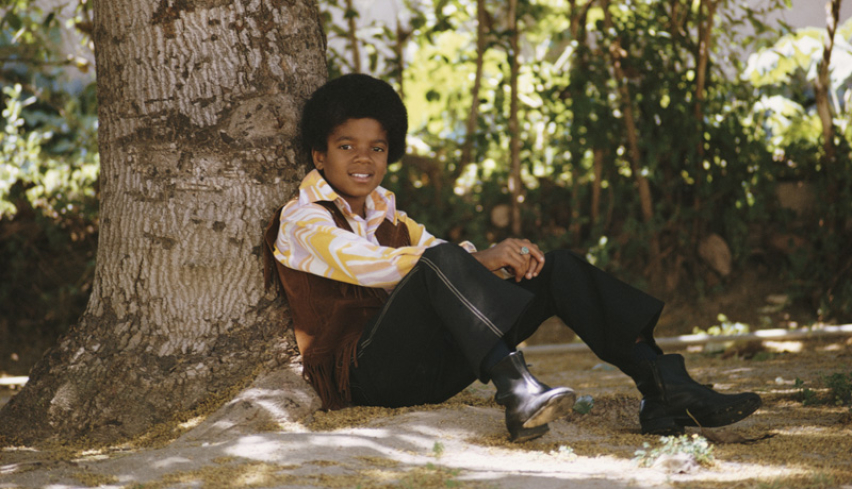
Michael Jackson has sold over 500 million records. He redefined popular music and could fill stadiums on every continent. Yet he struggled desperately with his own identity, saying in a 2003 interview with British journalist Martin Bashir, “I am one of the loneliest people on this earth… I guess you could say that it hurts to be me.”
What about us?
All the fame and success couldn’t fulfill a deep need inside him. Which got me thinking... what about us?
How do you see yourself? Are you secure in your identity as a child of God—loved, purposeful, grounded in the immense promise of a risen Savior? Or, like many, do you sometimes feel less steady, confident one moment and unsure the next, wrestling with who you are and what your life is meant to be?
It is deeply human to feel unsettled at times.
If that’s you, you’re far from alone. It is deeply human to feel unsettled at times—shaken by life’s challenges, the words of others or overwhelmed by the pace of the world. These moments can distort how we see ourselves, how we relate to others and how we interpret the world around us.
I found myself thinking about this recently as the world once again turns its attention to the King of Pop, Michael Jackson. With the BBC documentary "Michael Jackson: An American Tragedy" trending, and the biopic "Michael" breaking box office records, the predictable cycle of fascination, admiration, and controversy has resurfaced.
I should confess: "Bad" was the first album I ever owned. I played the cassette endlessly on my not-quite-Sony Walkman. I was too young to experience "Off the Wall" or the cultural earthquake of "Thriller", but "Bad" made me a fan for life. Jackson’s music, rhythm, and the way he danced were magical.
As a young teen, I couldn’t understand how someone... could appear so intent on self-destruction.
As I grew older, I also witnessed some of the most troubling chapters of his life: the first allegations of child abuse, the infamous moment when he dangled his baby over a balcony railing, the increasingly erratic behavior, the dependence on medication and visible frailty. As a young teen, I couldn’t understand how someone with such extraordinary talent who seemed to have the world at his feet could appear so intent on self-destruction.
He was at war with his own identity.
His appearance drew the most attention at first: the changing skin tone, the surgeries, the transformation into someone almost unrecognizable. It was painful to watch. Despite everything he had achieved, he was at war with his own identity, trying to erase every trace of the boy he once was. And, even with an entourage around him, he often described feeling incredibly lonely.
The abuse Michael and his siblings endured from their father, Joe Jackson, is well documented. Michael often said he longed to please him but never felt good enough. That early wound shaped him profoundly and could explain why he so often sought affirmation from fans, sometimes in dramatic ways, such as the incident with his baby. His erratic behavior led to the tabloid press dubbing him "Wacko Jacko".
Most of us don’t share his fame or resources, but we do understand what it feels like to question who we are.
Michael Jackson’s story is extreme, but the underlying struggle is not. Most of us don’t share his fame or resources, but we do understand what it feels like to question who we are, to look for validation in the wrong places and to feel lonely even when surrounded by people.
These are deeply human struggles and ones that ultimately only find their true answer in Christ.
These are deeply human struggles and ones that ultimately only find their true answer in Christ. Identity and our need for connection are some of the themes we explore in our new digital pathway, Ethos. Have you tried it yet?
You can take a short quiz to discover how secure you are in four areas of what it means to be human: identity, relationships, reality, and purpose. You’ll then receive a personalized profile and recommended spiritual practices to help you grow in any areas where you feel less grounded. You can explore it at ethos.beinghumanlens.com.
The King of Pop is no longer here to take it, of course, but what if someone had helped him see that identity isn’t built on what you achieve but on the unshakeable truth that we are already known and deeply loved by the God who made us?
Originally published by Being Human. Republished with permission.
Heather Carruthers is the project co-coordinator for the Evangelical Alliance's Being Human initiative.
The Evangelical Alliance in the United Kingdom is made up of hundreds of organisations, thousands of churches and tens of thousands of individuals, joined together for the sake of the gospel. Representing our members since 1846, the Evangelical Alliance is the oldest and largest evangelical unity movement in the UK. United in mission and voice, we exist to serve and strengthen the work of the church in our communities and throughout society. Highlighting the significant opportunities and challenges facing the church today, we work together to resource Christians so that they are able to act upon their faith in Jesus, to speak up for the gospel, justice and freedom in their areas of influence.








