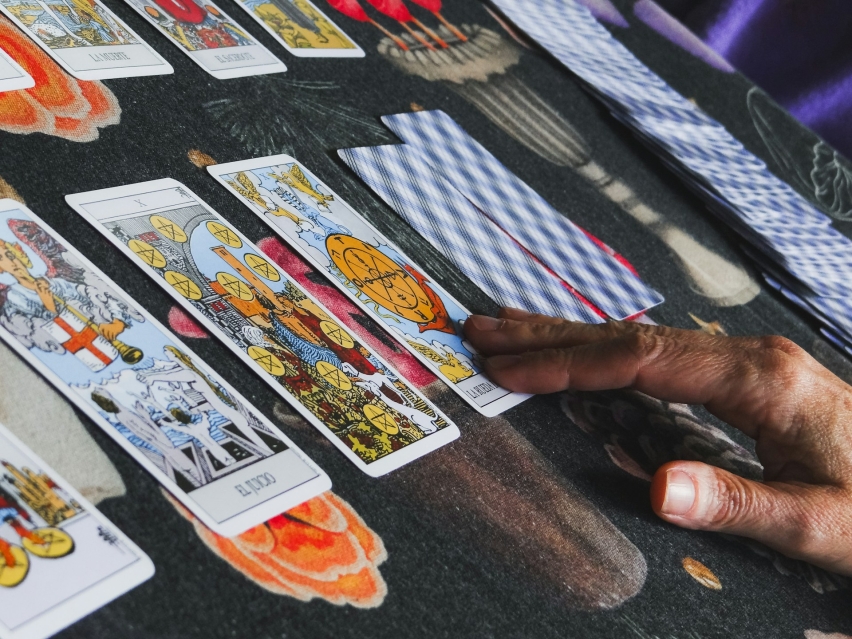
A recent survey showing that one in five churchgoing Protestants in South Korea used shamanistic services within the past three years has prompted concern among Korean Christian scholars and pastors.
One in four church members also indicated they did not strongly object to carrying a talisman, pointing to what some Korean church leaders describe as the “shamanization of faith,” according to reporting by Christian Daily Korea. They said the trend reflects a mix of popular culture, anxiety about the future, prosperity-oriented religion and weakened trust within church communities.
Shamanistic practices, including fortune-telling, saju — a Korean form of divination based on birth data — horoscopes and talismans, have long existed in Korean society. But Christian Daily Korea reported that such practices are increasingly appearing in mainstream entertainment, YouTube, social media and AI-based content, where younger people often encounter them as a form of amusement rather than religion.
Dr. Kim Young-han, president of the Christian Academic Society and professor emeritus at Soongsil University, told Christian Daily Korea that the spread of shamanistic content should be understood in the context of what he called a “post-Christian” cultural moment shaped by postmodernism and religious pluralism.
Kim said Korea’s shamanistic traditions predate Christianity and remain embedded in the culture. Even Christians, he said, may be influenced when they are repeatedly exposed to shamanistic themes through secular media.
“Religious pluralism claims that all religions are equally paths to salvation, but the Korean church must preserve the essence of biblical Christianity,” Kim said. “The church can maintain its reason for existence only when it stands on evangelical faith and faith centered on the Word.”
Pastor Lee Chun-sung, secretary-general of the Korea Christian Ethics Institute and an associate pastor at Woori Church in Bundang, said the most significant shift is that fortune-telling is increasingly treated as entertainment.
“In the past, visiting fortune tellers or consulting saju was something people wanted to hide and felt ashamed about,” Lee said. “But now, especially among younger generations, there is a strong tendency to consume saju and horoscopes simply as entertainment or fun.”
Lee said some young Christians now approach fortune-telling with the attitude that “it’s just for fun,” weakening the sense that such practices conflict with Christian teaching. He also expressed concern about AI-generated horoscopes and online saju services, saying they can begin as entertainment but grow into dependence.
“At first it begins as entertainment, but eventually people become increasingly dependent on it in order to relieve anxiety about the future,” Lee said. “In that process, there is a danger that people come to rely more on divination and shamanistic elements than on God.”
Dr. Jung Jae-young, a sociology of religion professor at Seoul Theological University of Practical Studies and director of the 21st Century Church Research Institute, told Christian Daily Korea the issue should not be viewed only as individual compromise. He said it also points to weaknesses in church community life.
Jung said some saju cafés and fortune-telling venues function as places where people can talk openly about private fears and decisions. Churches, he said, do not always provide that same sense of safety.
“The problem is that many church members feel unable to safely share their deep concerns and wounds within the church,” Jung said, adding that when prayer requests or counseling details spread within a congregation, people may look elsewhere for comfort.
He said divination can be appealing because it offers quick answers and practical direction in times of uncertainty. He also linked the trend to prosperity-oriented faith, saying material success and personal well-being can become so central that the line between seeking God’s blessing and seeking spiritual help elsewhere becomes blurred.
Dr. Seo Chang-won, chairman of the Korea Institute for Reformed Preaching and a former professor at Chongshin Theological Seminary, gave a sharper theological warning.
“I believe that people who call themselves believers while visiting fortune tellers or dabbling in shamanistic beliefs are falling into the sin of idolatry forbidden by God,” Seo said. “Someone who accurately predicts the past is not necessarily able to predict the future. The future belongs to God.”
Seo said Christians should fear God, trust Scripture and reject dependence on spirits or divination.
The experts cited by Christian Daily Korea said the issue reflects more than a temporary cultural trend. They pointed to several overlapping factors: the weakening of biblical teaching, the rise of religious pluralism, the influence of entertainment media, material-centered forms of faith and declining trust in church communities.
They said Korean churches face a dual challenge: teaching more clearly on the gospel and Christian doctrine while also becoming communities where believers can speak honestly about anxiety, wounds and uncertainty without fear of exposure.