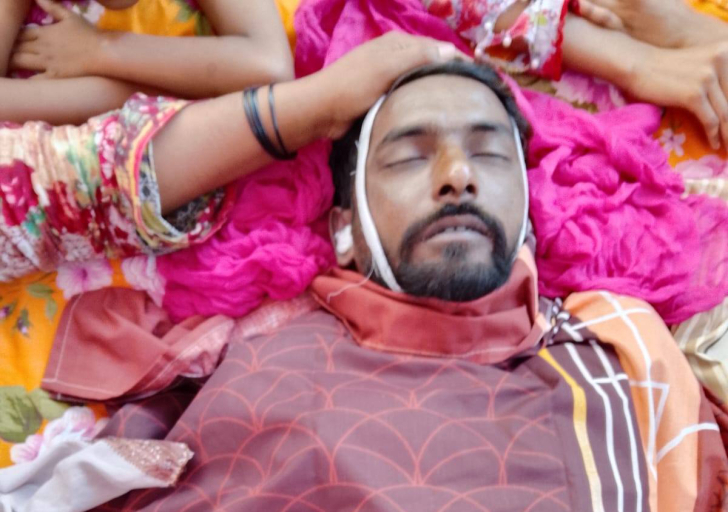
At least six Christian sanitation workers have lost their lives and one remains in serious condition after inhaling toxic gases while working in sewers over the past few weeks in Pakistan’s Punjab and Sindh provinces, despite court mandates requiring the government to implement proper safety measures for these essential workers.
On May 7, Shabbir Masih, a sanitation worker and father of three, died in Faisalabad, Punjab, while his colleague Sanwal Masih was hospitalized due to exposure to poisonous gases. Earlier, on May 4, two workers, Shakeel Masih and Samar Masih, died in Sahiwal, Punjab, while cleaning a manhole without any protective equipment. On April 17, three other workers—Wilson, Waqas, and Nazeer—were killed while clearing a blocked sewer line in Surjani Town, Karachi, Sindh Province.
Rights activist William Pervaiz said that Shabbir Masih had not received his wages for two months, forcing him to work without safety gear.
"Due to abject poverty, Shabbir Masih felt compelled to descend into the manhole, resulting in his tragic death. He was the sole breadwinner for his family, leaving behind three children," Pervaiz stated on social media. He called for accountability from the Water and Sanitation Agency (WASA) and immediate compensation for the bereaved family, alongside demands for safety equipment for all sanitation workers.
Ejaz Alam Augustine, a Christian member of the Punjab Assembly, expressed regret over the negligence shown by WASA and local municipal corporations. He also criticized the legal action taken against Khalid Masih, a Christian subcontractor, whose involvement in hiring the two deceased workers in Sahiwal has led to accusations of negligence."I have called for a thorough investigation into the scapegoating of a Christian subcontractor to shield a Muslim contractor from accountability," Augustine told Christian Daily International.
Augustine also noted that a request has been made in the Punjab Assembly to discuss this inhumane treatment of sanitation workers, stressing that these systemic failings must be addressed urgently.
Labor rights groups assert that the recent fatalities highlight ongoing discrimination and marginalization faced by Christians, who constitute approximately 80% of Pakistan's sanitation workforce.
A July 2025 Amnesty International report entitled, “Cut Us Open and See That We Bleed Like Them,” found that sanitation workers in Pakistan face systemic discrimination, hazardous conditions and caste-based exclusion in public-sector employment, as previously reported by Christian Daily International.
Amnesty noted that sanitation work is overwhelmingly assigned to non-Muslims from so-called “lower castes,” often without offering them real alternative employment options. The situation is even more precarious for women sanitation workers, who face “triple discrimination” at the intersection of caste, religion, and gender, it stated.
The report also noted that stigmatization has made sanitation workers vulnerable to violence, including in cases involving blasphemy allegations. It cited several cases of Christian sanitation workers accused of blasphemy, including the country’s most high-profile blasphemy victim, Aasiya Noreen, better known as Asia Bibi.
Data collected from nearly 300 government job advertisements from 2010 to March showed that many explicitly required applicants to be non-Muslim or from “lower castes,” reinforcing historical caste-based employment patterns and effectively pushing non-Muslim workers into sanitation roles.
Following high-profile court rulings from the Islamabad High Court (IHC) in December 2025, all job advertisements for sanitation work must now avoid discriminatory language, such as "Christians only," and instead require a more inclusive phrasing. The court emphasized that sanitation workers must be protected with appropriate safety measures to prevent further loss of life.
Justice Raja Inam Amin Minhas of the IHC noted that over 70 Christian sanitation workers have died since 1988 due to exposure to toxic gases. The court labeled the neglect and lack of safety provisions as serious failures of state responsibilities and mandated the federal government to ensure comprehensive safety measures for these workers, including functional protective gear and monitoring devices.
In line with ongoing efforts to ensure workers' rights, the National Commission for Human Rights (NCHR) has filed a constitutional petition to the newly established Federal Constitutional Court (FCC) seeking an end to manual sewer cleaning, spotlighting the dire risks sanitation workers face due to hazardous working conditions and the absence of protective equipment and training.
As the FCC resumes hearings on this critical issue, the NCHR's petition underscores the urgent need for a national health and safety framework to protect sanitation workers. The lack of regulatory enforcement has resulted in a continued cycle of toxic exposure, injury, and avoidable deaths.
Rights activists say the dire circumstances surrounding sanitation workers in Pakistan reveal the urgent need for reforms and accountability, as they continue to confront dangerous conditions without adequate protection or recourse.