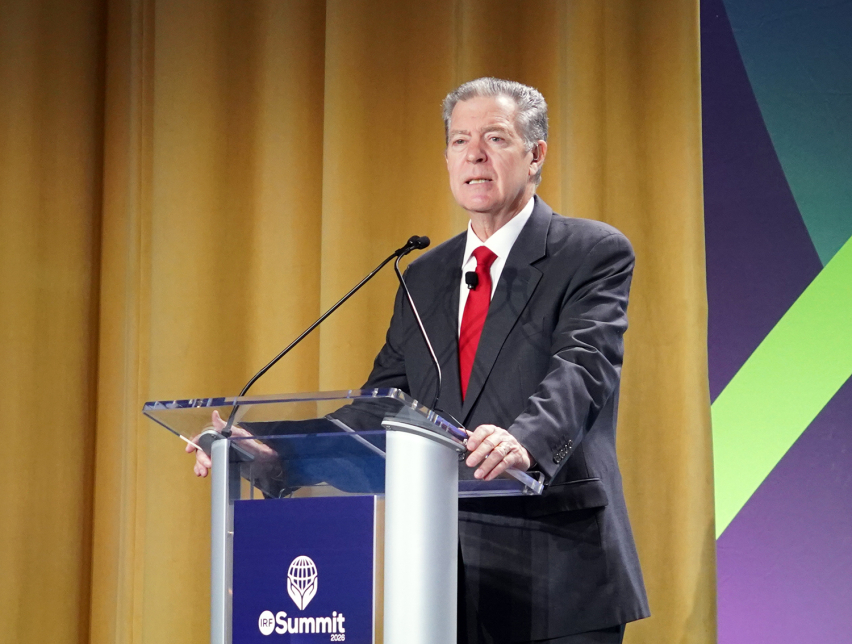
The sixth annual International Religious Freedom Summit opened Monday, Feb. 2, in Washington, D.C., with a call to intensify global advocacy for freedom of belief, as co-chairs warned that religious restrictions and persecution are rising worldwide even as the movement to defend conscience rights gains strength.
Addressing hundreds of advocates, faith leaders and policy experts at the Washington Hilton, IRF Summit co-chair Dr. Katrina Lantos Swett, president of the Lantos Foundation for Human Rights, said the international religious freedom movement stands at a crossroads.
“It was the best of times, it was the worst of times,” she said, borrowing a line from Charles Dickens to describe what she called the growing momentum for religious freedom alongside the expanding repression faced by people of faith. “More people than ever now live in countries and regions where their most fundamental conscience rights are restricted, repressed, and threatened.”
The two-day summit, running through Tuesday, brings together more than 90 organizations representing over 30 faith traditions. The event features plenary sessions, spotlight presentations and breakout tracks focused on action, accountability and awareness.
Co-chair Sam Brownback, who served as U.S. ambassador-at-large for international religious freedom from 2018 to 2021, framed the movement as both a moral and geopolitical struggle.
“Ours is truly a global movement feared by dictators around the world because we represent the heart of freedom,” Brownback said. “They actually fear religious freedom more than they do aircraft carriers or even nuclear weapons.”
Brownback described people of faith living under repressive regimes as “our greatest ally,” saying their perseverance and public witness challenge authoritarian systems from within.
The IRF Summit was launched in 2021 and has grown into one of the largest civil society gatherings focused on advancing freedom of religion or belief worldwide. Organizers say nearly 80 percent of the world’s population lives in countries with high levels of governmental or societal restrictions on religion, a trend that has steadily increased in recent years.
Summit partners say their goal is to build political and public support for international religious freedom and to encourage governments, civil society and faith communities to defend conscience rights across borders.
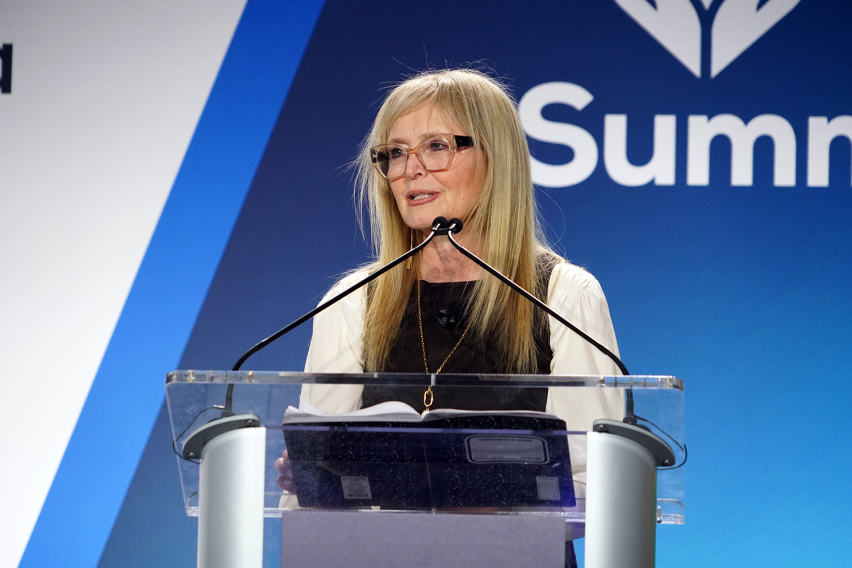
In her remarks, Lantos Swett said the movement’s growth has been fueled by a broad coalition committed to speaking on behalf of those who suffer because of their beliefs. “Each of us here has answered the age-old question, ‘Am I my brother’s keeper?’ with a resounding ‘yes’,” she said.
The summit is guided by a charter adopted in 2021 that affirms freedom of religion and conscience as a universal human right rooted in human dignity and protected under international law, including Article 18 of the Universal Declaration of Human Rights.
The charter defines religious freedom as encompassing individual belief, communal practice and public expression, and calls on governments, religious bodies and civil society organizations to take practical steps toward ensuring freedom of religion and belief for all people.
Organizers say the annual gathering is intended to strengthen cooperation among advocates and to draw global attention to religious persecution, discrimination and violence, which they describe as growing threats to social stability, human rights and peace.