
The Italian Evangelical Alliance has raised theological and practical concerns following the signing of a national ecumenical agreement that brings together Catholic, Orthodox, Protestant and some Evangelical and Pentecostal churches in Italy.
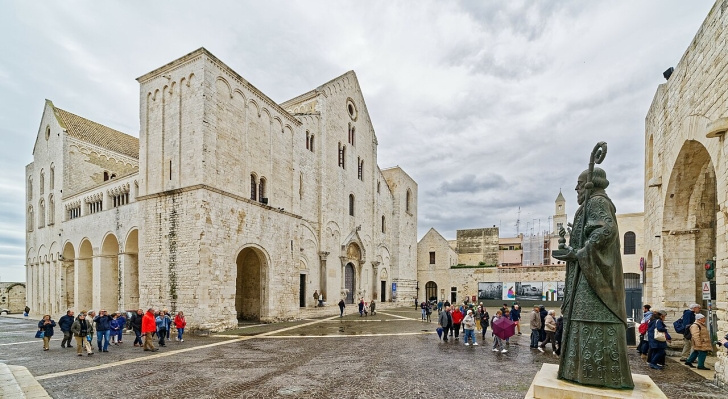
In a statement published in February, the alliance’s Federal Executive Council addressed the “Covenant Between Christian Churches,” signed Jan. 23 in Bari by senior representatives of 18 Christian churches and organizations, according to reporting by Evangelical Focus. Signatories included Cardinal Matteo Zuppi, president of the Italian Episcopal Conference, along with leaders from Orthodox churches, the Waldensian Church, the Baptist Union and the Federation of Evangelical Churches in Italy.
The covenant commits participating churches to mutual recognition as Christian communities, cooperation in common witness, and the avoidance of “every form of competition, proselytism or overreach,” language that has prompted concern among some evangelicals about its implications for evangelism.
The agreement builds on decades of ecumenical development in Italy. Local councils of Christian churches first emerged in Venice in 1993 and now operate in 19 Italian cities, organizing joint initiatives among Catholic, Orthodox and historic Protestant communities. The Bari covenant represents the first attempt to formalize such cooperation at the national level.
According to the alliance’s statement, the covenant reflects a theological framework that defines Christian unity primarily in terms of shared baptism and institutional reconciliation. The alliance cautioned that this approach risks treating unity as an absolute value, without sufficient attention to doctrinal differences that evangelicals consider essential to the biblical gospel.
Particular concern was raised over Article 2 of the covenant, which commits churches to avoid proselytism and to welcome one another as “sister churches.” The alliance said this language appears to place Roman Catholicism and evangelical churches on equal theological footing, a position it said would represent a significant departure from Reformation convictions.
The statement also questioned how the covenant’s rejection of proselytism would be applied in practice, especially with regard to evangelizing individuals baptized in Catholic or Orthodox churches. Alliance leaders expressed concern that traditional evangelical outreach could be interpreted as unethical or illegitimate under the covenant’s framework.
The participation of a Pentecostal church — the Church of Reconciliation — was cited as a notable development, marking the first time a body from Italy’s charismatic-Pentecostal sector has joined a national ecumenical agreement of this kind. Historically, much of Italy’s Pentecostal movement has remained outside formal ecumenical structures.
In 2014, several major Pentecostal bodies in Italy, including the Assemblies of God in Italy and the Federation of Pentecostal Churches, endorsed a declaration promoted by the Italian Evangelical Alliance stating that “irreconcilable theological and ethical differences” made ecumenical engagement with the Roman Catholic Church untenable.
The alliance said it remains uncertain whether the Church of Reconciliation’s participation signals a broader shift within Italian Pentecostalism or represents an isolated case.
The statement concluded by contrasting two visions of Christian unity: one based on shared baptism and institutional recognition, and another grounded in conversion and adherence to the biblical gospel. The alliance warned that, under the latter understanding, the covenant represents “a further step away from the biblical integrity of Christian unity.”








