For Victoire Ingabire Umuhoza, faith was never a political tool. It was a calling. A devout Catholic who once aspired to become a nun, Ingabire has long drawn strength from her religious convictions. But today, as she sits in detention in Rwanda awaiting trial, even that source of comfort has been stripped away.
Her daughter, Raïssa Ujeneza, describes a pattern that goes beyond politics, one that touches on conscience, isolation and control
“My mother has made no secret of her strong faith and that she draws a lot of strength from that,” Ujeneza said in an interview with Christian Daily International.
She said her mother is now completely barred from attending church. “I think it is a way to mentally break her, but also just to show her how much control they have over her movements and what she is allowed and not allowed to do,” she said.
During Ingabire’s previous imprisonment, authorities allowed her to attend church, but under strict conditions.
“She would be the last one entering and the first one to leave so that they would put a gap between her and other churchgoers,” Ujeneza said. Now, even that limited access has disappeared.
The restriction, her daughter argues, is not incidental. It reflects a broader effort to isolate her from any community that could sustain her including fellow believers.
“Christians tend to be known in societies for daring to stand for justice despite the dangers,” Ujeneza said, suggesting authorities may fear the solidarity such groups can provide.
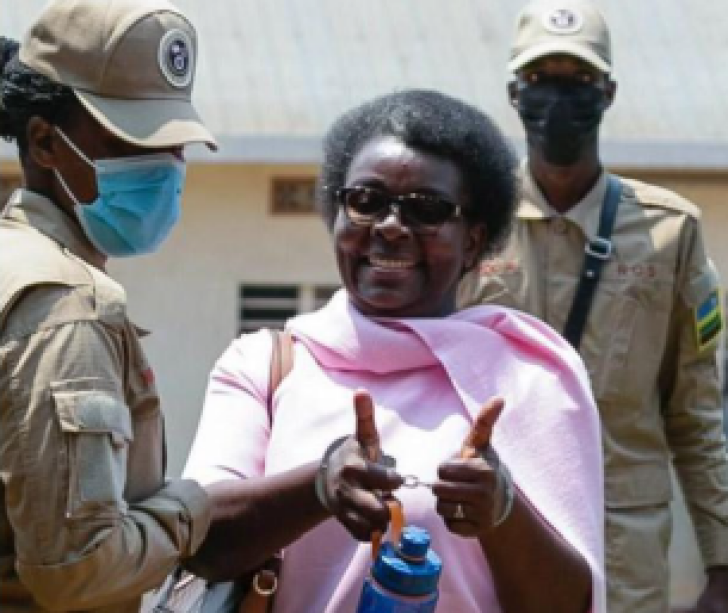
Her account comes amid wider concerns about religious space in Rwanda. In recent years, hundreds of churches have been closed over regulatory compliance issues, a move the government says is about safety and order, but critics say has tightened control over religious life. Within that environment, Ujeneza believes churches themselves are cautious.
“To continue to be a church to the people, they need some kind of free movement, so to appease the government, they stay away and refrain from certain comments,” she said.
Limited access to family
Beyond faith, Ingabire’s personal connections have also been severely restricted. “They do not allow us to talk to her,” Ujeneza said.
The situation echoes her earlier imprisonment, when direct contact was rare. “It took six years for our mother to be able to call us,” Ujeneza said, recalling that even then, the call was only permitted due to a family emergency.
Ingabire was arrested again in June 2025. Nearly nine months later, Rwanda’s Supreme Court ruled that her arrest and investigation were lawful, dismissing her objections.
According to Ujeneza, the legal challenge centered on how the case was initiated. “In this case, a judge made that ruling, and it is the same judge who will rule over her case. So how much bias is there?” she said.
Her mother had argued that the process violated proper legal protocols and rendered the case invalid. The court disagreed.
The ruling means Ingabire will remain in custody as the trial proceeds, with no clear timeline.
“Last time it took over two years before there was a verdict, so it might as well be the same,” she said.
Political journey
Ingabire’s case cannot be separated from her political role. A longtime opposition figure, she returned to Rwanda in 2010 after years in exile in the Netherlands to challenge President Paul Kagame’s government. She was later convicted on charges including terrorism and inciting division, which she denied. She was released in 2018 by presidential pardon.
International organizations, including Amnesty International and Human Rights Watch, have repeatedly criticized her earlier trial as politically motivated. A 2017 ruling by the African Court on Human and Peoples’ Rights found that Rwanda had violated her rights to freedom of expression and defense.
Her latest arrest follows renewed accusations linked to alleged subversive activity, charges her supporters again reject as political. Ujeneza believes her mother’s international visibility has made her a target.
“They see international media covering her story, and this frustrates them because they cannot silence her unless they put her in jail,” she said.
Politics, she said, was never Ingabire’s original path. “She never intended to become a politician, but slowly but surely this has become her vocation,” Ujeneza said. Instead, what began as conviction has turned into a lifelong mission.
“She is going to invest everything she has in bringing about democracy and revealing truths… this is her life's work,” she said.
Despite years of imprisonment and pressure, Ujeneza says her mother remains resolute.
“Her will is strong,” she said. Even exile is not an option.
“She would not return to the Netherlands… her life is in Rwanda. She will live and die in Rwanda,” she said.
For Ujeneza, her mother’s case reflects a broader issue across Africa. One shaped by fear of dissent. “I think sometimes we think we see competition, but it is indeed all fear,” she said.
She called for greater openness toward political and religious differences.
“Being from a different religious group doesn’t mean you’re a threat,” she said.
Instead, she urged societies to embrace pluralism. “We have more to win if we do that. There is more to unite us than that separates us,” she said.
As Ingabire waits for trial, her situation sits at the intersection of faith and politics. A woman who once considered religious life now finds herself cut off from worship. A political opponent remains in custody under a system her family believes is stacked against her.