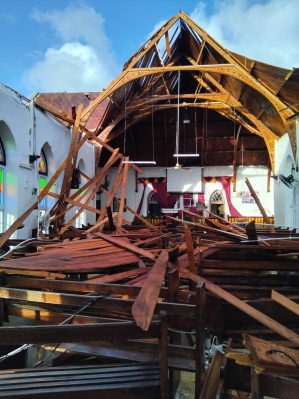
More than 170 churches across Jamaica have applied for government repair grants after Hurricane Melissa tore through the island, damaging religious buildings that often serve as emergency shelters and community hubs.
The Category 5 hurricane hit the island on Oct. 28 with 185 mph (298 km/h) winds and up to 30 inches of rainfall leading to severe flooding and landslides. Parts of the South West went underwater with roads and bridges washed away. 45 people died with up to 27 missing and more than 90,000 people displaced.
Church buildings also sustained both severe and minor damage in the hurricane. The Social Development Commission (SDC) subsequently offered the grants worth a total 75 million Jamaican dollars ($476,572.05 USD) as part of the Jamaican Government’s Church Clean-Up and Restoration scheme.
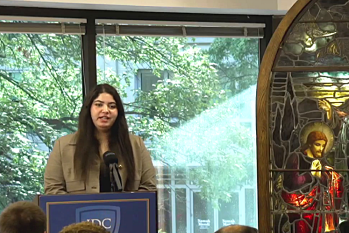
“Churches are integral to community development,” said Omar Frith, SDC Executive Director, as quoted by the Jamaica Gleaner. “Church facilities are frequently used as emergency shelters, coordination centres and meeting spaces, particularly in times of crisis. Supporting their recovery strengthens both the institutions and the communities they serve and contributes to national recovery and resilience.”
The funds were specifically available to help 11 churches in each of the 16 severely impacted constituencies in the five most affected western parishes of St. Elizabeth, Westmoreland, Hanover, Trelawny, and St. James.
“To accelerate the relief or recovery efforts, the Government of Jamaica has committed, as part of the National Clean-up Programme, funds in the amount of JMD$75 million to support the restoration of churches,” says a Restoration of Churches Project Brief for the Community Churches Recovery Initiative (CCRI).
“The programme seeks to provide targeted, transparent, and accountable financial assistance to churches damaged by Hurricane Melissa, enabling them to safely resume worship and community-support functions and to contribute meaningfully to local recovery efforts,” added the brief. It outlined the money could be used for cleaning-up the buildings and minor repairs such as replacing windows, doors and partially damaged roofs.
“Minor repairs are defined as works that are not structural in nature and which are intended to help churches return to functionality as quickly as possible,” the brief said.
Meanwhile, the Jamaica Gleaner reported that Everald Warmington, a ruling Labour Party Member of Parliament for St Catherine South Western, objected to grants being given for church building repairs. He wanted church communities to amalgamate instead, saying that most churches had few people. The MP also said taxpayers’ money should not be spent on rebuilding the church buildings, citing the separation of church and state.
However, Bishop Dr Alvin Bailey, president of Jamaica Evangelical Alliance, rebutted the objection and reportedly said Warmington had no authority to speak about the church on the island. He also highlighted the fact that churches had been involved in aid efforts after the hurricane.