The Independent Electoral and Boundaries Commission (IEBC) and the Evangelical Alliance of Kenya (EAK) convened a prayer breakfast Wednesday, Feb. 4, launching a formal partnership ahead of the 2027 General Election aimed at safeguarding the country's democratic process through value-based engagement. The initiative comes as the commission warns it faces a significant shortfall in funding for key pre-election activities.
Bishop Philip Kitoto, Chairperson of the EAK, described the church's involvement as a "biblical mandate" to serve as a voice of reason. He emphasized that after over 50 years of independence, Kenya must transition away from "destructive vices" toward a model of justice and integrity.
"The Church cannot remain silent in moments of injustice, violence, or moral decay," Bishop Kitoto stated, stressing that the clergy is committed to pastoring the nation toward peaceful elections. The EAK called for a clear national roadmap to address political polarization and condemned all forms of incitement and hate speech.
IEBC Chairperson Erastus Edung Ethekon told the gathering the meeting demonstrates the commission’s commitment to inclusivity. He urged faith leaders to promote ethics and engage politicians within their pews to ensure transparency during the upcoming election cycle. Ethekon noted that the IEBC is applying lessons from the 2022 polls by adopting a cycle-based preparation strategy, currently finalizing its 2025-2027 Election Operations Plan (EOP).
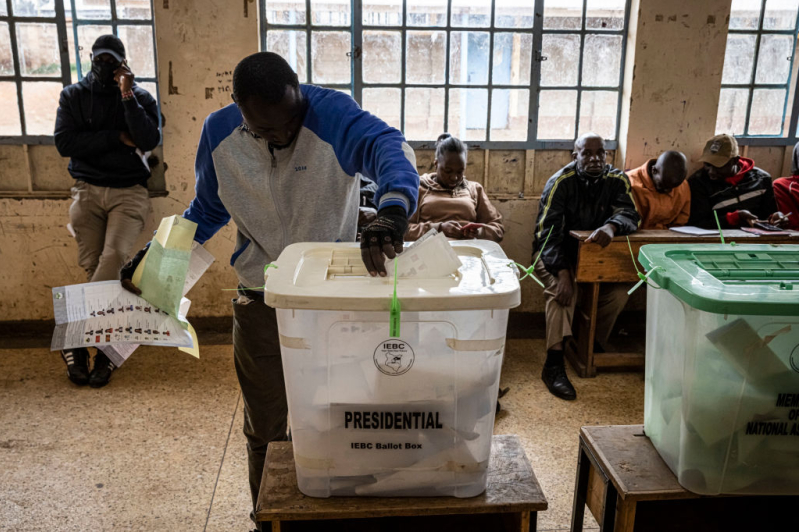
Continuous Voter Registration (CVR) resumed in September 2025 and remains ongoing. Ethekon set March 2026 as the target to launch Enhanced Mass Voter Registration (MVR), which will expand to the ward level. To support this, the commission is upgrading its systems to reduce congestion for first-time voters—a move aimed at addressing the digital bottlenecks seen in previous cycles.
Multi-billion shilling funding gap
Despite the roadmap, the IEBC faces a 6.7 billion shilling ($51.9 million) budget deficit specifically for pre-election activities. Ethekon attributed the gap to "delayed and inadequate funding," noting that while the commission proposed a 63 billion shilling ($489 million) budget for the full cycle, current allocations have been reduced by the National Treasury.
The commission is also navigating an administrative transition following the Feb. 3, 2026, resignation of CEO Marjan Hussein Marjan, who stepped down by mutual consent after a decade at the commission. These internal changes and stalled legislative reforms—including the reconstitution of the selection panel and campaign financing laws—remain significant hurdles as the 2027 polls approach.
The IEBC emphasized that election readiness requires cooperation with civil society, the media, and security agencies. While the commission welcomed the EAK’s support, civil society groups noted that the roadmap’s success depends on technical transparency and the timely passage of pending electoral laws just as much as moral advocacy.