Korean academics warned that moves to legalize assisted suicide and expand access to medication abortion risk eroding core bioethical standards, citing legal ambiguity, medical risks and international precedents where safeguards weakened over time.
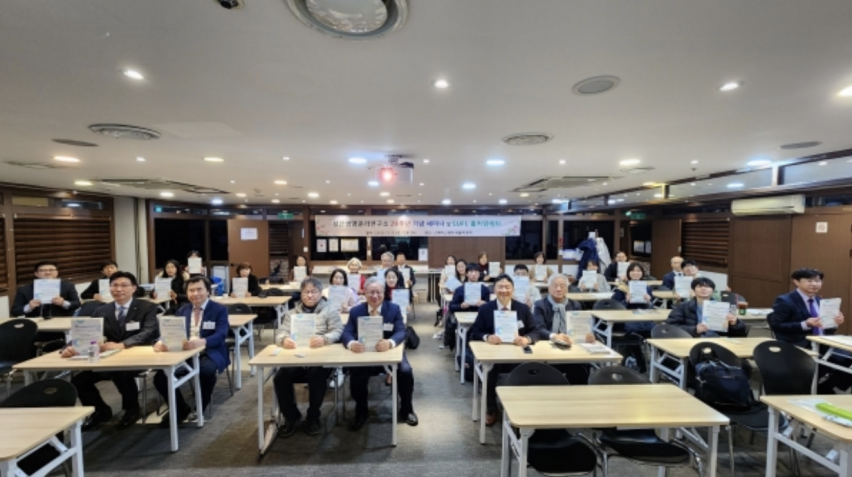
According to reporting by Christian Daily Korea, the warnings were delivered at the Sungsan Bioethics Research Institute’s 28th anniversary seminar held Saturday (Dec. 13) in Seoul, where legal scholars, theologians and medical professionals examined what they described as intensifying bioethical pressures in South Korea amid renewed legislative debate.
In a keynote legal analysis, Shin Hyo-sung, an adjunct professor of law and public administration at Myongji University, cautioned that Korea’s ongoing discussion of an “Assisted Dignified Death Act” conflates distinct concepts with far-reaching consequences.
“‘Death with dignity’ refers to withdrawing life-sustaining treatment at a terminal patient’s request, while assisted suicide involves a person ending their life with help from others, and euthanasia means a third party directly causes death,” Shin said. “When these concepts are mixed in legislation, misunderstanding is inevitable, and that creates serious legal risk.”
Shin said proposed Korean legislation relies heavily on post hoc oversight by review committees, raising questions about how criteria such as terminal status, unbearable suffering and voluntary consent would be assessed in practice. He argued the structure mirrors systems that later expanded beyond their original intent.
Pointing to the Netherlands, Shin said strict limits promised at the introduction of euthanasia were gradually loosened as oversight mechanisms failed to function effectively. He noted that eligibility later extended to patients with mental illness and dementia, and in 2023 was expanded to allow euthanasia for children under 12.
“The Dutch case is a clear warning that laws introduced with good intentions can expand in unintended directions,” Shin said. “Legalizing assisted suicide represents a fundamental shift across bioethics, medicine and law. Without broad social consensus and tighter safeguards, the consequences may be irreversible.”
Medical experts at the seminar raised similar concerns regarding medication abortion, challenging claims that it is a safe and straightforward alternative to surgical procedures.
Hong Soon-cheol, a professor of obstetrics and gynecology at Korea University College of Medicine, said medication abortion is often promoted as noninvasive and convenient while obscuring significant medical risks to both the fetus and the pregnant woman.
“Misoprostol was originally developed to treat gastric ulcers,” Hong said. “Its use as an abortion drug emerged from its side effect of inducing uterine contractions, not from being designed for reproductive care.”
Hong said the growing commercial distribution and online sale of abortion drugs have led to their use outside regulated medical systems. He cited reported complications including fetal abnormalities, uterine rupture, heavy bleeding and a high rate of follow-up surgical interventions.
“This is not a safe procedure,” he said. “It is simply a ‘hidden abortion’ — less visible, but not less dangerous.”
Hong added that medication abortion raises broader ethical concerns beyond immediate medical risk, including commercialization, pressure on physicians to perform procedures against their conscience, and proposals to loosen regulation through telemedicine and pharmacy sales.
“The direction Korea should take is not expanding the convenience of abortion,” he said, “but building medical and policy environments that protect life while ensuring pregnant women receive real support.”
Jang Ji-young, chair of the SUFL steering committee, echoed those concerns in a presentation that framed medication abortion as a form of structural violence masked by rights-based language.
“Medication abortion is often described as a ‘safe choice’ or a matter of women’s rights,” Jang said. “But international data show it frequently leads to complications requiring emergency care, hospitalization or surgery.”
Jang cited data from the United Kingdom’s National Health Service indicating that while complications occur at significant rates, official reports record only a small fraction, calling into question the reliability of safety statistics.
“It is not a lower-risk option,” she said. “It is a less visible risk.”
Jang criticized policy efforts that expand abortion access through insurance coverage or designation as essential medicine, arguing that such measures prioritize accessibility over women’s long-term health and fetal protection.
“Language such as ‘choice’ and ‘reproductive rights’ can obscure the reality that risk is being transferred to women,” she said. “This weakens both women’s health rights and the protection of fetal life.”
Other academic respondents reinforced the concerns. Lee Sang-won, former dean of Chongshin Theological Seminary, argued that terms such as assisted death, euthanasia and death with dignity differ linguistically but converge ethically.
“All involve ending life with medical assistance,” Lee said. “Semantic distinctions should not distract from that reality.”
Choi Ga-eun, a nurse at Korea University Anam Hospital, said limited end-of-life training for Korean medical students could unintentionally normalize euthanasia as an option. She noted that palliative and hospice care infrastructure must be strengthened before legislative changes are considered.
“Without proper experience in end-of-life care, medical professionals may see euthanasia as an alternative rather than a last resort,” Choi said.
The seminar took place amid continued legal uncertainty in South Korea following a 2019 Constitutional Court ruling that found the abortion ban unconstitutional but left lawmakers to revise the law. Proposed amendments to the Mother and Child Health Act have sparked debate by allowing abortion regardless of gestational age.
Organizers said the event was intended to re-center public discussion on ethical foundations rather than political urgency.
“These are not narrow policy questions,” Hong said. “They are questions about what kind of society we are becoming, and how we define the value of human life.”