

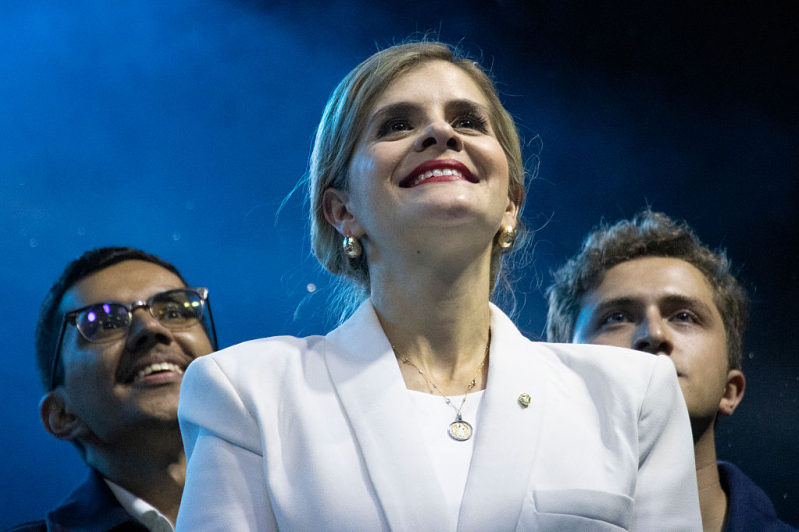
After her electoral victory Sunday, Feb. 1, with more than 48% of the vote, Costa Rica’s president-elect, Laura Fernández, held her first news conference, outlining how her administration will relate to the country’s religious sector.
With a conciliatory yet firm tone, Fernández said her government will be marked by an unwavering defense of freedom of conscience and freedom of worship.
When asked about her position on churches and the faith of citizens, Fernández was emphatic: “My position is one of freedom. People must have total freedom of worship — whether they are Catholic, Christian, Jewish or simply do not profess any faith.”
She said she will lead a “government of respect for differences and respect for the beliefs of every Costa Rican.”
That approach reflects the spirit in which she celebrated her victory. In her first public remarks after the results were announced, she entrusted her future government to God, recognizing His sovereignty over the nation.
During the news conference, Fernández shared details about her private life and religious background, stressing that while her public role will be inclusive, she holds deep personal convictions.
“In my personal life — which belongs to me and my family — I am a practicing and respectful Catholic, deeply devoted to the traditions of Catholicism,” she said.
She also noted that her education was shaped by religious institutions. “I was educated in a Catholic primary school and high school, and I have always felt very close to my personal devotions,” Fernández said.
Fernández said religious affiliation will not be a factor in forming her Cabinet or choosing collaborators. Instead, she said she will prioritize technical excellence and moral integrity.
“To form the government and lead Costa Rica, I will surround myself with the best profiles, without any kind of discrimination,” she said.
She added: “Anyone who is Catholic, evangelical or has no faith at all — if they have technical competence, moral character and a good heart — can work with us.”
The president-elect called for national unity through what she described as a “great crusade” involving all social and religious sectors.
“I believe the time has come for a great crusade for national human dignity, a great crusade for love of neighbor, for social justice, for the restoration of values and the family,” she said.
She also reassured leaders of different denominations that her administration will keep open channels of dialogue, as she has done with figures from diverse faith communities.
“I would never persecute any religious leader of any church,” Fernández said, noting her close relationships and frequent conversations with Catholic leaders, evangelical Christians, Jews and representatives of other faith traditions in the country.
Fernández concluded by reaffirming that her goal is for Costa Ricans to practice their beliefs “in absolute freedom, fully and without any kind of inequality.”
Originally published by Diario Cristiano, Christian Daily International's Spanish edition.


