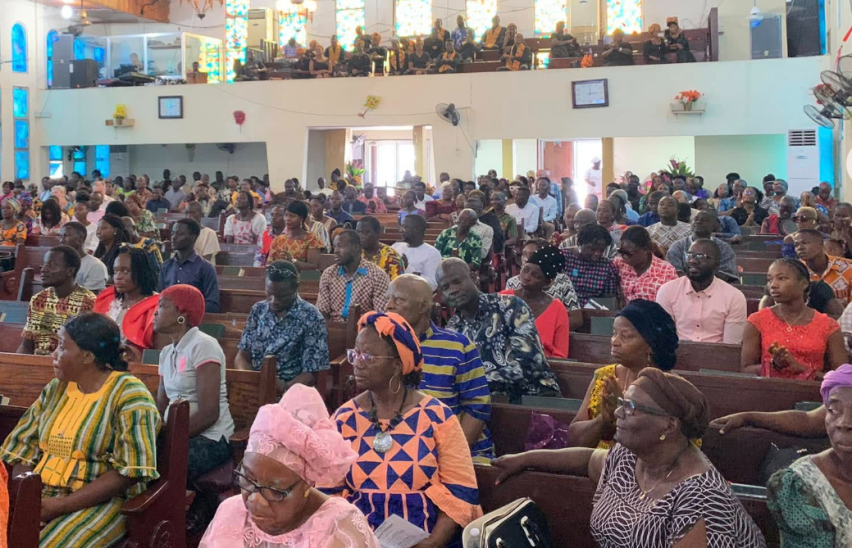
Thirty-six years after hundreds of civilians seeking refuge inside a Lutheran church were massacred during Liberia’s brutal civil war, the country’s military has publicly apologized for atrocities committed by its soldiers. Church leaders and survivors welcomed the unprecedented acknowledgment but said genuine reconciliation will require more than words.
The Armed Forces formally apologized for crimes committed by its predecessor in 1990 at St. Peter’s Lutheran Church in Monrovia, during the country’s civil war. The apology marked the first time the military institution has publicly accepted responsibility for abuses carried out under its former leadership.
"I would like to say on behalf of my boss that we regret our dark past," said Oscar Mulbah, assistant defense minister for public affairs, according to AllAfrica. "This is the time to show that we have been able to choose hope over fear. The minister of national defense wants me to assure that this institution is loyal to the people and the state. It's a people-centered military. This Armed Forces of Liberia are the respecter of rule of law and human dignity. The history of the Armed Forces of Liberia is one that we regret, but we own it."
For survivors gathered at the church where an estimated 600 men, women and children were killed after seeking sanctuary, the moment carried deep emotional significance.
Yet many also renewed calls for Liberia’s lawmakers to pass legislation establishing a long-delayed War and Economic Crimes Court, arguing that acknowledgment without accountability cannot fully heal the nation's wounds.
“The apology is meaningful because it recognizes what happened,” survivor representatives said during the commemoration. “But justice has been delayed for too long.”
The massacre at St. Peter’s Lutheran Church remains one of the darkest chapters of Liberia’s First Civil War. Government soldiers entered the church compound where civilians had sought protection and opened fire, killing hundreds in what has become one of the country’s most notorious wartime atrocities.
The attack shocked the international community and became a symbol of the indiscriminate violence that devastated Liberia during two civil wars between 1989 and 2003.
The Lutheran Church has spent decades preserving the memory of those killed while urging successive governments to pursue justice and national healing. This year’s memorial included prayers, remembrance ceremonies and the unveiling of a new memorial honoring the victims, alongside the military's formal apology.
Church leaders have consistently maintained that Christian forgiveness does not eliminate the need for justice.
Over the years, leaders from Liberia’s Christian community have argued that reconciliation requires truth, accountability and repentance. During previous commemorations of the Lutheran massacre, Catholic Church leaders declared that “there can be no reconciliation without justice,” urging the government to establish a war crimes tribunal to prosecute those bearing the greatest responsibility for wartime atrocities. They warned that failing to hold perpetrators accountable risks allowing history to repeat itself.
That conviction continues to resonate across Liberia's churches.
The World Council of Churches, which highlighted Liberia in its global prayer cycle, described St. Peter's Lutheran Church as the site of one of the country's worst wartime massacres and called on Christians worldwide to pray for the churches' witness in rebuilding peace, promoting reconciliation and serving communities still living with the legacy of conflict.
Survivors say healing remains incomplete because many of those responsible for atrocities have never faced trial.
Liberia's Truth and Reconciliation Commission recommended the establishment of a war crimes court in 2009 after documenting widespread abuses committed by all major factions during the country's conflicts. Despite those recommendations, political opposition and years of inaction prevented the creation of the tribunal.
Glimmer of justice
Momentum has increased under President Joseph Boakai's administration. Earlier this year, the president submitted draft legislation establishing a War and Economic Crimes Court to Liberia's Legislature after extending the mandate of the Office for the Establishment of the War and Economic Crimes Court.
The proposed court is intended to investigate and prosecute those most responsible for serious violations committed during the civil wars while strengthening the rule of law and ending decades of impunity.
Human rights organizations welcomed those steps but cautioned that survivors have already waited more than three decades for justice. A coalition including Human Rights Watch, the Center for Justice and Accountability and Liberian civil society groups recently urged the government to move "without delay" toward making the court operational while ensuring meaningful participation by victims and affected communities.
The Center for Justice and Accountability, which has supported survivors of the Lutheran Church massacre in international legal proceedings, says the Liberian government has yet to fully investigate those responsible despite successful prosecutions abroad involving former wartime commanders. The organization argues that accountability ultimately belongs in Liberia itself through a functioning domestic war crimes court.