
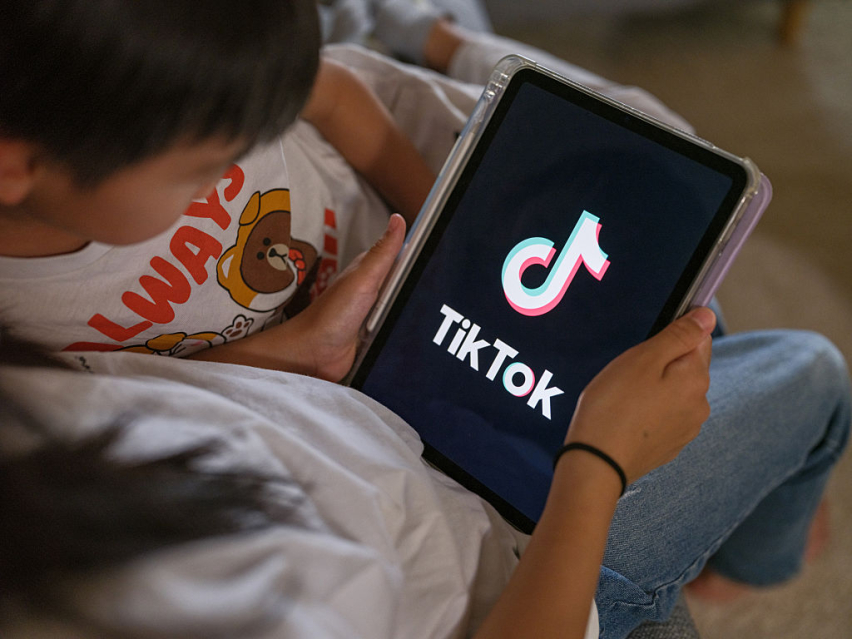
More than half of German children and young people aged 12 to 17 support restricting access to social media for minors, even though most of them describe the platforms as good for their own lives, according to a report published Aug. 27 in Berlin by the German health insurer Techniker Krankenkasse.
The report, titled "Jugend zwischen Like und Limit" ("Young People Between Like and Limit"), found that 55% of respondents backed some form of ban. Eight percent supported a general prohibition for children and young people, while 47% favored a ban up to a certain age. Those respondents proposed an average age limit of 14. Thirty-nine percent rejected a ban outright.
The findings arrive as several governments have moved to bar or restrict minors from social media platforms, and as courts and regulators press technology companies over the design of their products. The German statutory health insurer used the release to argue that legal limits alone will not resolve the problem, and that platform operators and educators share responsibility.
Positive views, with reservations
Despite the support for restrictions, 80% of the young people surveyed said social media does them rather good or very good, the insurer reported.
Jens Baas, chairman of the executive board of Techniker Krankenkasse, said young people value the platforms for contact with friends, ideas and access to information. "At the same time, however, they are also aware of the downsides, such as fake news, cyberbullying and other content that is mentally burdensome," he said in the release. He added that society must find lasting solutions to protect the health and well-being of children and young people.
Asked what irritates or stresses them most, 57% of respondents named excessive advertising. The spread of false information followed at 52%, then spending too much time online at 36%, bullying and insults at 35%, and inappropriate images or videos, such as depictions of violence, at 31%.
Heavy use linked to poorer well-being
The report drew a series of comparisons between young people who spend four or more hours a day on social media and those who spend one to two hours. The insurer said no causal relationship can be derived from the survey data, but described the pattern as consistent.
Among heavy users, 49% said they were often or constantly in a bad mood, compared with 20% of light users. Gaps of a similar size appeared for feelings of insecurity and doubt (41% versus 22%), dissatisfaction with oneself (40% versus 22%), irritability or anger (39% versus 14%), inner restlessness (39% versus 17%) and exhaustion (39% versus 22%).
Physical complaints followed the same pattern, according to the report. Sleep problems were reported by 38% of those spending four or more hours a day on the platforms, against 14% of those spending one to two hours. Heavy users also reported more headaches or migraines (37% versus 12%), muscle tension or back pain (30% versus 17%), abdominal pain (28% versus 12%) and irritated eyes (22% versus 8%).
Baas said existing research points in the same direction. He cited depressive moods, anxiety disorders, dissatisfaction with one's own body and sleep problems as effects that have been associated with intensive use.
Insurer argues bans are not enough
Techniker Krankenkasse said a broad prohibition would not adequately address the risks its report identified.
"In our view, a blanket social media ban to protect children and young people from the risks online does not go far enough," Baas said. "We live in a digital world — for children and young people to be able to handle social media in a healthy way over the long term, media literacy is decisive." He said providers must also be held to account and offer versions of their platforms suited to young users, without advertising and without algorithms that encourage compulsive use.
Lilli Berthold, deputy secretary general of the Bundesschüler*innenkonferenz, the national body representing school students, told the insurer that many young people cannot cut back on their own. A ban, she said, should only ever be a last resort, with sustained work on media literacy by parents and schools mattering more.
Asked what would help them use social media safely, 48% of respondents pointed to educational videos about the risks placed on the platforms themselves. Forty-six percent wanted trained contacts at school, such as media scouts, 43% wanted more conversations with their parents and 42% favored workshops or projects. Twelve percent said no support was needed.
Valentin Dander of the Gesellschaft für Medienpädagogik und Kommunikationskultur, a German association for media education, offered practical advice in the release. Accompanying young people's media use at home with interest and a critical eye, and negotiating rules together, is where it starts, he said, along with deliberate choices about which platforms to use. He said creative and social leisure activities outside digital spaces are also needed.
Debate over restrictions widens
Governments in several countries have already legislated. Australia passed a law in late 2024 barring children under 16 from social media platforms, with penalties of up to 50 million Australian dollars ($32.5 million) for companies that fail to comply and no exemptions for existing users or parental consent. Prime Minister Anthony Albanese said at the time that the aim was to allow young Australians a childhood and to give parents peace of mind. Digital researchers questioned the reliability of age-verification technology and warned that restrictions could be circumvented, while some experts described the measure as too blunt an instrument.
The British government announced in June that under-16s would be barred from platforms including Snapchat, TikTok, YouTube, Instagram, Facebook and X, following the Australian model. Mark Gilmore, policy adviser at the UK Evangelical Alliance, told Christian Daily International that the measure was unlikely to achieve what was intended.
"A social media ban is not a silver bullet, and many young people will find ways around it," Gilmore said. "But social media has caused real harm to children's wellbeing, relationships and safety." He said the alliance had pressed for stronger accountability of technology companies, and that churches had an opportunity to offer young people spaces of friendship, belonging and support as the changes take effect.
Reuters reported in June that authorities in a range of countries, Germany among them, have introduced restrictions on young people's use of social media.
Platform design has also come under legal pressure. Meta Platforms agreed in August to pay billions of dollars and change core features of Facebook and Instagram to settle claims by dozens of U.S. states that it built its platforms to be addictive to children.
Under that settlement, Meta agreed to impose daily time limits for teenagers, restrict overnight access, silence notifications during school hours and late at night, interrupt endless scrolling, and limit beauty filters and visible "like" counts. Several of those measures address the same features the German report identified as sources of stress for young users.








