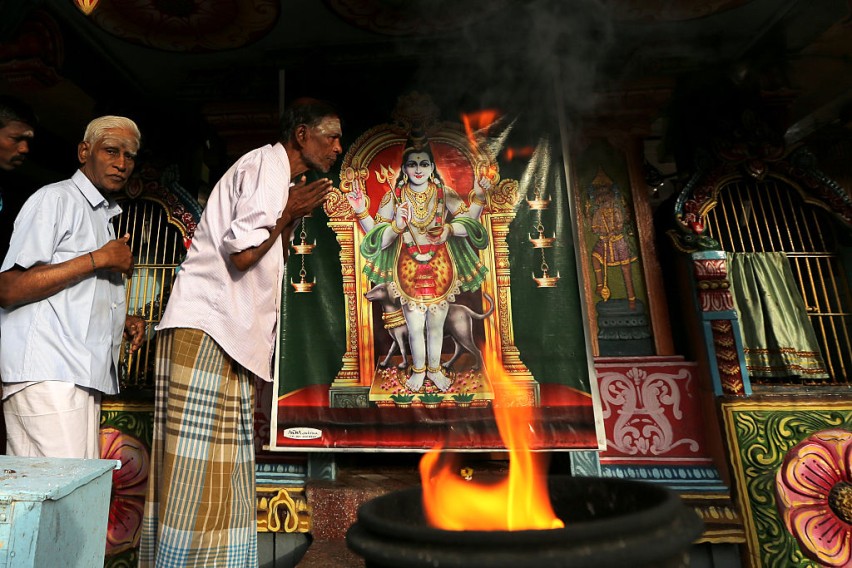
For decades, religious persecution in Sri Lanka was framed mainly as Sinhala-Buddhist nationalist campaigns against Christians and Muslims, but a growing body of research points to a less-examined front: Hindu nationalist or Hindutva-style movements among Sri Lankan Tamils in the northern and eastern provinces drawing ideological and organizational support from India’s Hindu right.
The research comes from Colombo-based think tanks to international watchdogs, now corroborated by direct testimony from Sri Lanka’s leading Christian advocacy body, the National Christian Evangelical Alliance of Sri Lanka (NCEASL).
This convergence of two nationalisms – Sinhala-Buddhist and Tamil-Hindu – is creating what religious freedom monitors describe as an increasingly precarious environment for Sri Lanka’s Christian minority, particularly Tamil-Hindu converts.
New Vocabulary of Hate
A December 2025 report by the Center for the Study of Organized Hate (CSOH), “Contours of Emerging Hate in Sri Lanka,” finds that Hindu nationalist organizations have steadily built grassroots influence in Tamil-majority regions since 2016, naming Siva Senai, Rudra Sena and Ravana Sena as the vanguard.
Activists founded Siva Senai in Vavuniya in 2016 to “protect Hindu heritage and communities” from “Sinhalization” and from the growing presence of Christianity and Islam in Tamil areas. Rudra Sena followed in 2020; Ravana Sena has also gained a foothold across the north and east.
Siva Senai’s chief organizer, Maravanpulavu Sachithananthan, told reporters the group formed “after consultations with many organizations in India, including the Shiv Sena, the Rashtriya Swayamsevak Sangh [RSS], Vishva Hindu Parishad [VHP] and the Goa-based Hindu Jana Jagruthi Samithi.”
Mike Gabriel, the NCEASL’s associate general secretary and head of Religious Liberty, Relief and Development, told Christian Daily International that this marks a genuinely distinct strand of persecution from the pattern familiar in the south.
“There are some similarities, particularly opposition to Christian worship and allegations of unethical or forced conversion,” he said. “However, in the north and east we are increasingly seeing these concerns expressed through a Hindu nationalist framework rather than the Sinhala-Buddhist nationalist framework more commonly seen in the south.”
The rhetoric itself, he noted, carries a distinct edge.
“The language is also different,” Gabriel said. “Groups such as Siva Senai promote ideas such as Sivabhoomi [land of Shiva, a Hindu god], portray conversion to Christianity as a threat to Tamil Hindu identity, and at times present Tamil Christianity as something foreign to Tamil culture. This introduces an additional dimension to persecution: Christians can be portrayed not only as a religious threat, but as somehow less authentically Tamil.”
Documented Escalation
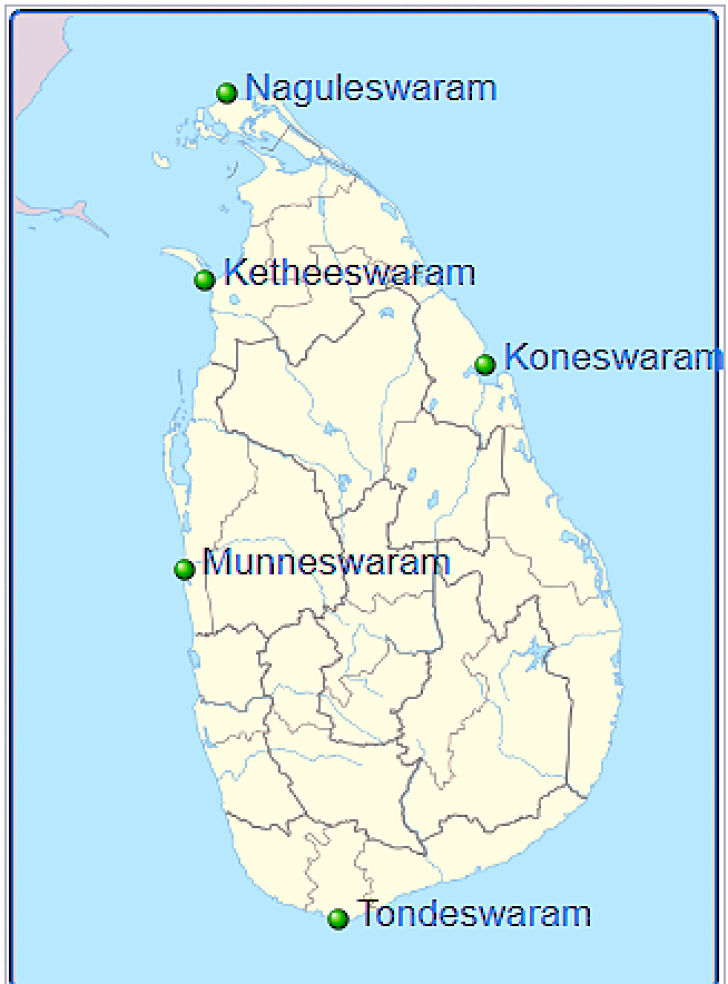
The concern is not new. As early as August 2023, journalist Skandha Gunasekara reported that Tamil civil society figures were sounding the alarm over a “surge in Hindu nationalism.”
Ambika Satkunanathan, former Commissioner of Sri Lanka’s Human Rights Commission, told The Morning: “In recent times we have seen attempts to ignite Hindu majoritarianism and nationalism within the Tamil community. In particular, in the past seven years, the increase in anti-Muslim and anti-Christian rhetoric...has started to manifest in real-life actions.”
NCEASL’s own documentation now supplies a concrete example.
“One clear example occurred in Jaffna in March 2025, when members of Siva Senai disrupted the annual blessing ceremony of a Christian church and objected to the gathering on the grounds that the church was involved in religious conversions,” Gabriel said.
But organized ideology is different from broader community sentiment, he said.
“We are careful, however, not to attribute every incident involving Hindu individuals or communities to organized Hindutva groups. Attribution requires evidence,” he said. “What concerns us is the wider pattern: organized groups such as Siva Senai and Rudra Sena openly campaign against conversion and increasingly use narratives associated with Indian Hindutva movements. Siva Senai’s links and engagement with organizations such as the RSS, VHP and BJP have also been publicly acknowledged.”
The scale is growing. NCEASL’s May 2026 report, “Rights at the Crossroads: A Legal Analysis of Religious Attacks in Sri Lanka,” documents 89 religiously motivated incidents nationwide between November 2024 and October 2025 — 58 targeting Christians and 22 targeting Hindus. Kilinochchi, a Tamil-majority district in the Northern Province, recorded the second-highest count nationally, at 12, trailing only Gampaha at 15.
Alan Keenan, in written testimony submitted to the U.S. Commission on International Religious Freedom (USCIRF), has separately warned of “new vectors of religious tension emerging as a result of the growing influence of a Hindutva-style identity among Sri Lankan Tamils,” and cautioned that this dynamic “opens up the space for a possible, if fragile, alliances between Hindu activists and Buddhist nationalist activists against the alleged threats posed by Christians and/or Muslims.”
Convergence, Not Yet Coordination
Asked whether NCEASL was tracking possible cooperation between Hindu and Buddhist nationalist actors, Gabriel confirmed the organization has broadened its lens: “We are increasingly looking at religious nationalism as a broader FoRB challenge rather than only as a Sinhala-Buddhist nationalist issue.”
Asked directly about cooperation, he was careful to not overstate it: “We would be cautious about saying that there is currently a coordinated Buddhist-Hindu nationalist alliance operating across Sri Lanka. The more immediate concern is convergence: different nationalist movements may increasingly identify Christians and Muslims as common threats.”
He pointed to the cross-border evidence behind that concern.
“There is evidence of Hindutva narratives and organizational influence moving between India and Sri Lanka, particularly through Siva Senai and related networks,” Gabriel said. “There is also funding from India which is resourcing these groups. There have also previously been attempts at engagement between Sinhala-Buddhist nationalist actors and the RSS.”
That duality complicates NCEASL’s advocacy.
“This complicates advocacy because responses must address extremism without portraying Hinduism or Buddhism themselves as the problem,” he said. “Hindutva needs to be clearly distinguished from Sri Lanka’s long-established Hindu traditions.”
Independent research echoes this nuance. An analysis by Shenali D. Waduge documents extensive Indian government-backed cultural diplomacy in the Northern Province, including temple renovation projects it says aim “to project Hindu soft power, strengthening Tamil Hindu identity aligned with Tamil Nadu and Indian cultural frameworks.”
Whatever one makes of its broader strategic claims, this documentation aligns with Gabriel’s account of Indian funding reaching Hindu nationalist networks in the north.
Larger Regional Pattern
Christian leaders and monitors increasingly place these developments within a broader South Asian pattern.
The United Christian Forum in India recorded 834 attacks on Christians in 2024, up 100 from 2023, with The Wire tracing the surge to 2014, “when the BJP [Bharatiya Janata Party] under Narendra Modi first formed the Union government,” and noting that Hindutva activists and the state increasingly wield anti-conversion laws against Christian and other minority communities.
Sri Lankan Christian communities fear similar patterns are migrating south through informal networks linking Tamil Nadu’s Hindu nationalist actors with sympathetic groups in Sri Lanka’s Tamil north and east.
State Complicity
Sri Lanka’s constitutional architecture compounds these tensions. The U.S. State Department’s latest International Religious Freedom Report on Sri Lanka, from 2023, notes that while the constitution “provides for freedom of thought, conscience, and religion,” it also “accord[s] Buddhism the ‘foremost place’ among the country’s religious faiths,” a structural ambiguity minority faiths must navigate.
Gabriel put a human face on that ambiguity. Asked what state complicity looks like in the 36 of 89 incidents implicating state actors, he said it rarely takes an overt form.
“It is more often administrative pressure, failure to protect, or the use of police authority to restrict worship than direct participation in violence,” he said. “We see pastors being summoned to police stations following complaints, demands that churches register even where there is no clear legal requirement, pressure to discontinue worship, surveillance, and sometimes a failure to act effectively against those threatening religious communities. Registration requirements have increasingly been used as a mechanism to restrict churches, particularly smaller congregations operating from rented premises.”
The pattern, he stressed, is inconsistent rather than systemic.
“There are also examples of police officers correctly recognizing that peaceful worship cannot simply be stopped, so the practice is not uniform,” he said. “The broader concern is inconsistent application of the law and the influence that local religious or community actors can sometimes exercise over state officials.”
Open Doors’ 2026 World Watch List ranks Sri Lanka 65th, with a persecution score of 55. The previous year’s list named “religious nationalism” as the country’s dominant persecution engine and noting that “converts from a Buddhist or Hindu background face the strongest persecution.”
What Comes Next
Together, these findings – from Sri Lankan and Indian civil society, U.S. monitors, international watchdogs, and now NCEASL’s own casework – show a persecution landscape no longer defined by Sinhala-Buddhist majoritarianism alone. A second axis of religious nationalism, rooted in resurgent Tamil-Hindu identity and reinforced by ties to India’s Hindutva movement, is actively fueling hostility against Christians in the north and east even as it reshapes Tamil political and cultural life.
Asked what reforms are most urgent, Gabriel pointed first to how churches are regulated.
“One of our main concerns is the regulation of places of worship. NCEASL supports a clear, transparent, streamlined and voluntary registration system, allowing churches that want legal personality to obtain it without making registration a condition for exercising the right to worship,” he said. “We also advocate for ordinary building and planning regulations to be applied equally to all religious communities, rather than using religious approval procedures to restrict minority places of worship. The 2022 circular on registration is particularly problematic because it is being implemented despite lacking a clear legislative basis.”
He framed the wider ask around consistency.
“More broadly, we are calling for consistent enforcement of laws dealing with incitement and religious hatred, stronger police accountability and FoRB awareness, and equal treatment of Buddhist, Hindu, Christian and Muslim communities,” he said.
His read on the government’s response was measured.
“The government response has been mixed. There have been instances where senior police officers have correctly clarified that registration is not mandatory, but the same requirements continue to be imposed elsewhere,” he said. “The government has also taken some initial steps to address extremist religious narratives, but we have yet to see a comprehensive policy response addressing these structural problems.”
Sri Lanka’s dwindling Christian minority now faces pressure from two directions – Sinhala-Buddhist nationalism in the south, an ascendant Hindu nationalism in the north, and the coming years will test whether the country’s fragile pluralism, protected on paper but eroded in practice, can hold.