

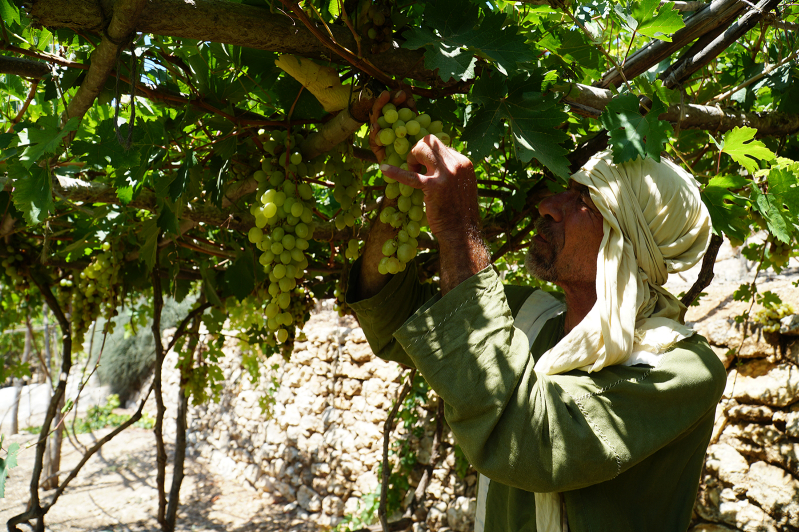
On a hillside overlooking modern Nazareth, visitors step away from traffic and apartment blocks and into a re-created agricultural landscape shaped by stone terraces, vineyards and olive trees — a setting designed to reflect daily life in Galilee two millennia ago.
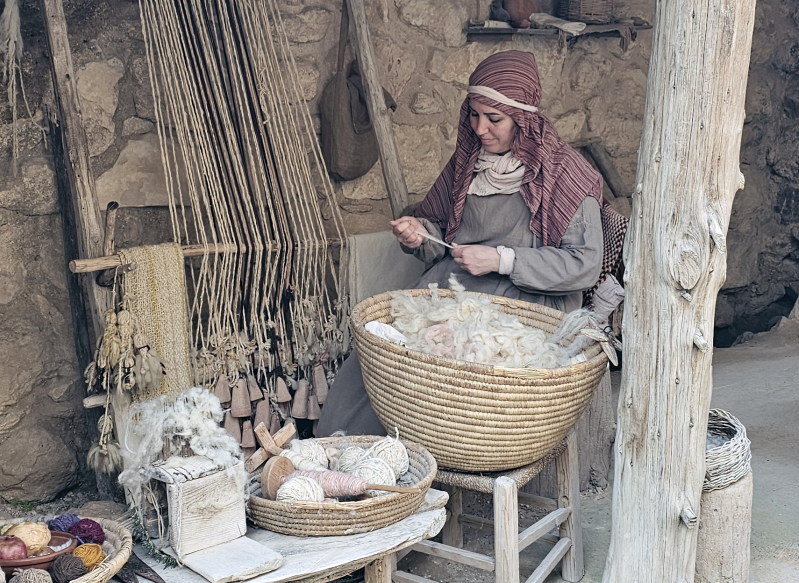
Here, at Nazareth Village, Scripture is not only read or quoted but embodied. While the guides themselves are dressed in modern clothing, they introduce visitors to villagers, farmers and tradespeople in first-century dress, weaving biblical passages into explanations of farming cycles, family life and communal worship as they would have been experienced in the time of Jesus.
For nearly 30 years, the site has drawn pilgrims, pastors and students from around the world seeking to understand the Gospels within their original historical and cultural context. As Nazareth Village marks its 25th anniversary, its leadership is also preparing for a significant new chapter — an ambitious expansion aimed at accommodating growing visitor demand and deepening educational impact, even after years of disruption caused by the COVID-19 pandemic and regional conflict.
“We see again and again that when people come here, the Bible becomes real,” said Maha Sayegh, director of Nazareth Village, in an interview with Christian Daily International. “People tell us they have read Scripture all their lives, but when they walk through the village, something changes. Suddenly they understand how powerful and tangible it is.”
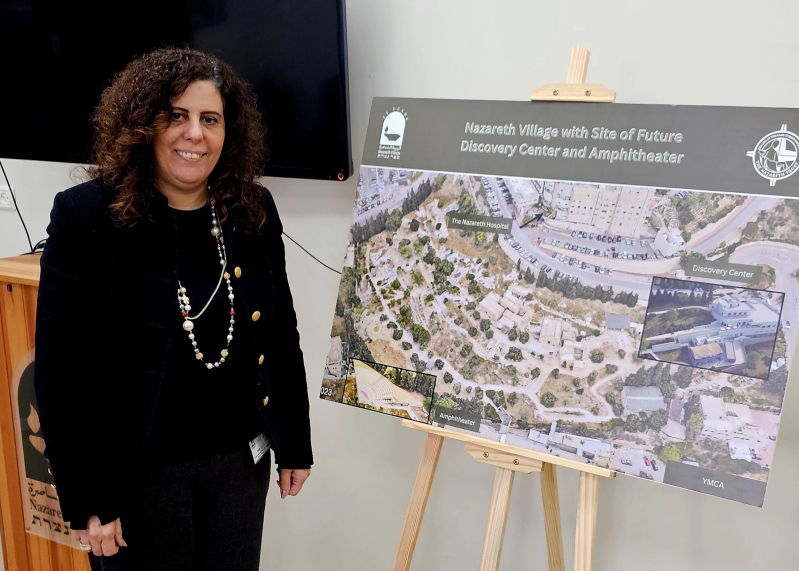
Sayegh has been closely connected to Nazareth Village since its earliest days. She joined the project in 1997, when the concept was still being shaped by a small group of local Christian leaders and international partners committed to creating a site that would tell the story of Jesus from within his hometown.
She began as an assistant to the first director, supporting the early planning stages as the team prayed, met regularly and worked to transform a vision into a functioning ministry. Over the years, she served in multiple roles across the organization before being appointed director in 2015.
“I feel privileged to be part of this project,” she said. “As a Christian living in this land, to serve in a Christian organization in Jesus’ hometown is a unique opportunity.”
For Sayegh, Nazareth carries particular theological and symbolic weight. The Gospels recount that Jesus grew up in Nazareth and lived there from childhood until the beginning of his public ministry at about age 30, later returning after preaching and teaching in Galilee, where he was rejected in his hometown synagogue. Nazareth Village, she said, offers a way of “bringing him back”— telling his story from the place where it began.
“To share the story of Jesus from Nazareth, not from afar, but from here, where he grew up, is very meaningful,” she said.
Each year in peak seasons, Nazareth Village has welcomed more than 100,000 visitors from more than 110 countries, according to the organization. Before the pandemic, attendance reached more than 123,000 visitors in 2019, placing significant strain on the site’s facilities.
What draws many visitors, Sayegh said, is the way biblical teaching is integrated into everyday life rather than isolated as abstract theology.
“They understand how Jesus’ words fit into first-century reality,” she said. “When he speaks about farming, vineyards or community life, people here can show exactly what that looked like.”
Visitors frequently describe the experience as emotionally moving. Sayegh said it is common to see people deeply affected at certain stations along the tour, particularly in places such as the olive press or the synagogue.
“We see people in tears,” she said. “They are touched not only by the history, but by the message itself.”
Even clergy who return repeatedly with tour groups often report discovering new insights.
“Pastors tell us that each time they come, even with a different guide, they learn something new,” Sayegh said. “They hear Scripture in a fresh way and then want to share that understanding with their congregations.”
Nazareth Village was intentionally designed to differ from many archaeological sites in Israel, which typically present ruins and excavation layers accompanied by informational signage.
“Here, we try to bring the stones to life,” Sayegh said. “You meet the people. You hear their stories.”
The guides are believers who are passionate about both Scripture and storytelling. The team includes local Arab Christians, Messianic believers and international volunteers who serve for periods ranging from weeks to a full year.
“This diversity is very important,” Sayegh said. “People meet local Christians, hear about life today, and also see believers from many nations serving together.”
The village also partners with Christian organizations that have representatives in Israel, inviting them to help lead groups in their own languages and share about their ongoing work in the land.
“For many visitors, it’s their first time learning about the living Christian community here,” she said.
While Nazareth Village was conceived as a reconstruction, subsequent archaeological discoveries confirmed that the site itself reflects genuine first-century agricultural use.
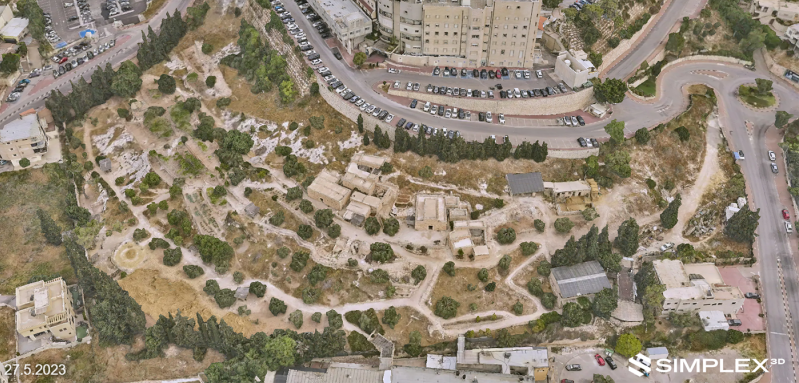
The land belongs to the E.M.M.S. Nazareth - Nazareth Trust, a Scottish Christian charity that also operates the Nazareth Hospital — the oldest hospital between Beirut and Jerusalem, founded in 1865 — the Academic School of Nursing, and SERVE Nazareth, a volunteer program that works in conjunction with all branches. Because the land remained under charitable ownership, it was preserved from commercial development.
During early exploration, archaeologists uncovered a rock-cut wine press, pottery fragments dated to the first century and stone terraces used for farming. These findings shaped the layout of the village and its interpretive route.
“The idea of the village came first,” Sayegh said. “But then archaeology confirmed that this was indeed a first-century farm.”
She noted that vineyards, wine presses and watchtowers described in the Gospels closely resemble features found on the site, making it plausible that Jesus himself would have known the area.
“This kind of agricultural work was a community event,” she said. “Everyone would join in during harvest. So who knows — maybe he did too.”
Despite its popularity, Nazareth Village currently operates within physical limits. The site’s Welcome Center is rented, and in recent years the organization has had to turn visitors away because it could not accommodate additional groups.
To address this, leaders have launched a multi-phase development plan that includes a new visitor center with expanded restrooms, multimedia orientation spaces and exhibits introducing visitors to first-century Nazareth before they enter the village. A 300-seat amphitheater is also planned for teaching, performances and large group gatherings.
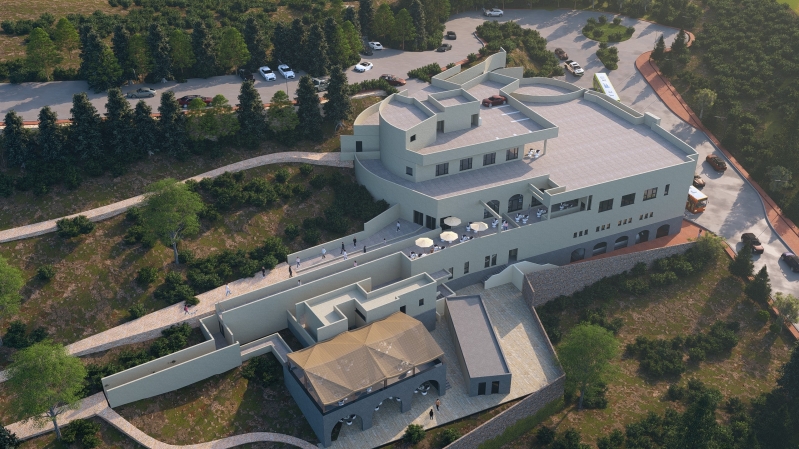
Foundations for the new building were laid this year — a step Sayegh described as both challenging and hopeful given the region’s ongoing conflict.
“In times of war, development is not what you expect,” she said. “But with the support of donors and friends, we felt this was the right moment.”
Nazareth Village, like much of Israel’s tourism sector, has endured years of instability. After COVID-19 closures, visitor numbers rebounded sharply in 2023, with more than 80,000 people visiting before Oct. 7. Tens of thousands of additional visits were canceled after the outbreak of war.
Still, Sayegh remains confident in the ministry’s long-term calling.
“Five very difficult years — yet we are still here,” she said. “By God’s grace, we are planning for the future.”
“No war lasts forever,” she added. “We believe normal days will return, and when they do, we will continue to do what we are called to do.”
For Nazareth Village, that calling remains unchanged: helping visitors encounter the teachings of Jesus not as distant history, but as a lived reality rooted in place, community and faith.


